I re-read recently my post on Antagonists and Protagonists (you can read here) as I replied to another comment about Conflict and Motivation. Even though I truly believe what I wrote then, that the main pillar of the Conflict in a story is the mere incompatibility of the goals of Antagonists and Protagonists, it’s true that psychoanalytic motivation gives a sense of profound meaning to a story. My life changed completely when a couple of decades ago I met the works of Freud and psychoanalytical thinking. It is still at the core of my thinking about life and death and it improved not just my life but the understanding of my characters. So even if the motivation of a Protagonist or an Antagonist can be as simple as the need to eat and/or survive, as in JAWS or ALIEN, it’s useful to understand some of the deeper core motivations of characters. So here are a few nuggets about Freud – a genius who is, in our day, in my view, critically undervalued.

Sigmund Freud, the famous Austrian doctor, was a very clever man who studied hysteria in the barbaric 19th century. At that time, people were convinced that only women suffered from hysteria and one of the main treatments for the condition was the removal of the uterus. Freud was not particularly keen on that kind of therapy so he studied another path: hypnosis. He was a pioneer in hypnotherapy and had phenomenal success. Through hypnosis he was able to uncover the origins of the traumas that led to neurosis and hysteria. As he brought these traumas to the conscious mind, he saw that the patients soothed their symptoms and felt more at ease. Unfortunately, though, this therapy had a side effect: the patients got dependant of the therapist. As soon as the hypnotic sessions were terminated, the symptoms seemed to come back. But Freud started to notice one other thing: he was hired to take patients to a sanatorium in the quiet mountains and between sessions of hypnosis he would engage in massages and conversations with the patients – as he did this he started to pick up that these conversations were as valuable as or even more valuable than the hypnosis itself. And thus was born the Talking Cure – Psychoanalysis.
Two of the main discoveries that made Freud famous were the so-called Two Topics. The First Topic said something like this: our mind has three basic parts – the Unconscious, the Conscious and the Pre-Conscious (Subconscious). Think of it as a computer. Conscious mind is the program you are using at the moment – I am using MS Word at the moment and writing a text – I am perfectly conscious that I am doing that. The Subconscious are the programs and applications that are minimized: I can quickly activate them by clicking on an icon and opening a browser, for instance. The Unconscious though, is much deeper within the software – it’s the Operating System – that mass amount of software that is running under the whole workings of the computer and which is much more difficult to access. Think of it like this: if I ask you to tell me what you had for dinner last night, you will probably remember by accessing your Subconscious mind. But if I ask you what you had for dinner a year ago, you will probably have more trouble remembering. It’s possible that I could use hypnosis to make you remember, it is there in your memory somewhere, but we would have to access your Unconscious mind – the part of your mind where more than 90% of your thinking occurs. Freud discovered that the Unconscious works with Symbolism and that our dreams are a gate to the Unconscious. And that’s also the source of our Fantasies. And our love for stories. Stories, in a way, are the perfect way for our Unconscious to learn – as they also work through symbolism. That’s why the deepest narratives are the ones that resonate with the chords of our Unconscious – not necessarily the most complex.
Now, Freud’s Second Topic is more controversial. Freud said that there are three parts of our mind that are constantly in conflict: the Id is our pure animal – focused on egotistic needs, feels and wants. It’s very basic: hunger – eat; thirst-drink; pee-release; anger-violence; etc. The Superego is the social, disciplined self: it obeys the rules, it inspires feelings of guilt and shame, and other social impositions. And finally the Ego: the diplomat, trying to balance the Id and the Superego and Reality – looking for comfort and to overcome the conflict. In Freud’s view, this main basic Conflict between the parts of our mind is the pillar of every conflict and every neurosis.
 One important source of this inner conflict is the Oedipus Complex. This complex represents the conflict between our fundamental inner needs, Id needs, towards our parents – love, sex, hate, violence – and the Superego that idealizes and defines a «normal» relationship with our parents. Our Ego must be able to reconcile both these parts of our inner mind and Reality, which is never ideal, and that’s why most people’s relationships with their parents is never perfect.
If you want to render profound motivations to your characters, then, the relationship with the parents is always at the core and your knowledge of psychoanalysis becomes a major resource. Here are a few examples:
In STAR WARS, Luke’s father, Darth Vader, represents Evil and Obi Wan is the Grandfather who rivals that Evil. Luke’s oedipal relationship with his father is the main source of this story’s conflict – as well as Vader’s oedipal relationship with Obi Wan.
In GODFATHER, the main inner conflict of the story is Michael Corleone’s desire to leave a life of crime while still being unable to separate himself from his father’s figure.

In CASABLANCA, Rick’s inner conflict is between his love for Isla and his love for the principled and mature course of action represented by Victor Lazlo’s father-figure.
I will not analyze each of these cases one by one, as it would take a whole post and require much explanation. I just wanted to alert you, as fellow writers, that if you want or need to engage in the deeper meanings of a story, Freud’s theories and thinking seem to me a very good place to start. See you next time, fellow knights.




 Some narratives don’t develop on the pillars of conflict. Virginia Woolf’s KEW GARDENS, for instance, which I find an excellent short-story, does not live on conflict. But the vast majority of stories are based on a conflict between antagonists and protagonists. It could be a story of Man against Nature, as in JAWS, or Man against God, or Man against Himself, but conflict based stories are the most straight forward, the easiest and the most common kind. Even in love stories. At the center of love stories, there is always an obstacle to love. The better the obstacle the better the love story. And so, in Reiner’s WHEN HARRY MET SALLY we have a conflict between Love and Friendship. In Ephron’s SLEEPLESS IN SEATLE you have Distance as an obstacle to Love. In Austen’s PRIDE AND PREJUDICE, the main obstacles are… well… Pride and Prejudice. You have a good obstacle to Love, you have a story.
 So, in summary, a good antagonist must have one principal, important characteristic: His/her main goal is incompatible with the protagonist’s goal. That’s it. Now if you want a blunt instrument or a precise delicate scalpel is up to you and what you want to do with your story. If you want an evil chess master or a basic volcano, it’s up to you and the story. So it all comes down to the main goal of the protagonist. What does he/she want? And this goal depends on one thing… well… actually two: your Theme and your Message. What is your story about and what do you want your readers to retain in the end? What do you want your protagonist to learn or not to learn in the end? That you must not be too proud or too prejudiced to see Love just in front of you? Or that you can be so blind that you will lose your family as you try to protect it? Or do you want a protagonist so driven and stubborn, like Marv in Miller’s SIN CITY, that he will never learn until he’s dead?
 Think of a movie like JAWS: a sheriff who is scared of water and who came to a small coastal community to escape from the confusion of urban civilization is confronted with the threat of a killer shark. The Theme is Man against Nature – or Civilization against Nature. The Message is: only when you respect Nature can you deal with it (or something of the sort) – Civilization disrespects Nature at its own peril. Now, this is a deep common problem that affects all of us and which most of us can relate with. How you then develop it around the conflict between a sheriff and a shark and make it a unique story is at the core of your talent as a writer.
 Today came out an article of mine on Writing in English in the

 Now, this text was prompted by two things I read that illustrated the two sides of this spectrum. On one side was an article from an academic calling himself elitist and debunking writings from non-academics, saying non-academics are lazy and don’t study all kinds of hypotheses and thinking that was done for thousands of years. Academics, he seemed to say, have more Knowledge than others and so they know better. I don’t completely disagree with this assessment, to be honest: academics study a lot and know a lot and most of the time they are the spearheads of our Knowledge. Universities all over the world significantly and systematically and constantly improve our lives. But I have a few issues about that ‘elitist’ claim about academics. I know a few academics and believe me: many times they are simply wrong. This happens because they are not perfect and because our Knowledge is not perfect, but also because Academia is many times more concerned with politics and money than with Knowledge and Education. Academics themselves don’t agree with each other and sometimes they don’t commit to opinions themselves. On the other hand, as Kurt Lewin once said: «There’s nothing more Practical than a good Theory.» Yet, many theories out there are simply not practical: they can be right in a lab, but they don’t work in real life. When we are stuck with Academia we are often limiting our options and that is a pity.
 On the other side of the spectrum was a comment made to me by a Trump-supporter. He accused me of basing my opinion on fake news coverage and movie-star rants. That is not true: I read books on History, books on Politics, and books on Economics, and a lot in between. That gave me a little bit of Knowledge and helped me analyze the problems and think about the options on the table. I base my opinions on my Education and my Knowledge and the opinions of many – not on Indoctrination, Emotional Attachment or Religious Thinking. I say Trump is nepotistic not because someone said so but because he appointed his daughter and son-in-law to the White House. I say he is a racist not because someone told me but because of what I heard him say after Charlottesville. I say he is a sexual abuser because of what I heard him say about women, because his lawyer is in jail for helping him with his abuse and because I believe the accounts of dozens of women about his abuse. I say he is autocratic as I see him try to circumvent the Judicial and the Legislative branches. I equate him with Nazis because of what I see him do and say about immigrants. I say he is corrupt because of scandal after scandal, of resignation after resignation of corrupt officials from his Executive. I say he conspired with the Russians as I hear Intelligence officials testify in Congress and as I see him bow down to Putin in Copenhagen and in every international policy of the United States for the last two years. And on and on…
 The best antidote to tyranny and stupidity is Education. We need to develop our Critical Thinking and our Free Thinking to improve our lives, our society, our world, and our culture. And that’s the role of Education and educators: to improve our options. To improve other people’s options. To get us all to make better decisions. We don’t need to be dried up academics, but it is incredibly dangerous for all if we allow ourselves to be dragged down by prejudice and ignorance. Knowledge, in the broader sense – in the sense that includes Skill and Information and Critical Thinking and Wisdom – improves our options and our decisions. So let us commit to it, I challenge you. Our Freedom depends on it.
 I used to be a very annoying kid. I had a fascination for movies since a young age and I would spend hours chasing people down to be able to describe to them thoroughly the latest movie I’d watched. Every single scene. And until my 20’s I was capable of remembering every single movie I had seen. After that, the movies became too many or my memory too evasive and I started making mistakes about this or that picture, this or that actor, this or that name. I still remember very well the first PG-13 movie I saw in a theatre. It was 1977’s Mike Newell’s mediocre THE MAN IN THE IRON MASK. My parents took me one evening, while my younger brother and sister remained at home. I felt like the luckiest kid in the world. This was at Cine Santa Maria, in Funchal, Madeira, Portugal. I don’t know if it still exists. And I remember the first PG-13 movie I went with my brother: it was 1980’s THE SEA WOLVES, with Gregory Peck, Roger Moore, and David Niven, and we saw it at Cine Casino, in the same city, where we lived. And I remember the first James Bond movie I ever saw: it was THUNDERBALL and I saw it with my father and brother in Lisbon in ’82 or ’83. And the first time I saw THE SOUND OF MUSIC with my mother and siblings at a theater in Lisbon. And 2001 – A SPACE ODYSSEY in Lisbon which I saw with my mother when I was 13. I hated it then. Love it now. See how annoying I can become? Movies blow me away. I love them. I can’t stop talking about them.
 When I started writing movies I didn’t know that much about it. I wrote a few scripts over the years, in my 20’s. I wrote some short-movies and some long features. It can be very frustrating to write for cinema because you can write and write and write but unless you convince someone to produce the movie, it will never leave your desk drawer. Writers are the only professionals in filmmaking who do all the work before there is even a glimpse of some money coming in. You can write many scripts, for years, without earning a cent! Just look at Guillermo del Toro, the Award-winning writer-director: the other day he unveiled 17 scripts he completed without ever having the chance to make them. 17 scripts! This is the commitment a screenwriter must have to the Craft.

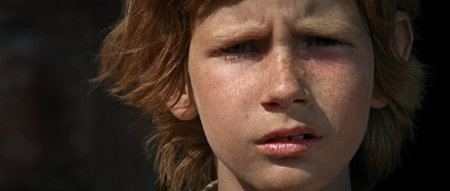
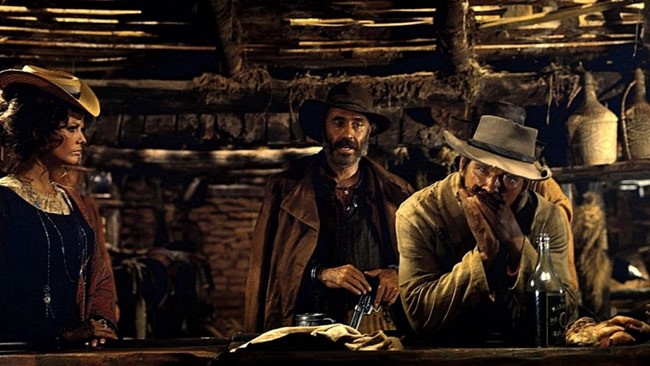
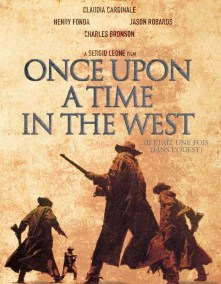 This is another post prompted by somebody’s question on Facebook. People still get extremely insecure about the darnest things. I keep saying: experiment, experiment, experiment. Try it. See if it works. It takes a lot of time? Of course it does! But if you want to succeed you need to invest your time and creativity. Look at the Italians. In the 1960’s they had a hunger for westerns – people just loved them, maybe because they had good memories of the Americans who’d come for the war of 1940, who knows? But would they wait for the American Film Industry to produce westerns in quantity and quality? No, they didn’t. They did the unthinkable: they made them themselves. Using sometimes American actors brought to the studios of CineCitá, the villages in the Italian countryside and desert of Almeria, they produced dozens of movies of what we now call the Spaghetti Western. Some very good westerns came from that absurd and insane phase of Italian filmmaking, including one of the very best western movies of all time: Sergio Leone’s ONCE UPON A TIME IN THE WEST. This is one of my favorite movies – in particular, the first 25 minutes of the film are some of my favorite moments in the whole History of Filmmaking. So what was the question somebody asked on Facebook? Of course, it was: How to introduce your characters? ONCE UPON A TIME IN THE WEST does it masterfully. The first four scenes are the introductions of the four main characters and here is how Leone made them memorable – I’m describing them from memory and actually summarizing, so please forgive me if I forget any detail or I’m not completely faithful to the movie.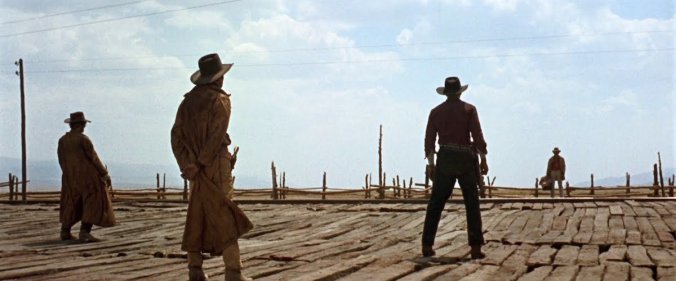

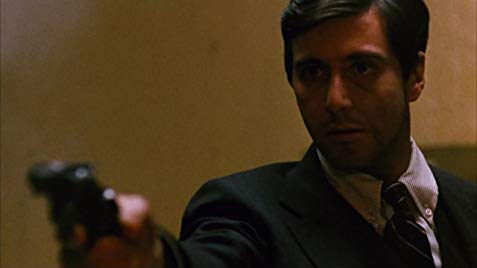 And so we rejoice when Michael chooses to save his father and murder in cold blood a police captain and a rival gangster at a restaurant. And we feel vindicated when he is able to outsmart and murder the leaders of the Five Families at the end of the first movie. We do not judge him. We’re glad he won. Even if Francis Ford Coppola is able to subtly reveal to us the corruption growing in the man, ‘asphyxiating the cat’ as he shows us Michael claiming to renounce Satan at the christening of his nephew while the murders he ordered are occurring, and Michael bluntly lying to his wife and sister as the movie closes.
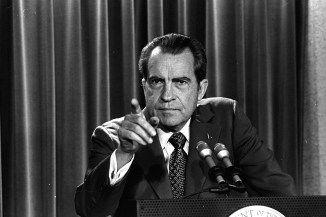 Now, in recent History, there were two US Presidents who were under an Impeachment Process. One used the Executive powers to spy on other Americans and then tried to cover it up. The CIA and the Intelligence Community were actively used to spy on the opposition, and then there was obstruction of justice. I guess it is obvious that this is an impeachable offense to most people. It was for President Nixon himself, as he resigned before being thrown out. The other President under impeachment had cheated on his wife and lied to cover it up. Should one lose his job over that? Not really sure.
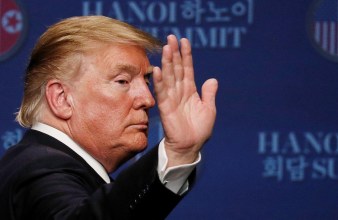 At what point will Americans realize that this President has done already much worse than the other two impeached Presidents combined? At what point will Americans realize that this is Reality, not Fiction? And that looking at a criminal kingpin with sympathy has consequences? Not marriage consequences or mere internal politics consequences but National Security and Geopolitical consequences. At what points will Americans realize that many people are and will be hurt by his gangster actions? At what point will this story stop being like a gangster movie where the police are not present and are ineffective to countermand Crime? At what point will Americans stop acting as if they were repressed despaired teenagers investing in loser dreams and fantasies?
 I was actually writing with somebody else much sooner than I was writing at all. If you read some of my posts, like this
  Scriptwriting is probably the most technical kind of fiction writing there is. Everything you do in a script is full of consequences for a lot of people. For instance, if you write a scene where two people are having a conversation in a car as they cross the Golden Gate bridge you must really have a very good reason for that, or it will never be made – no-one will close or simulate the Golden Gate bridge for a movie scene where two people just talk to each other, it’s just crazy expensive. And everything in a script must be in its right place – if you’re writing a sit-com, be sure to have a joke every other minute. Everything you do, every scene, every detail, has loads of consequences for the producers, for the director and the photography and the wardrobe and the actors, etc. So… it’s technical. Curiously enough, that makes it easier to co-write: because your writing style and your ‘feelings’ about this or that matter less.
 First of all, I don’t believe you can simply invite a random person, a random writer, to write with you. I don’t believe you can simply go online and ask somebody to write with you. The chances of that being rewarding seem to me very thin. A co-writer must be someone you connect with, someone you trust and, hopefully, someone you really know. Both minds and hearts must be able to integrate the others. Because, don’t forget, when you write fiction you are giving life to your fantasies. It’s only natural that the other person’s fantasies are different – but they must be compatible. You must both be able to get a kick from the same story. Hopefully, you should like the same kinds of stories and the same genres. Maybe even have the same references. You should also be keen to outline. Outlining is the easiest, most engaging and most crucial part of a writing partnership, in my experience. Only when you have completely agreed on what the story will be, in my view, will you be ready to write. And you must have the same work ethic – it’s important that neither one feels cheated, working harder than the other – or there will be complications.
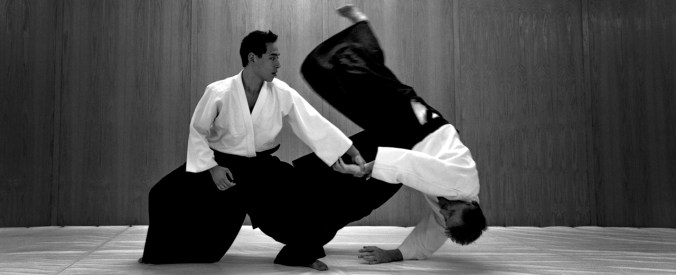 When I trained Fencing and Martial Arts in my youth I was struck by the fact that novices and masters seemed to choose their techniques in a different way. Novices seemed to be more deliberate and when they went for a technique they struggled to do the move correctly, just as they were taught. Masters, however, seemed to be more fluid and spontaneous. I learned that masters did techniques in order to breathe correctly so that everything happened naturally. Novices, however, tried to breathe into the technique, forcing themselves to breathe in a manner that allowed for a good technique to happen. You can see the same thing in football, for instance. When you see someone like Cristiano Ronaldo or Lionel Messi playing, they seem fluid and you can pick up that they use different techniques in order to go in a particular direction or be in a position to strike. They don’t even seem to think about the techniques they use. Maybe they don’t even realize the techniques they use. (Btw, Portugal just won the 1st UEFA League of Nations Cup – kudos to us.)
 Let me give you a writing example. When I was a kid I was enthralled by a particular sentence I wrote. It was something like this (loose translation): ‘The Moon was up on high, a comma of false modesty, hidden but interested.’ I just thought this was the most beautiful sentence I would ever write. It was a clever sentence, as I was describing the crescent moon. It seemed like a comma, falsely modest because it was mostly hidden in the shade but still very beautiful, and it was hidden but looked like it was slightly popping out of the hiding place to look at us. Clever… I still think it was a very good use of a metaphor. But I believe nowadays I write these kinds of sentences and use this technique all the time, without even noticing it. I don’t use it to make a beautiful metaphor or a beautiful sentence – I use it to lead the reader to a specific position and feeling. And that’s all I care about.

 Hyperjumping