I often see in online groups and even offline a few people asking for partners to co-write a story with. Most of these callings I find laughable. Why would anyone write somebody else’s story? Isn’t the whole point being able to write your own story? Giving life to your own characters and ventilating your own fantasies? Still, I can tell you with all honesty that writing with others can be a wonderful and fulfilling experience. So I would like to speak a little bit about that.
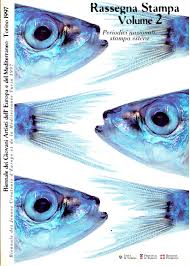 I was actually writing with somebody else much sooner than I was writing at all. If you read some of my posts, like this one, you will know that my first bouts of inspiration happened when I was very young and was playing with my brother. We would build our own stories and our own characters and play out the battles and the pursuits we were imagining. After that, I started writing my own stories and I would not share this process until many years later. On a few occasions, I happened to engage with other writers in a sort of cadavre exquis exercise: one of those where someone starts to write a story and then somebody else continues it and passes to a third person and so on – so in the end, you have a story written by many parties. I even did that in Torino, Italy, when I was representing my country in the Bi-Annual Fair of Young Creators of Europe and the Mediterranean in ‘97 – us writers ended up reading the whole strange text on stage for an audience with music and everything; it was very interesting. These exercises, though, even if interesting, never ended up creating a good story or even a good narrative. And there was always someone who made the whole text even weirder one way or the other – making a strange poem instead of narrating, or a deus ex machina of some sort. And it was obvious it would be so, as people write a lot with their feelings, their own style, their ideas, and never quite ‘fit’ into another person just like that.
For years I never thought I’d have the time to write with other people. I wanted to write my own stuff – imagine my own stories, fly with my characters, write as I pleased. How would I have the time to develop stories with other people when I had so many of my own to work with? That changed, however, when I started writing screenplays.
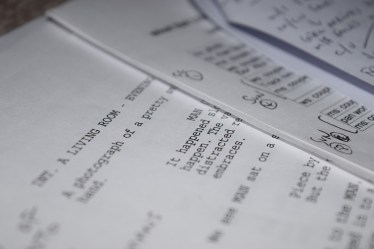 Scriptwriting is probably the most technical kind of fiction writing there is. Everything you do in a script is full of consequences for a lot of people. For instance, if you write a scene where two people are having a conversation in a car as they cross the Golden Gate bridge you must really have a very good reason for that, or it will never be made – no-one will close or simulate the Golden Gate bridge for a movie scene where two people just talk to each other, it’s just crazy expensive. And everything in a script must be in its right place – if you’re writing a sit-com, be sure to have a joke every other minute. Everything you do, every scene, every detail, has loads of consequences for the producers, for the director and the photography and the wardrobe and the actors, etc. So… it’s technical. Curiously enough, that makes it easier to co-write: because your writing style and your ‘feelings’ about this or that matter less.
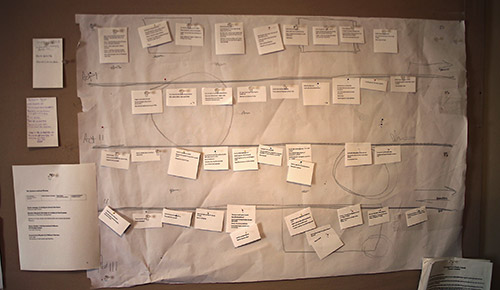
Also, you can do an outline or not when you are writing a book, but when you’re screenwriting, fuggedaboudit!, you need to outline, period. So I was in my late 20’s when I had my first real experience with co-writing. And it was a lot of fun! A friend of mine and I decided to write a romantic comedy and we worked several hours every Monday night on it. When you’re outlining with a friend, especially comedy, it’s a blast. You can have hours and hours brainstorming about funny things and building the characters and the story from scratch. And then you can start writing it scene by scene and it’s even funnier and more joyful. And then you can invite a group of friends over and make a reading of the script and laugh and drink and then commiserate together for having written a lousy script. Oh, the good ol’ times.
I ended up doing a lot more of that later on, especially after my 40th birthday as I was invited to co-write a script that was produced and then invited to do more stuff in co-writing. I had a lot of good experiences screenwriting with somebody else or even in a group. I think that in some cases it’s really the best thing to do – and it presses you to write more and faster and with more quality. It’s a really good experience. But it can also be frustrating. And I am very skeptical about partnerships in writing books, even though there seems to be a lot of them that actually work. This said, I think some things should happen for a writing partnership to succeed.
 First of all, I don’t believe you can simply invite a random person, a random writer, to write with you. I don’t believe you can simply go online and ask somebody to write with you. The chances of that being rewarding seem to me very thin. A co-writer must be someone you connect with, someone you trust and, hopefully, someone you really know. Both minds and hearts must be able to integrate the others. Because, don’t forget, when you write fiction you are giving life to your fantasies. It’s only natural that the other person’s fantasies are different – but they must be compatible. You must both be able to get a kick from the same story. Hopefully, you should like the same kinds of stories and the same genres. Maybe even have the same references. You should also be keen to outline. Outlining is the easiest, most engaging and most crucial part of a writing partnership, in my experience. Only when you have completely agreed on what the story will be, in my view, will you be ready to write. And you must have the same work ethic – it’s important that neither one feels cheated, working harder than the other – or there will be complications.
Second, it’s not easy when someone comes up with the story and one of you comes in to help write it. I was once hired by a film producer to help a director develop a script he was writing and I almost went mad when the guy started every single session by announcing he had changed the names of the main characters. Aaarrgggh!! My best experiences co-writing were the ones where both of us built the story together and owned the story together.
Thirdly, be able to compromise upwards. What do I mean by that? A rule of thumb I had with a director I worked for years was: we only committed to a plot point or an important item in the story when both of us fully agreed with it. If one of us was not sure, we kept working to find a better solution. Compromise upwards – compromise to get the best possible solution. Don’t compromise downwards, accepting something you don’t really like – it will most likely bite you in the behind going forwards or, at least, will diminish the pleasure and the stamina in the process and the work.
Fourth, the three pillars of person-to-person communication are essential. These are: 1)Active Listening – always try to listen carefully, willingly and actively to your partner – really understand what he/she is saying, not just the words but the meaning. 2)Empathy – always put yourself in his/her shoes and go to the core of what he/she is communicating; put yourself in the character’s shoes as well and promote that positioning with your partner, role-play if necessary. 3) Assertiveness – be able to convey as clearly as you can what you really think – don’t be passive or submissive, don’t be aggressive, don’t manipulate – tell it as it is in a way the other person is able to hear and integrate. If you don’t do this it is likely the communication will break sooner or later and all the work will be worthless.

So there… These are my two cents on this subject. I guess many times people will be in a position where it is not possible to have all the best conditions met: if you are part of a writer’s room for a TV-series or if you were hired by someone to co-write or ghost-write a book you may not have the say I profess. Still, I hope this text and these ideas are useful and can help you develop good partnerships. See you around the next campfire, fellow warriors.
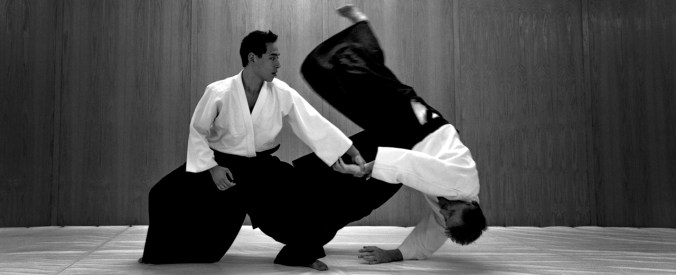 When I trained Fencing and Martial Arts in my youth I was struck by the fact that novices and masters seemed to choose their techniques in a different way. Novices seemed to be more deliberate and when they went for a technique they struggled to do the move correctly, just as they were taught. Masters, however, seemed to be more fluid and spontaneous. I learned that masters did techniques in order to breathe correctly so that everything happened naturally. Novices, however, tried to breathe into the technique, forcing themselves to breathe in a manner that allowed for a good technique to happen. You can see the same thing in football, for instance. When you see someone like Cristiano Ronaldo or Lionel Messi playing, they seem fluid and you can pick up that they use different techniques in order to go in a particular direction or be in a position to strike. They don’t even seem to think about the techniques they use. Maybe they don’t even realize the techniques they use. (Btw, Portugal just won the 1st UEFA League of Nations Cup – kudos to us.)
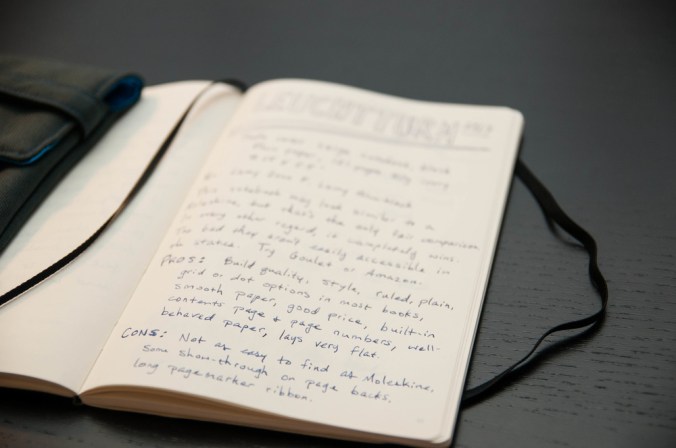
 Let me give you a writing example. When I was a kid I was enthralled by a particular sentence I wrote. It was something like this (loose translation): ‘The Moon was up on high, a comma of false modesty, hidden but interested.’ I just thought this was the most beautiful sentence I would ever write. It was a clever sentence, as I was describing the crescent moon. It seemed like a comma, falsely modest because it was mostly hidden in the shade but still very beautiful, and it was hidden but looked like it was slightly popping out of the hiding place to look at us. Clever… I still think it was a very good use of a metaphor. But I believe nowadays I write these kinds of sentences and use this technique all the time, without even noticing it. I don’t use it to make a beautiful metaphor or a beautiful sentence – I use it to lead the reader to a specific position and feeling. And that’s all I care about.




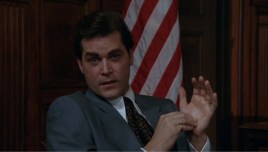 For many European citizens, the feeling is one of skepticism. What in reality is a problem of «not enough Europe» is felt in the streets as a problem of «too much Europe». If the Union doesn’t work, why are we investing in it? Remember that scene at the end of «Goodfellas» when Ray Liotta’s character is running around cooking pasta, getting high, trafficking drugs, managing his family and lover and trying to escape surveillance as everything crumbles all around him? That’s how I sometimes feel when I look at the Union struggling in the mud with all these geopolitical events. When will it be too much to handle?
 These strange people have been gathering strength all over Europe as well. They’ve been biding their time, waiting for the right moment. The moment when the weaknesses of the Union becomes apparent. Figures like Marine Le Pen and Nigel Farage even turned themselves into European Members of Parliament, vowing to destroy the system from the inside. Elections in Austria, the Netherlands, Italy, France, Germany and other countries now feature nationalistic and traditionalist parties that show increasing power. Recently, a far-right member of the Austrian government was caught on tape dealing with the Russians and had to resign… Is it the first of many?
 Winston Churchill himself was the one who suggested a united Europe – a United States of Europe, as he put it. He warned: «The Dark Ages may still return». Liberal values are stronger values. But they are under siege because we have been too timid in defending them. We relied too much upon their intrinsic worth. So we need to get back to the ballots and the streets. Today at 4pm only about 23% of Portuguese electorate had cast their ballots. 77% was no-where to be seen. Political absenteeism, both real and emotional, is the genesis of all totalitarianism. So our first duty, our first commitment, must be to voting.
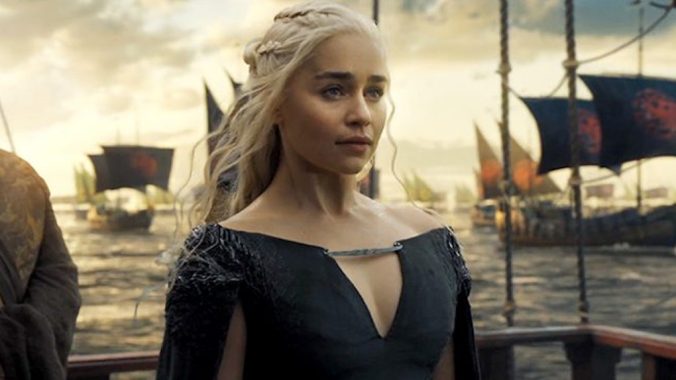
 Peter Dinklage is an incredible actor and the goodbye scene of Tyrion with his brother Jamie is breathtaking. Extremely well written it is a pearl of Dinklage’s performance. I doubt this goodbye could ever be a better one.


 So, as we travel through the wrinkles of time towards the upcoming release of Villeneuve’s DUNE in November 2020, I get to wonder once more about the importance of Religion. As I’ve said


 At the inception of Liberalism, one of the great experiments of the time was the French Revolution. Napoleon Bonaparte emerged from the chaos and two ideas emerged with him: 1) that Liberalism and Meritocracy could be used to create incredibly effective and sophisticated organizations, such as the million-strong Grande Armée; 2) that Aristocracy and aristocratic thinking were far from over. The armies of Napoleon were plagued, in the end, by the same aristocratic thinking, nepotism, and corruption that they were raised to destroy. And so was the society in general. In today’s world, wealth and power are still the ownership of an elite of public and private figures, in politics and economics, that are protected and supported by the whole system. And that is what makes for the increasing problem of inequality we see throughout the world: a small group of individuals amasses the majority of all the wealth.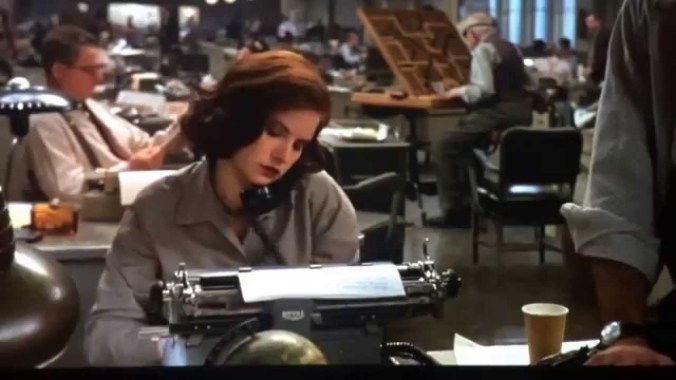


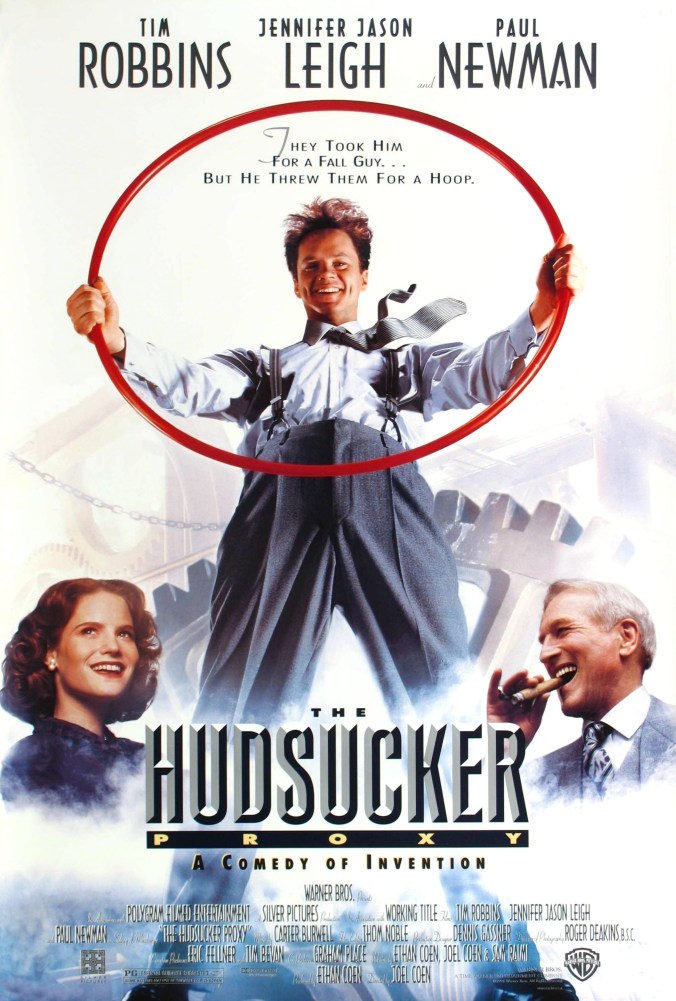
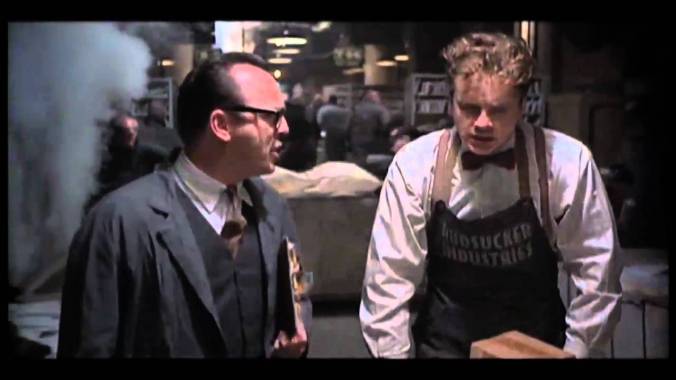
 Now, in THE HUDSUCKER PROXY the Coen brothers are focusing on the way Capitalism acts on the old and the new – we have the idealistic Norville Barnes against the Board of Directors headed by the ‘straight-for-the-jugular’ Sidney Mussberger. In a way, they represent the cut-throat kind of capitalism Max Weber talks about in his groundbreaking work THE PROTESTANT ETHIC AND THE SPIRIT OF CAPITALISM. He quotes Benjamin Franklin: ‘Remember, time is money.’ Weber explains how the devout protestant of the 19th and 20th century believed that it was their duty towards their lives and especially towards God that they apply themselves to their material gains. Idleness was seen as a sin. As Franklin would say: ‘He that spends a groat a day idly, spends idly above six pounds a year, which is the price for the use of one hundred pounds’. Meaning: every idle moment has a monetary cost. In this spirit, we can also follow the works of Frederick Taylor, of which Peter Drucker would write: ‘some of the most influential writings in Western Society since the Federalist Papers.’ Taylor’s Scientific Management would lead to punch-clocks, hourly wages, timetables, measured tasks, prolific production operation management, time management and other narrow productivity measures. And if we feel that is a way of thinking exclusive to Protestants, I would be curious to learn what Weber would say to nowadays work ethic of some Indians and Chinese – surely not Protestant in their majority.
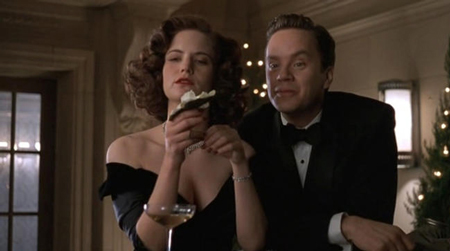 In the end, it’s important to understand that work cannot and should not be the sole and major focus of our lives. That is also what Norville seems to learn at the end. Being the President of the Hudsucker Industries is only of value if the rest of his life, in particular his personal life, is also satisfying. Idleness, feelings, empathy, being able to enjoy the Universe, are also important factors in a healthy society.