
The latest sexy idea I’ve been hearing about the American economy is that it is running a K- shape-economy. An economy where the middle/poorest classes are losing systematically, but where corporations and the richest Americans seem to be flourishing. It seems that the American economy is constantly flirting with stagflation, but GDP keeps growing north of 2% with stock market indexes constantly in record highs. In my view, this is a complete illusion. Economic downturn is already here, but the illusion of growth and prosperity is maintained by two simultaneous short-term factors: the first is the massive transfer of wealth from the poorest to the richest created by the advent of tariffs, tax breaks, and exploding public debt – arguably the largest of such transfers in American history – which, ironically, increases the velocity of money in a very Keynesian way. The second is the immense debt bubble of the AI tech firms who have been massively borrowing to the edge of collapse. I’m afraid this flailing illusion can implode at any moment.
I think the American are vulnerable to this illusion as they have been completely overrun by short-term pragmatism. For all its virtues, this pragmatism, this obsession with problem-solving and usefulness of action is fundamentally stupid. Intelligence demands not only problem-solving abilities, but an understanding of complexity, cause and consequence, and critical thinking. Otherwise, short-term action can often do more harm than good.
Controversial psychologist Elliott Jacques (ironically lauded by his service in helping to structure one of the world’s most successful organizations: the US Army), equated intelligence with the ability to project in time the consequences and effectiveness of one’s actions. As such, the more intelligent someone is, the more he or she is able to predict the future and think how their actions will play out. Geniuses as Budda or Jesus Christ, would be able to think in terms of a very long time, perhaps eternity. A very intelligent person would be able to think in terms of years or decades. A simpleton would only be able to foresee a day or two.
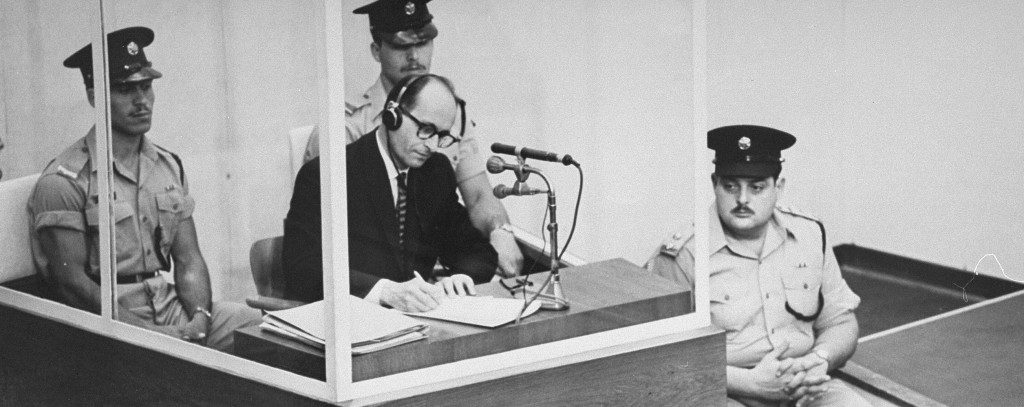
From a different perspective, Hannah Arendt, analyzing the personality and attitude of Nazy officer Enrich Heichmann, seems to link the emergence of Evil, even the banality of evil, to a determination not to think. Not to think in moral terms and in principled terms. Heichmann, in her view, simple obeyed orders and did his job to the best of his ability – never mind that his job was to plan and execute the Holocaust. Thinking if this was right or wrong simply was not useful to him.
Speaking of the Human Condition, Arendt reflected on how life splits into three kinds of action: labor (as it pertains to everyday actions to eat, bathe, grow, reproduce, etc.), work (pertaining to our job and function in society), and action (pertaining to political action) – which she believed demanded a decision to think. Beyond her approach to vita activa, Byung-Chul Han refers to vita contemplativa: that ability to contemplate, meditate, reflect, value idleness and the simplicity of life which supports our ability to learn, to create, to develop spirituality, to love, and to give space to the Other, connecting us, as he puts it: “to the experience of being in which what is beautiful and perfect does not change or pass”. More than overcoming our need to think and get involved in political action, according to Han, our blind dedication to labor and work tramples our vita contemplativa, leaving us in a state of perennial activity, in profound tiredness, total exhaustion, devoid of choice, prisoners to our self-servitude behind the bars of our own success. In other words, it leaves us stupid, drowned in pragmatism and practicality. And also, drowning in debt, consumerism, depression, and anxiety.
This stupid focus on the short term is also very useful and practical. It allows for realpolitik. We could even say that Donald Trump’s major talent is one of recognizing stupid, understanding stupid, and performing to stupid. This frees political discourse. Truth and facts are no longer an issue. If we don’t win, it’s a fraud. If we are losing, we are winning. If we are convicted, we are not sentenced, or the judges are betraying us. If we don’t want files, there are no files. If we want Venezuela, we get Venezuela. If they don’t like us, they are bad guys. If they question, they are attacking us. No obvious consequence. Long term consequences are for others. If there is no plan, there is a plan. Paraphrasing one of the famous “Don Tzu” memes: if there is no strategy, the enemy will never discover it. Confusion and incoherence are normalized – our day-to-day needs are a priority that shall not be ignored – we will not focus on anything else.
For this, faith is helpful. In a particularly pragmatic American way, William James would state that if faith brings comfort, morality, hope or a sense of purpose, it is already useful. This, I would say, precluding the need for a connection to reality, objective facts, or critical thinking, let alone the ethical standard of scientific knowledge. Again, practicality as an absolute virtue.

In this panorama, technological innovations emerge that enhance the unbalance. Atomic bombs are not particularly practical. They are expensive, difficult, and you can allude them to cause fear, but you can’t really use them. Drones, however, especially AI operated drones, seem harmless until they’re not. And they’re particularly practical. War making will be easier and easier to start if all we are apparently risking is a piece of machinery.
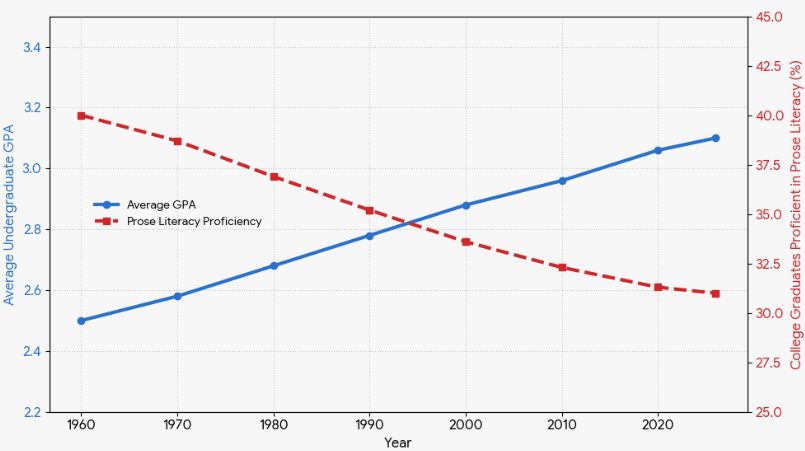
The same with the Internet: it apparently brings us all the information collected by Mankind to the palm of our hand. But most people, maybe even all of us, are not equipped to deal with that. We either allow ourselves to become confused or we slouch in exhaustion as we revel in cat videos, car crashes, bicycle prowess’s, or people intentionally hitting their own genitals on camera. We let the algorithm manipulate our views on politics, economics, history, and science. Having the information, it turns out, is not the same as having the education. Discussion is good and discuss we should. We should have opinions and we should trade them. But criticism is not the same as critical thinking – which implies rationality, questioning ourselves and others, understanding facts, be able to logically link causes and consequences. Nowadays students of all ages spend less hours in the class, study less, and learn less, even though they have higher grades. Our education systems are so behind the curve, we have no idea how to prepare our children for the world of today, let alone the world of tomorrow.
And then, there is AI, threatening to make all education obsolete. Why would we need books and education if AI solves all the problems? Why learn when you can prompt? This naïve infantile question has been uttered, as Big Tech corporations buy millions of old books and blindly destroy them to train the machines. They salivate as they envision a world that would be The Matrix, Fahrenheit 451 and Orlwell’s 1984 rolled into one. By destroying old books that no one is reading, they are making these pieces of paper useful and practical. The same thing with the art and texts created by artists and writers – mere consumer products that can be imitated by machines, if you think pragmatically enough. Mere uploads. Never mind the human connection, the creativity that led us through History, or the future of ideas and ideologies. Never mind dreaming of other worlds and exploring the core of the Human soul. These are not practical elements at all. It’s all a question of feeding consumers and submit them to spend.
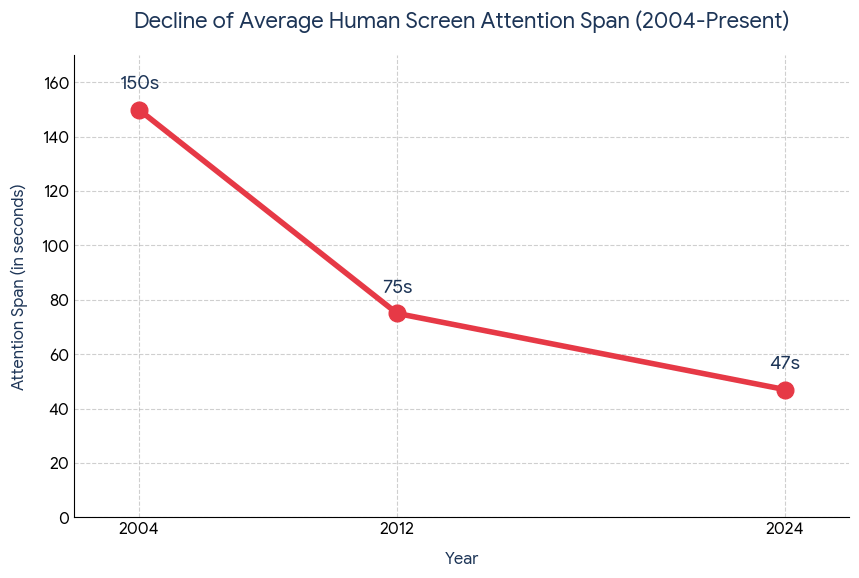
(Data Dr. Gloria Mark at the University of California, Irvine)
Already in 1957, Hannah Arendt worried about this advent of automation. She worried about the divorce between knowledge and thinking. We would become “defenseless slaves”, she wrote. And defenseless slaves we are becoming, defeated by burnout, Mental Health issues, and, most of all, by the practical and useful stupidity of everyday life.

















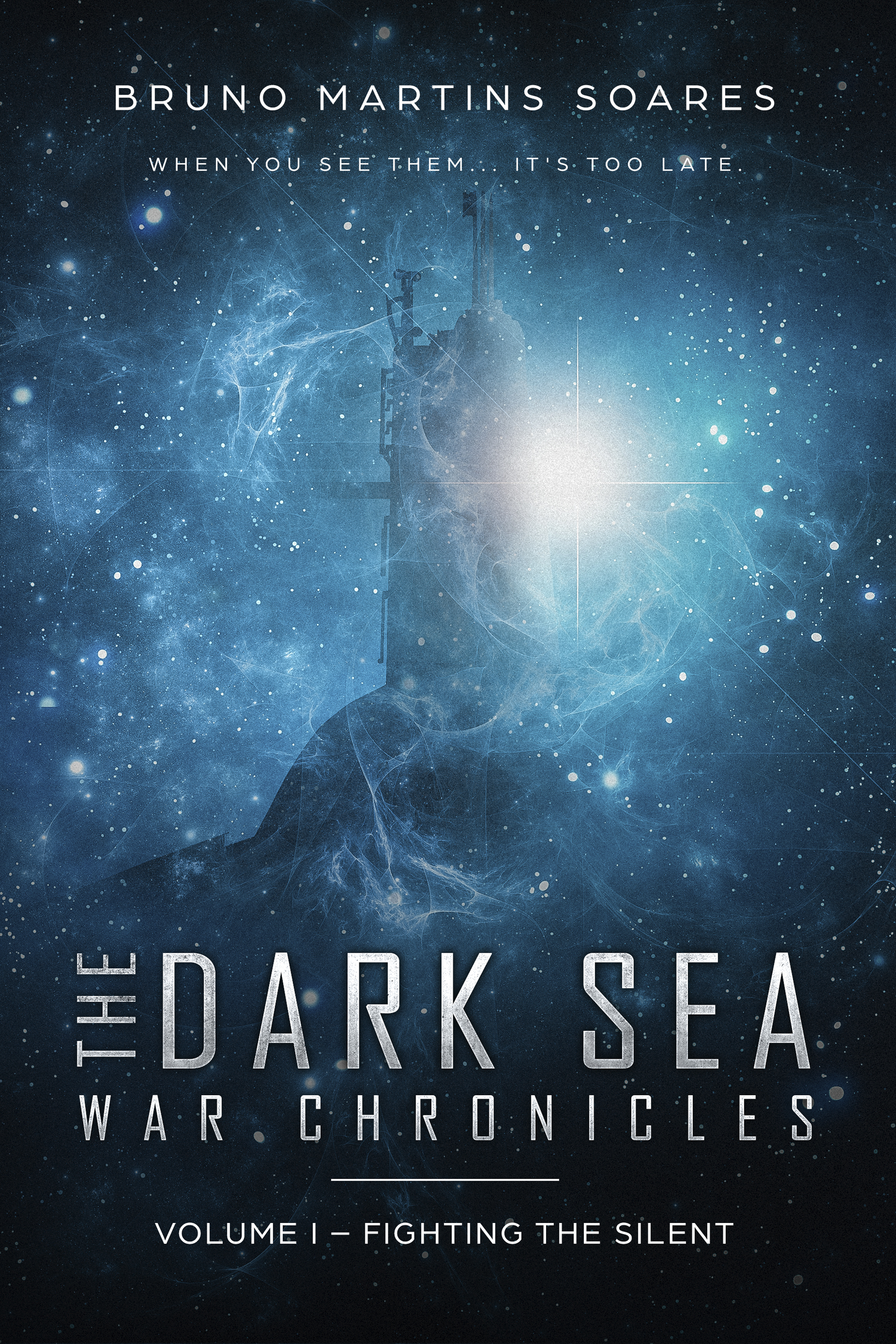 Each of the novels I wrote became more consistent and easier to write once I found their Meaning. THE ALEX 9 SAGA, for instance, is about finding a family when it seems impossible. So it’s about Family. And
