They say a writer never has a vacation and that’s the truth. A writer is always writing or thinking about writing. A story is always looming somewhere within the tortuous meanders of a writer’s mind. Throughout the years I started using a few tools I picked up here and there to help me deal with this continuous effort, or rather this continuous energy. These diverse tools have been useful to me in many ways and some of them are actually a lot simpler than you may think. Many writers I know actually use many of them, even if they call them something different, and they are commonly used beyond professional writing. I bet you are using some of them, whether you know it or not. Still, I thought it would be interesting to talk a little bit about at least three of them, so here they go. The order is not meaningful, as you may have learned by other lists of mine.
- THE NOTEBOOK
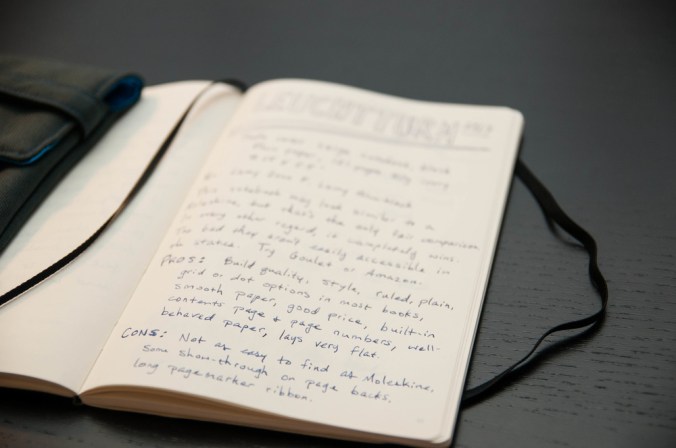
The common notebook is probably the most obvious tool. Every writer has his/her notebook whether they know it or not. You can use your phone, your recorder, your web camera, your computer, your IPad, whatever. Every writer has a tool to take notes. It’s essential! Maybe you use it to write in a coffee shop or on the train, maybe you use it to draw your characters or your scenery – it’s still a notebook. I use several forms of it. I usually have an XL sheet I’ve already spoken about here. I use it to gather concepts and gimmicks. These will help me always to have a story to write, and focus on the story I’m working on without getting infatuated by another idea that comes along. Once the concept or gimmick is settled on my XL sheet, I forget about it until it’s time to work on it for real. I have over 40 unwritten concepts on this sheet right now.
I also have a Word document dedicated to each story I’m writing. It’s not a document where I write the story itself, it’s a file where I write character traits, random ideas I have about that story, or even write future scenes or pieces of scenes that I will copy and paste into the narrative when the time comes. The Word document for my current WIP is now over 17 pages long and has the curious and coincidental name of «2030», which is the first line written on it and documents the year the story is supposed to happen in. Many of the things on these pages are now obsolete, but I never change my ‘notebook doc’, I just keep writing on it, because I may want to return to a strange unused idea at some moment or want to understand the origins of another idea, which brings me back to the notes on the doc. This is, for me, a very important document, almost as valuable as the actual document where the story is being weaved.
And then, there are actual notebooks. Notebooks everywhere. The most important of these is the one that I keep next to my bed with its pencil. Many of my ideas come to me in my sleep. However, it is rare for an adult to remember his/her dreams… except for the first 5 minutes after we wake up. So that is the moment when ideas must be immediately stored. Many times we are too sleepy to make any sense and it’s not uncommon for me to get up in the morning and not understand a word I have written in that book. Still, that single notebook has saved many jewels from oblivion and that is certain. It also works as a weapon against insomnia. Many times I can’t sleep because an idea is plaguing my mind, exciting me and troubling me. Once I write down the main pillars of it, however, I feel at ease and sleep comes to me quite quickly. So I’m really grateful for that notebook.
Beyond these, I always (almost always) carry a notebook and a pen with me. You never know when you’ll need one, and I actually have notes spread out everywhere – unfortunately, as I lose many of them.
- THE BOARD
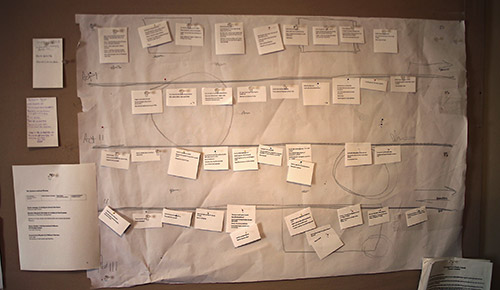
If you’ve been reading my blog you already know I’m a fan of Blake Snyder’s Beat Sheet. Well, in his book SAVE THE CAT, Snyder also talks about a tool many writers, especially screenwriters, use to organize their work. They call it The Board. The Board is basically a lay down of the structure of the story. Some people use a cork board, some cards, and some pins; some people use specially written software or a smartphone app. I sometimes use an XL sheet with squares and text boxes I spread over a 3 Act division. The Board allows you to keep the whole story overview in one place and to keep adding to it, changing plot points from place to place and interlocking ideas in one way or another before you write them. Take a look at this post about it from Isaac Botkin – he explains it well.
Sometimes I also have the Board written down on a Word document, and I even have a template I made with Snyder’s beats listed when I want to check out if the plot points of the story are in the right place. But most of the time I have The Board in the most elusive and dangerous place: my mind. I do not recommend you do this, seriously. I do it because I was doing it for a long time before I even knew what The Board was – and it’s half the pleasure I get from writing: visualizing and playing with the structure in my mind. If I ever forget this or that idea I find it means it wasn’t that important or that good – otherwise I don’t forget it. And most of the times I wrote down or put down The Board I learned I didn’t need to do it. I had it all in my mind. If it’s a story I will not be working on at the moment, I’ll write down the fundamentals on a Word document and then I’ll commit to The Board I’m working on. What’s important is that at any moment I can change the pieces from one place to another and make sense of the whole structure in a single glance. Use a real Board, seriously. Put your story down in words, put it on the wall. I bet I’ll be doing that myself soon, as my age pressures my mind.
- MIND-MAPS
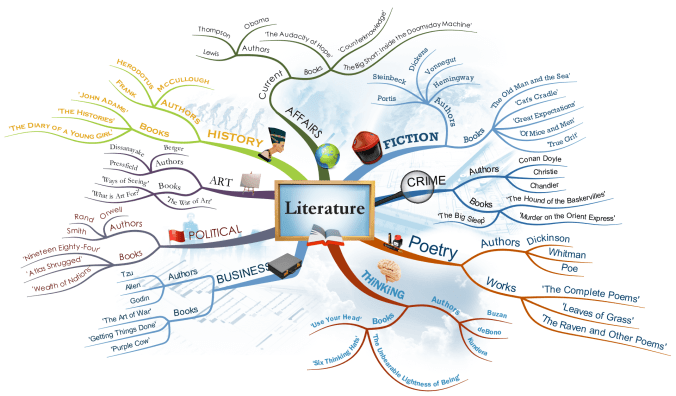
Mind-mapping is a technique I picked up a long time ago when I was working on Time Management and Presentation Skills. It’s a technique invented by an Australian called Tony Buzan who was studying the way people study. He became an expert on the brain and on memory and speed-reading. The theory behind mind-maps refers that it works by replicating the way our inner brain works. Using images and a fluid design we can organize ourselves as we open our minds. I’m not going to recommend a particular site on the subject, just google it. There is tons of stuff on mind-mapping. I use it for everything. When I have an idea and want to develop it, when I’m on my lunch break and want to structure my latest blog post, when I have a meeting and want to have my ideas organized, when I have story in my mind and want to lay it down simply on one page, I pick up a notebook and mind-map. A few years ago I was on a conference sitting behind a well-known author whose name I won’t mention and I took a peek at what he was doing on his tablet and, surprise-surprise, he was mind-mapping a story. That was so cool! His Board was a Mind-Map!
So these are a few of the tools I’ve been using for years on my writing. Do you use them too? Do they make sense to you? Tell me all about it.


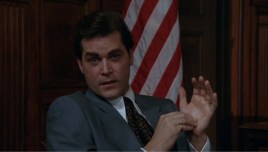 For many European citizens, the feeling is one of skepticism. What in reality is a problem of «not enough Europe» is felt in the streets as a problem of «too much Europe». If the Union doesn’t work, why are we investing in it? Remember that scene at the end of «Goodfellas» when Ray Liotta’s character is running around cooking pasta, getting high, trafficking drugs, managing his family and lover and trying to escape surveillance as everything crumbles all around him? That’s how I sometimes feel when I look at the Union struggling in the mud with all these geopolitical events. When will it be too much to handle?
 These strange people have been gathering strength all over Europe as well. They’ve been biding their time, waiting for the right moment. The moment when the weaknesses of the Union becomes apparent. Figures like Marine Le Pen and Nigel Farage even turned themselves into European Members of Parliament, vowing to destroy the system from the inside. Elections in Austria, the Netherlands, Italy, France, Germany and other countries now feature nationalistic and traditionalist parties that show increasing power. Recently, a far-right member of the Austrian government was caught on tape dealing with the Russians and had to resign… Is it the first of many?
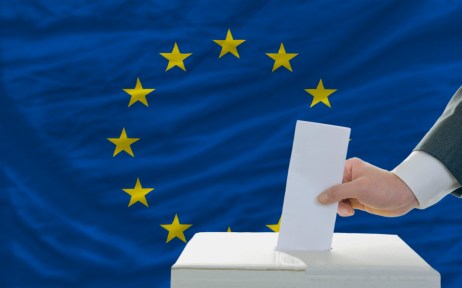
 Winston Churchill himself was the one who suggested a united Europe – a United States of Europe, as he put it. He warned: «The Dark Ages may still return». Liberal values are stronger values. But they are under siege because we have been too timid in defending them. We relied too much upon their intrinsic worth. So we need to get back to the ballots and the streets. Today at 4pm only about 23% of Portuguese electorate had cast their ballots. 77% was no-where to be seen. Political absenteeism, both real and emotional, is the genesis of all totalitarianism. So our first duty, our first commitment, must be to voting.
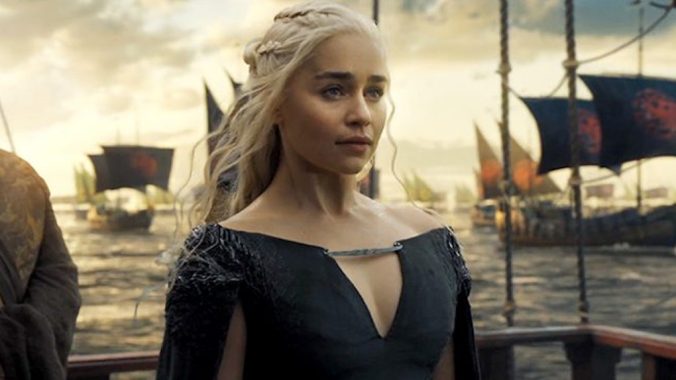
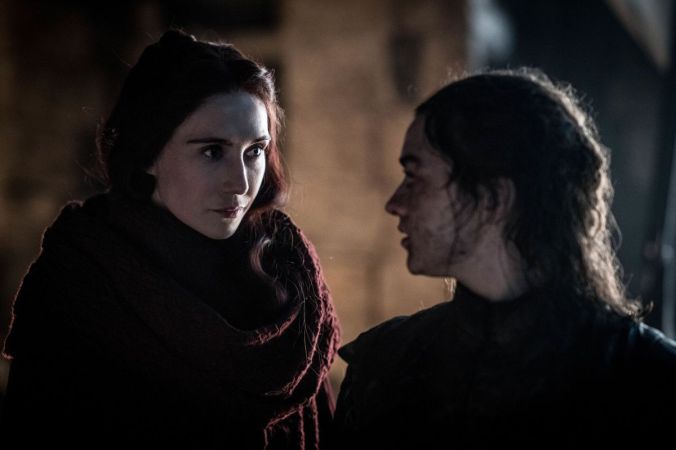
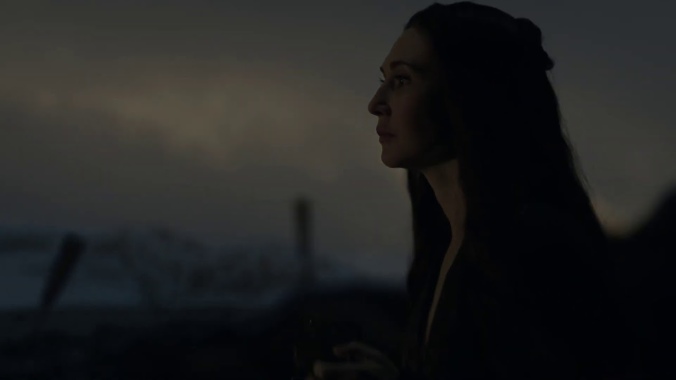
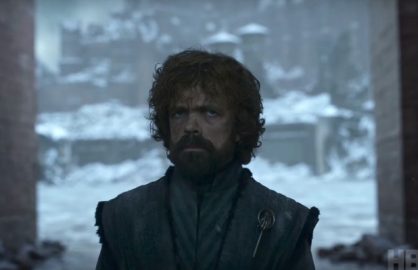 Peter Dinklage is an incredible actor and the goodbye scene of Tyrion with his brother Jamie is breathtaking. Extremely well written it is a pearl of Dinklage’s performance. I doubt this goodbye could ever be a better one.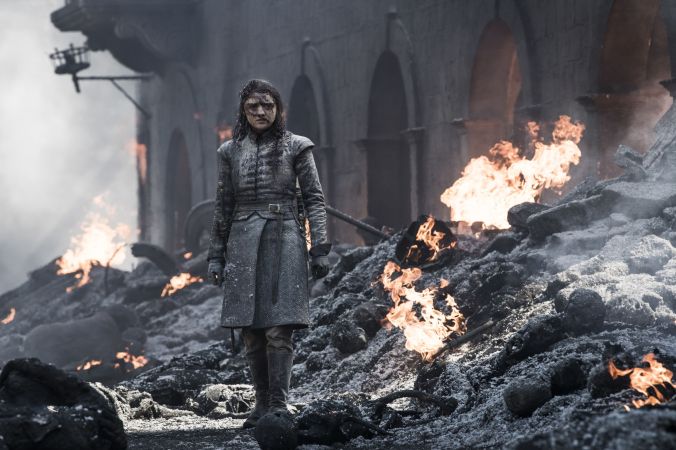
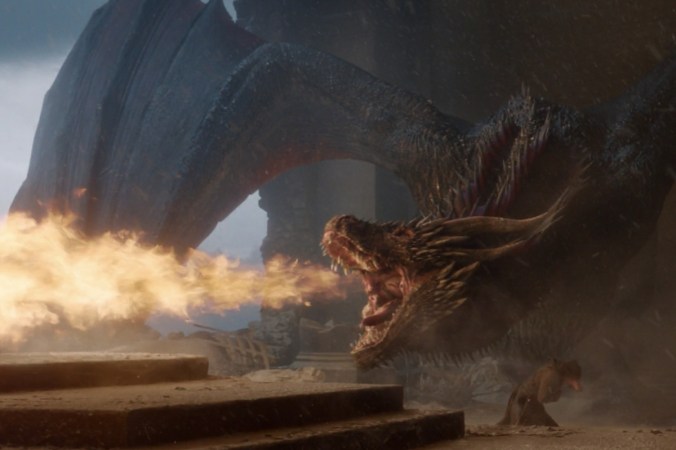

 So, as we travel through the wrinkles of time towards the upcoming release of Villeneuve’s DUNE in November 2020, I get to wonder once more about the importance of Religion. As I’ve said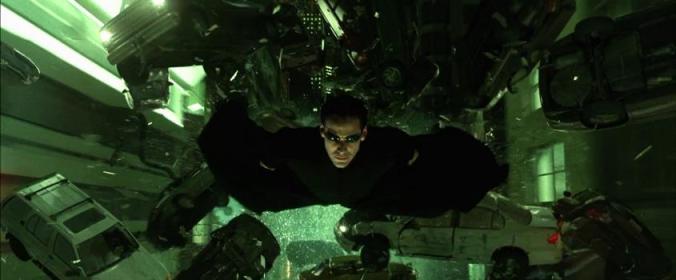


 At the inception of Liberalism, one of the great experiments of the time was the French Revolution. Napoleon Bonaparte emerged from the chaos and two ideas emerged with him: 1) that Liberalism and Meritocracy could be used to create incredibly effective and sophisticated organizations, such as the million-strong Grande Armée; 2) that Aristocracy and aristocratic thinking were far from over. The armies of Napoleon were plagued, in the end, by the same aristocratic thinking, nepotism, and corruption that they were raised to destroy. And so was the society in general. In today’s world, wealth and power are still the ownership of an elite of public and private figures, in politics and economics, that are protected and supported by the whole system. And that is what makes for the increasing problem of inequality we see throughout the world: a small group of individuals amasses the majority of all the wealth.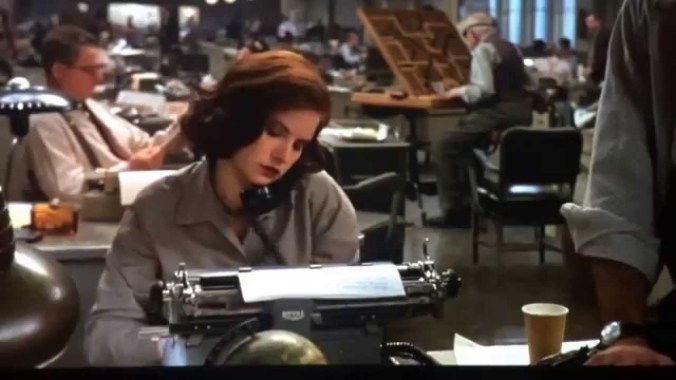


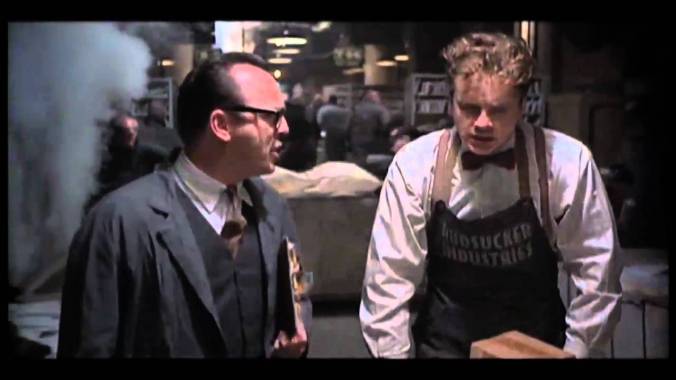
 Now, in THE HUDSUCKER PROXY the Coen brothers are focusing on the way Capitalism acts on the old and the new – we have the idealistic Norville Barnes against the Board of Directors headed by the ‘straight-for-the-jugular’ Sidney Mussberger. In a way, they represent the cut-throat kind of capitalism Max Weber talks about in his groundbreaking work THE PROTESTANT ETHIC AND THE SPIRIT OF CAPITALISM. He quotes Benjamin Franklin: ‘Remember, time is money.’ Weber explains how the devout protestant of the 19th and 20th century believed that it was their duty towards their lives and especially towards God that they apply themselves to their material gains. Idleness was seen as a sin. As Franklin would say: ‘He that spends a groat a day idly, spends idly above six pounds a year, which is the price for the use of one hundred pounds’. Meaning: every idle moment has a monetary cost. In this spirit, we can also follow the works of Frederick Taylor, of which Peter Drucker would write: ‘some of the most influential writings in Western Society since the Federalist Papers.’ Taylor’s Scientific Management would lead to punch-clocks, hourly wages, timetables, measured tasks, prolific production operation management, time management and other narrow productivity measures. And if we feel that is a way of thinking exclusive to Protestants, I would be curious to learn what Weber would say to nowadays work ethic of some Indians and Chinese – surely not Protestant in their majority.
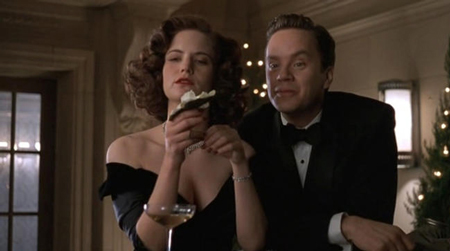 In the end, it’s important to understand that work cannot and should not be the sole and major focus of our lives. That is also what Norville seems to learn at the end. Being the President of the Hudsucker Industries is only of value if the rest of his life, in particular his personal life, is also satisfying. Idleness, feelings, empathy, being able to enjoy the Universe, are also important factors in a healthy society.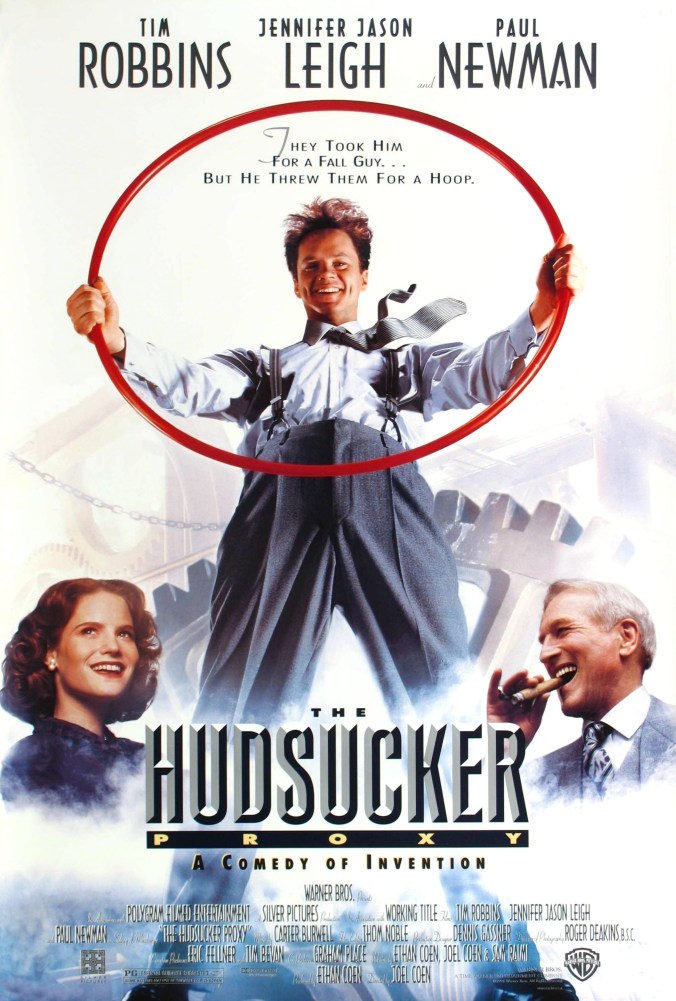


 And after a few minutes, we started hearing an exotic flute: what was this? GLADIATOR? THE LAST SAMURAI? No, it was KING ARTHUR – that mediocre Fuqua movie with Clive Owen but with a great score. Great combo!
![Foto: @[100890010083913:Frank Embacher Photographie]](https://hyperjumpingblog.com/wp-content/uploads/2019/04/4_the-world-of-hans-zimmer_berlin_foto_frank-embacher.jpg?w=676) And then, of course, it finished with the Chevaliers de Sangreal theme, the one at the end of the movie – one of the best Zimmer themes ever.
And then, of course, it finished with the Chevaliers de Sangreal theme, the one at the end of the movie – one of the best Zimmer themes ever.
 Hyperjumping