 There has been recently a lot of talk about sex and rape in fiction. Of course, sex and violence have forever been major hooks in movies and books. In Hollywood, violence is a key feature, but of course sex is much cheaper to stage and in other markets it has been used ad nauseam by so-called intellectuals exactly for the same type of reasoning Americans use violence: to appeal to our most basic inner selves. In recent times I have also heard a lot of speeches about what it seems to be the ‘fascination’ for rape themes – people complain about the use of rape as a theme to develop characters and ‘enrich’ stories. Do they have a point? Let me speak about it for a bit.
Sexual writing has been here for millennia. Not to speak of other artistic depictions of the subject. Sex is part of life, it rings with our inner beings and of course that means it will show up in art and fiction. We are all trying to encapsulate in one way or another the basic truth of the Human Drama, of the stories we all seem to be a part of. So sex must be present, of course. Obviously, there is a difference between the fictional depiction of sex or sexual encounters and pornography. I’ll try to differentiate one for the other, let me know if you agree: pornography depicts sex to sexually arouse and entrance the reader; erotica or fictional depiction of sex, on the other hand, describes life, and sex as a part of life. The first is showing sex, period. The second is showing life with sex as part of it. Can we tell a story without sexual content? Of course. But should we, for moral reasons? Of course not. That’s simply not what we do. We writers don’t shy away from life just because it’s inconvenient or morally ambiguous, or difficult to face. So, if it makes sense, sex should be there. With as much or as little detail as it makes sense.
 How about rape? Rape is not exactly sex, in the sense that, as many criminologists would tell you, rapes are more about power and violence. I don’t know if you ever watched Gaspar Noé’s movie IRREVERSIBLE. I remember watching it at a movie theatre and witnessing the incredibly graphic scene of Monica Bellucci’s rape. Bellucci is one of my sexual icons – I think she’s basically gorgeous. But I remember watching her get raped by a criminal in that manner was the single least sexual arousing scene I ever watched. If you ever had an illusion that rape has to do with sex, I dare you to watch that movie. Rape is about power and about violence. And it’s horrific.
Of course, Freud would tell you something a bit different and I would tend to agree with him: all power cravings and violence have to do with sex. There’s something inherently connected within these concepts. Think of Stalag Fiction, for instance. In the 1950s and ’60s, in Israel, with the ghosts of the Holocaust still hanging over everyone’s heads, a series of very popular pornographic and/or erotic novels were published depicting sexual happenings, usually between Nazi captors and Allied or Jew captives in or around Concentration Camps. It was forbidden very quickly, but it is obvious that these sexual fantasies were coming from the very ghosts the whole society was trying to overcome. That disgusting violence invaded sexuality and fantasy. But that, one could argue, was also a way to exorcise it – to expel the demons from the deepest corners of the mind.
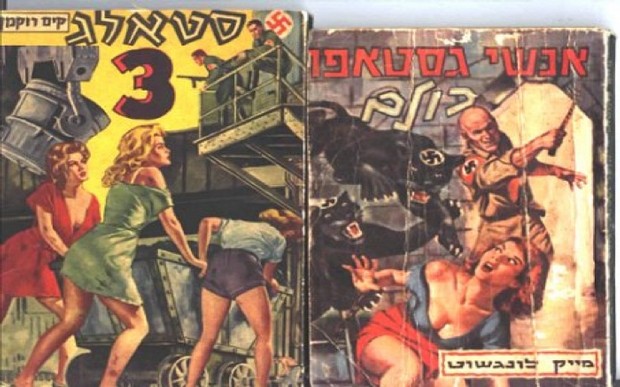
So should we write about rape? Should we write graphic sexual, violent and despicable acts? I think there are two things to take into account here. First, gratuitous sexual and violent contents are simply bad writing, in my view. We are telling a story, we should respect our characters – having graphic scenes to shock or arouse makes you nothing but a pornographer. I’ve written rape scenes, and if you are minimally empathetic with your characters (and you should be), then you’ll find they are no fun to write. Still, I wrote them because they conveyed something to the audience: what the environment was about or what molded the character’s story. There should always be a point to what the characters suffer – scenes I wrote were never there just because ‘they were cool’. And in one way or another, I had to deal with the weight of the scenes and what that did to the story – and that was the point, actually. And remember: rape is a real phenomenon. It happens, maybe even more than we think. And worst of all in times of war, when it’s weaponized and tolerated. So how can we ignore it if it happens? Should we pretend it’s painless, as in the mainstream movies of the past? That’s much worse than actually depicting it.
Secondly, censorship has no place in fiction. We should not chastise fictional writings just because they are uncomfortable or even morally reprehensible. If you don’t like it as a reader, put the book aside or give it a bad review or bad mouth it to your friends. Pure censorship is the resource of the weak and the ignorant. Fiction’s role is one of disruption, experimentation, learning, feeling and thinking. It’s a way to expand your mind and only dictators, totalitarianists and Nazis believe societies will be better off by censoring. Creativity is the exercise of Freedom.
And that’s pretty much what I had to say for today, fellow knights. Keep moving forward. See you around the next campfire.
 These last few weeks have been pretty hectic for me, but I’m finally able to tell you about it. As a writer, I have gotten used to analyze and review my personal strategies along the way. An important factor is to take care of my physical, mental, economic and psychological health. I’m one of those people who often take on more than I can chew, and that has got me into some disagreeable situations in the past. I’ve been near a couple of mental breakdowns before (or have even been through them, diagnosed or not) and they have knocked me out in moments where it could really make a difference. I am also aware that creativity itself depends on our psychological conditions and that it is crucial that I take care of mine (it’s my livelihood, in the end) – there’s nothing so frustrating as wanting or needing to write and to issue original ideas and thoughts and being completely unable to do so. That’s why, at one time or another, I promote my own idleness, even though I do it in a way that I never completely stop. So what happened in these past few weeks and why am I talking about this? Let me tell you about it.
 So, last weekend started on Friday the 11th. I took a day off to attend this year’s Fórum Fantástico, my favorite Sci-fi/F event in Portugal. I thought that Friday would be the boring day of this three-day event, but it wasn’t! Not only did I reconnect with some friends and contacts, with ad-hoc important business meetings on the spot, but I got to meet one of my absolute favorite Portuguese illustrator/designer: the talented Tiago da Silva. He once created the cover for one of my novels, but I hadn’t yet met him in person. It was great and maybe we will have a chance to work with each other soon. Then, Saturday, the 12th, was another full day, with the likes of Ian Watson speaking, plus a handful of very talented Portuguese and international speakers. It strikes me, looking back, how incredibly developed are the new generations of designers, illustrators, comic book artists, game creators and other little geniuses in the Portuguese SF/F scene. On Sunday, though, the focus was a lot on me. It started with playing a demo of the HOT TARGETS: THE DARK SEA WAR CHRONICLES, the game by Sérgio Mascarenhas based on the universe of my books. Then after lunch, there was a speaking event with the ubiquitous Rogério Ribeiro at the Auditorium: about my writings! And then, at the end of the day they delivered the Grand Prize Adamastor for the Fantastic for SF/F novels in Portugal, and… I WON! I won the award! For the Portuguese version of THE DARK SEA WAR CHRONICLES. What do you know!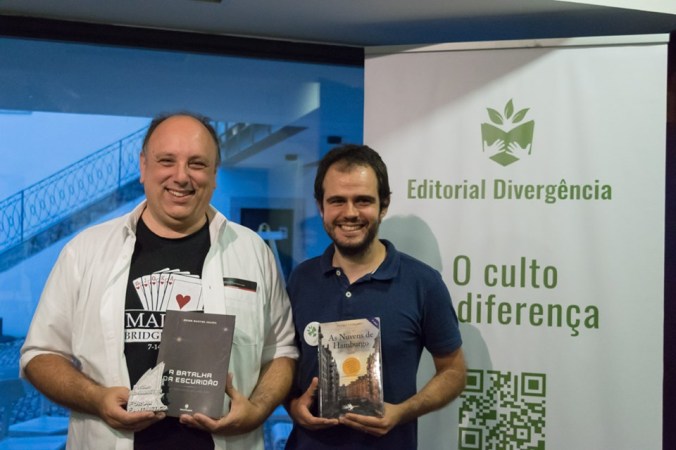


 «As we were speeding through the dirty streets in Thalof’s car, I thought I was looking at a giant lump of mold made of aluminum and zinc and dirty grey rocks and white chalk bricks that was slowly growing in an organic unorganized wild fashion inside a monstrous white ceiling cave. Huts after huts after huts.»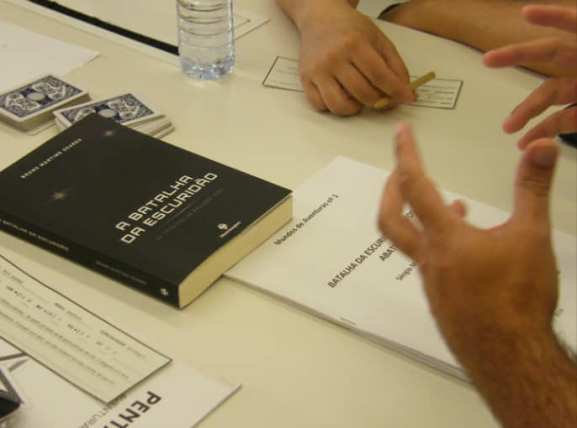


 This weekend I traveled North to the special and charming city of Oporto for the city’s Book Fair. My publisher had me come in for a book signing and there I went. The Oporto Book Fair is not a big event, we’re talking of about 130 exhibitors, but I’m certainly not one to complain, I’m happy to stage any book signing, of course – and don’t think many people came, I’m not that known of a writer. But still, I signed a couple of books and had fans come in with previous publications, happy to meet me almost as much as I was happy to meet them. I was also happy to return to this city, the one they call The Undefeated. Been there a few times and I love to go back.

 So it’s easy to equate the phenomenon of immigration with progress and prosperity. It seems they come hand in hand. Actually, I remember meeting a Swedish professor that showed me how the USA had built its success around immigration. He said something like this: «If you emigrate to Sweden or Portugal or France, you will never be a Swede or a Portuguese or a French. Maybe your children, having been born in these countries, can have the chance of being considered native – if they’re lucky and they don’t have a different tone of skin or their names don’t give them up. If you emigrate to America, though, you can legally become a citizen after five years. You just become an American like any other. That’s the biggest competitive advantage the Americans have over everybody else.» A place where you can converge a vast amount of points of views, cultures and customs is a place of great learning and adaptation, becoming strong and sophisticated. Places that remain closed and homogeneous and bare eventually fall sick and poor and die.
 If you ever read Bernard Cornwell, Simon Scarrow and/or Adrian Goldsworthy you might know that Oporto is a city where the brilliant general Arthur Wellesley, the Irish Duke of Wellington, and his red-coats faced the great armies of Napoleon and defeated them. As I crossed the Douro River on a train, heading back home to the South, I remembered those incredible battles fought by, among others, expatriated soldiers. Part of Wellington’s genius was the creation of integrated battalions, with both British and Portuguese nationals, and later Spanish, Dutch and Germans as well, if I recall. Diversity, he seemed to notice, make us all stronger. We should all notice it too. See you around the next campfire, fellow warriors.


 I haven’t binge-watched a TV series in a long time, but this weekend I devoured the 9-episode second season of MINDHUNTER, a brilliant Netflix series on the development of the Behavioral Science Unit of the FBI – a unit focused on the psychology of serial killers. In the late 70’s and early 80’s, the BSU started by interviewing incarcerated serial killers to understand what moved them. That led to a quantum leap in serial killer understanding and apprehension. The story is absolutely fascinating and the series is top-notch, with the notable participation of the amazing David Fincher. Some of the scenes on the interviews are incredible, including the riveting performances of Cameron Britton as Edmund Kemper, the ‘Co-Ed Killer’, and Damon Herriman as Charles Manson.
 This last particular interview, on the 5th episode of the season, made me think about the root of Evil, arguably the theme of the whole series. The argument apparently made by Manson’s character, that we are all prisoners of an oppressive system and that true freedom comes from releasing the chains we feed in our minds, seems a common thread in the speeches of violent criminals, be it Adolf Hitler’s pseudo-Nietzchian arguments or the Unabomber letters portrayed in another interesting TV series: MANHUNT: UNABOMBER, with Sam Worthington and Paul Bethany. I’ve talked about this illusion of freedom

 Today, I’m still dwelling on Character Development. One area that comes up from time to time is choosing and developing a POV – see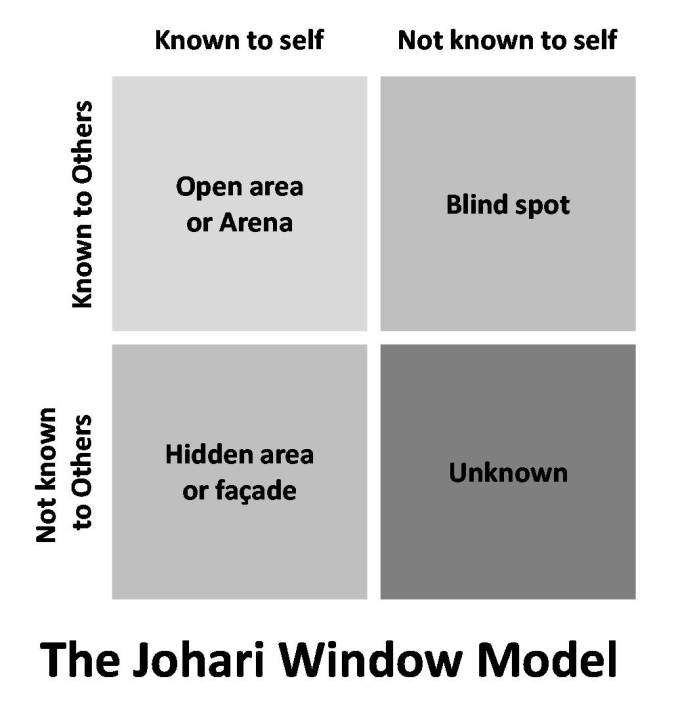
 But the real fun comes up when you think about 4) the Blind Spots. Blind Spots are things that others (readers) may know but you (the character) don’t. I love to work on these things because it’s a lot of fun to imply this or that without the characters actually realizing it. For instance, you know when you pick up that two characters are in love with each other but the characters themselves don’t know it yet? This may be easy to show in Third Person, but it’s a lot more fun to create in First Person. I did the same thing a couple of times with leadership, for example, in THE DARK SEA WAR CHRONICLES – the MC didn’t know he was becoming respected by his crew for all he was able to do and say, but we could slowly see it in the actions of his team. Also, the MC was constantly annoyed by another character, but we could see they were becoming good friends.
 Hyperjumping