Just watched Marvel’s BLACK PANTHER movie. I am a Marvel fan and have been for a long time. I’m not one of those guys who know everything about super-heroes, but I remember the comics I read in my teens. I loved the Daredevil, enjoyed Spiderman and was fond of the Avengers. I absolutely loved the X-Men’s episode that led to Phoenix’s death. I remember reading those comics every week until I was 18 or 19 (time I went away to college). So it was with great expectation and gusto that I saw the grandiose wave of super-hero movies happen in the last few decades. I believe most of the movies on the Marvel Universe are really well made and really great movies. I thought BLACK PANTHER was also a really good movie. So why did it bore me so much?
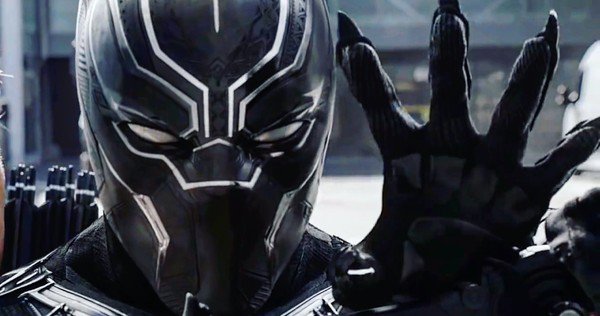
As I said, I’m a Marvel fan. I don’t like DC Comics. It’s not a religious thing or something. It’s just that DC’s heroes always seem too perfect in some way. They’re the rich guy’s heroes: they’re either Superman (with hardly any flaw), or super-rich, or gods, or royalty, or super-powerful. Marvel heroes always seem more human, the people’s heroes, with human flaws and human problems, and always in trouble. So I like Marvel much more. I still think some of the best super-hero movies are DC movies: the first two Dark Knight movies, the first two Batman movies (Tim Burton), the Wonder Woman movie, all of these are really really good. But Marvel has also created some gems: like Iron Man, or Spiderman movies, or LOGAN. And then there are those movies I think only fans can appreciate: I loved X-MEN:APOCALYPSE, for instance, because of Phoenix, most of all. And really liked THE AVENGERS.
I think super-hero movies have gone through a very interesting process: the thought and the effort that go into the execution of these movies, the investment in the story and the CGI effects and the actors and performances have become better and better. They’ve embraced Joseph Campbell’s hero’s journey and follow Blake Snyder’s SAVE THE CAT structure (my favorite). Disney is even considering investing in BLACK PANTHER for the Oscar race. And all I can say is: what’s wrong with these people?
You’ve seen the reactions to the Star Wars movies (I haven’t watched HAN SOLO yet) and they will happen as well with super-hero movies: they are becoming dull.

Formulas are formulas. They are mostly tools. For many people, the American movie industry is too dependent on formulas. One of them is Blake Snyder’s Beat-sheet. As you might know, I love Snyder’s Beat-sheet. It changed my writing for the better. Snyder basically divided Aristotle’s 3 Act-structure into 15 beats. They show us what must happen on the first act, the second and the third. And it is a good formula. Many people blame formulas like these for movies having become too predictable and bland. However, you can pick up Snyder’s Beat-sheet and apply them on movies from CASABLANCA to BLADE RUNNER – they actually comply to the formula. And many other original interesting movies do too. It’s not the tool that’s to blame, it’s the user.
Creativity seems to live of unconformity. It seems that original ideas, the ‘out-of-the-box’ ideas, are the ones that went farther away from the norms, into a realm of unseen and unheard ideas, where no-one knew something was there. But that is not necessarily so. Most of the more interesting ideas come from what we call: Creative Problem Solving. They’re about the way someone picked up a problem and was able to solve it in a different way. They are not about the creation of something in a vacuum, but the conclusion of a long process of studying a problem and coming up with different progressive solutions. But one thing is getting a creative solution further and further along – closer and closer to its potential. Another much more interesting thing is to create a different paradigm, a different level – another kind of solution platform. And that, in my view, is what is lacking.
Well, the main strength behind Marvel and DC comics, is not the structure, is not the main formulas, is not the flawless and intelligent execution of the main ideas. It’s the strength of the original stories and the original characters. The great creators behind these Disney blockbusters, the Star Wars, Star Trek, DC and Marvel, are great minds like George Lucas, Gene Roddenberry, Bill Finger, Jerry Siegel, Jack Kirby and Stan Lee – all of them over 70-years-old and most of them already dead. Don’t get me wrong: I love all these guys and I think they’re geniuses. But let’s be serious: all these movies I’ve been talking about are not particularly creative. Lucas, Roddenberry, Kirby and Lee were creative. The rest of them are fan-boys getting the geniuses’ ideas closer and closer to their potential.
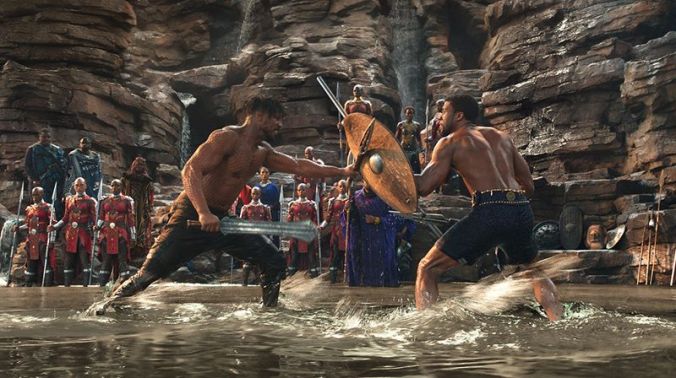
So what’s wrong with BLACK PANTHER? I would say: nothing. Good story, good acting, great battles, great special effects, powerful characters. On the other hand… Haven’t I seen this movie before? Okay, there’s a social side to it: the film mostly features strong African characters. As in WONDERWOMAN, there’s an important ground-breaking social impact that is not minor. There are too many movies with Caucasian men saving the day. But I think I am able to criticize this movie without putting that into question. In fact, if the CAPTAIN AMERICA movies were coming out now, I would probably be writing the same thing: it’s becoming old.
We need new creators. We need new stories. We need to stop believing that what has been done before is more reliable than what is new. Because you can rely on this: what gets old, eventually fails. I think we are seeing that happening already in the movie theatres. Wake up, Disney, we need your creativity back.


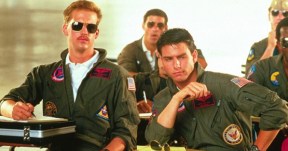 Another formula that was particularly irritating for a while was the ‘Sacrificial Lamb’ formula. I was shocked yesterday at the workshop when I put up a photo of Maverick and Goose and no-one seemed to know who they were. Am I really that old?? Well, then I asked: who will be killed in the movie? And the audience quickly came to the conclusion that it wouldn’t be the character portrayed by Tom Cruise, it must be ‘the other one’. Goose is an example of a Sacrificial Lamb: a character you build up over the first two acts just to kill him/her for effect just before the end of the Second Act. Obi-wan Kenobi is another Sacrificial Lamb. And Boromir as well (even though he gets killed in the final act of the first LotR movie).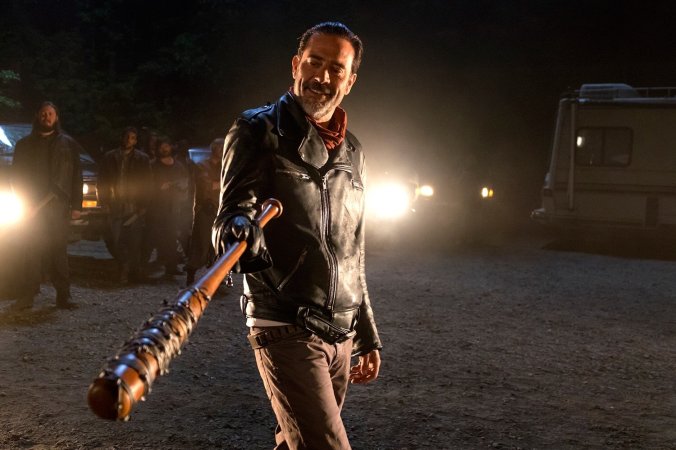
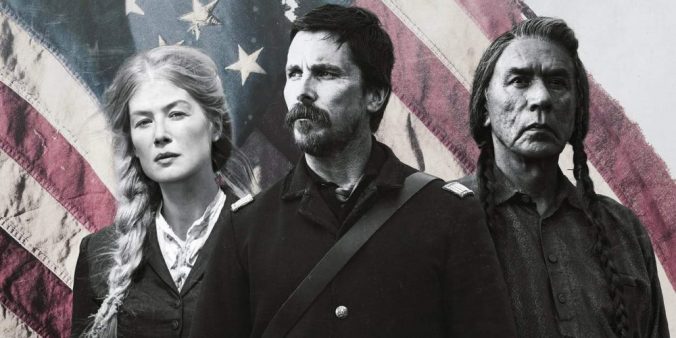
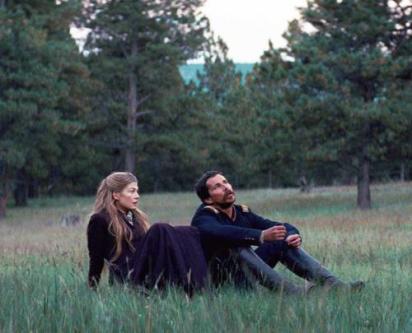
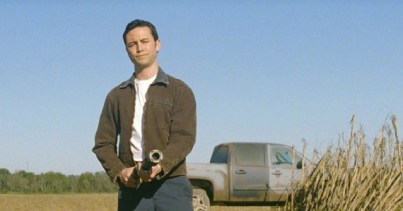
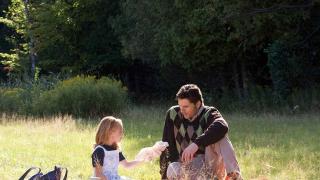 Both this movie and this book bring an original and ground-breaking take to time-traveling. THE TIME TRAVELER’S WIFE starts with a man meeting a stranger in a library and she recognizes him as the man who has been visiting her since she was a little girl and with which she is in love. Many times we believe that people from the future would know more than we would know ourselves, but in this story things are not that simple: the time-traveler has a gene that sends him almost randomly into the past, so sometimes he meets the woman he loves when she is an adolescent, and sometimes when she is a grown woman. They eventually marry and his condition makes for a very curious and interesting love affair. I love romantic movies and this one is a good example. Again, another movie that went by without much notice, but I definitely recommend it.
 I hesitated in considering GROUNDHOG DAY a time travel movie, but, in fact, Bill Murray’s character does travel to the past every day, always at the same moment. And GROUNDHOG DAY is a great movie and an absolute classic. However, I feel THE EDGE OF TOMORROW fits better in this list. The concept is very similar, but more violent: a US Army officer fighting an alien race wakes up always on the same day every time he gets killed. THE EDGE OF TOMORROW is a movie that grows on me every time I watch it (yes, I can see the irony). I think Emily Blunt is sexy as hell in this and Tom Cruise is indeed a good actor (despite the annoying smile). The movie is thought provoking and stimulating even though that ‘centralized intelligence’/’kill the queen’ thing is a bit old already. The movie is based on the manga series ALL YOU NEED IS KILL by Hiroshi Sakurazaka. One of these days I will tell you why I believe the Japanese (manga included) have some of the best character development around – for now take my word for it and watch this movie.
 Even though I thought of other movies to put in here (like 12 MONKEYS), no time-traveling movie list would be complete without BACK TO THE FUTURE. I like the first one the most. Robert Zemeckis is a very strong director, even though I feel sometimes he shies away from some deeper moments. In BACK TO THE FUTURE he’s flawless. The construction of the narrative is very good, even though we stumble into the grandfather’s paradox once more. You know the one? If you went back in time and killed your grandfather before you were born how could you have gone back in time to kill your grandfather? But as I said before, don’t let logic get in the way of a good story. It’s always a treat to watch Michael J. Fox as Marty running around putting his parents ‘back’ together. It touches our fundamental fear of our parents separating or not succeeding and that’s a solid ground for a story. It’s also a cultural shock that is at least very funny. And of course Christopher Lloyd is amazing as Emmett Brown. This is one of those that we’ll see once and again on Christmas time for decades.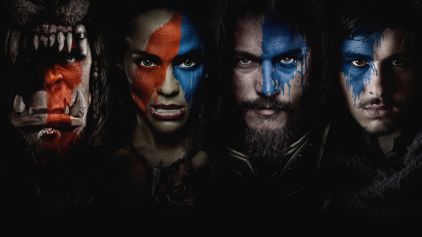


 including some of the most prominent writers of the New Portuguese Literature, as José Luis Peixoto, João Tordo or José Mário Silva. It also includes one of my short-stories, from back in the day, and made me reminisce about my younger years. A lot has happened since then and maybe that’s why I am less tolerant nowadays with some questions young or amateurish writers pose in some Facebook groups I belong to. I shouldn’t. I should be more patient. But I’m not. I just remember not having anyone to ask stupid questions when I started and maybe I’m resentful (poor me).
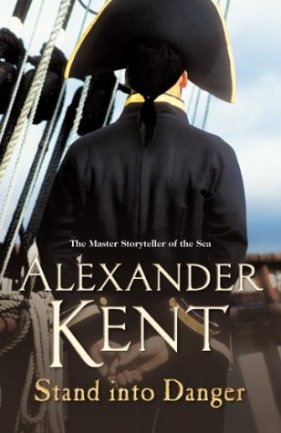 Here’re some reasons to use Third Person, in my view: 1) You want to follow several equally important characters, and it doesn’t make sense, or it becomes too confusing, to be jumping between several First Person narrators. 2) The story has such a scope that you need to follow the whole more often and give weight to the general ‘up-in-the-air’ POV, instead of being stuck to a particular ‘down-on-the ground’ POV. 3) You want to show important things that the character does not know about and maybe never will. In one of Alexander Kent’s novels (probably STAND INTO DANGER), the MC is in love with a woman who is tortured and killed. We know what happened to her and some of the characters around him also know what happened to her, but they let the MC think she just abandoned him and went on her way, safely. This kind of twist wouldn’t be possible, or it would be more difficult, if the novel had been written in the First Person.
 The thread this question generated was filled with polemic and surprising comments. Some people, maybe because they’re addicted to outlines or maybe because they don’t like to feel they lose control, would say it is impossible that something coming out of their wits would do something unexpected. To me, it happens frequently. Characters just ignore what I want and do what they want. What does that mean? It probably means the character is so consistently built it is not coherent anymore to act as I have planned before. Or it means I take the risk of actually empathizing with the character and understanding what he/she would feel in a certain situation, losing a bit of control myself. Or it means that a writer is indeed a bit schizophrenic as David Mamet suggests. But I do believe characters have minds of their own and that’s one of the most difficult things to manage when you write.
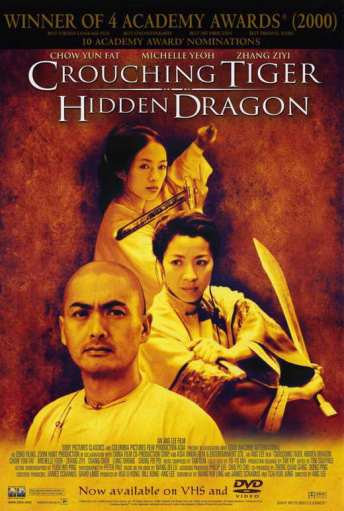 It’s been a few decades since Bruce Lee’s Kung-fu movies conquered the West. Since then, we’ve seen the rise of many talented artists as Jackie Chan or Jet Li. I particularly liked the low-budget Hong Kong phase of Jackie Chan, who was both funny and skillful. Kung-fu movies are a lot like musicals as if you are watching the performance of dancers in carefully choreographed moves, but there’s a kind of life and death tension that gets your attention. And Jackie Chan has a lot of Charlie Chaplin in him as well. But the best movie I’d seen on Kung-fu was ENTER THE DRAGON with Bruce Lee at his best. Until, of course, CROUCHING TIGER, HIDDEN DRAGON. In this movie, Ang Lee picked up most of the Kung-fu movie tropes and made a serious dramatic movie with them. After this one there were several others, like HERO or THE HOUSE OF THE FLYING DAGGERS, but CROUCHING TIGER was the first, I believe.
 But then we have a third act that throws the story into another path. Luo Xiao Hu, a thief from the desert, tries to stop Jiao Long’s marriage and take her with him. We also learn that they were both lovers in the past, at a time the young woman was kidnapped in the desert. This new storyline turns the story upside down and we start understanding why Jiao Long is so keen in getting her freedom.
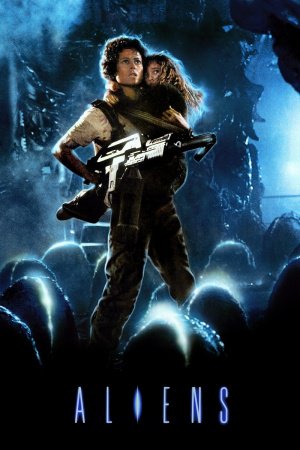 Of course at that point (1986) there was no way of knowing there would be at least 7 or 8 more movies on the infamous alien (if I’m counting the Prometheus and the AxP storylines correctly), so it wasn’t the final encounter by any measure. I actually watched the Cameron movie in the theatre, before I watched the Ridley Scott groundbreaking first installment, and even though I’ve watched both several times since then, I still like the Cameron movie better. But that’s just me: I love military action and I think ALIENS is one of the best Scifi military action movies ever made. And as I watched it last night one more time I concluded three things: 1)Cameron is a really talented director; 2) Cameron, Giler and Hill’s screenplay is really-really good, and; 3) the Midpoint in this movie is very powerful.

 I must also tell you that in my view, THE BOURNE SUPREMACY is in a class of its own. It is by far the best of the Bourne movies, with a brilliant plot that focuses on a wounded warrior looking for closure for the death of his lover. The last scene in Moscow, where he confronts the daughter of a Russian diplomat he killed is a tremendous scene that credits both Damon and Greengrass and which shows the depths of the character in such a powerful action movie. It ends with the wounded Bourne walking to the sunset projected in the windows of the buildings, a shot I always love to watch.
 What I’ve learned about Greengrass’s directing is that it does not live on cutting alone, quite the opposite: it lives on the thread. With all the crazy fast cutting he «doesn’t do random». Every cut is perfected to the maximum so that we never lose the thread. We always can follow where the blow goes, where the next weapon is, where the movement happens. So the thread is the crucial part, not the cuts.
 Hyperjumping