De Palma’s ‘Untouchables’: Laying Down a Scene

Some people still do believe that all you have to do to write proper fiction is to sit in front of your computer and start typing. You know that old Hemingway quote: ‘All you have to do is sit in front of your typewriter and bleed’? Well, I love that quote, but it makes it well easier than it is.  Much of my writing is done away from any writing device. It’s done in bed, sometimes when I wake up in the middle of the night, or in the shower, or as I drive, or as I walk on the beach or take a cup of coffee. Because even after you outlined the shit out of your narrative, even though you know your characters by heart and you are absolutely certain what needs to come next, you still need to lay down the scene. You still need to figure out what’s happening in a scene, the details, the breathing of the scene. Most of the time I won’t be able to start writing before I know exactly how the scene will play out. This is what I’ll be speaking about today.

MV5BYTVjYWJmMWQtYWU4Ni00MWY3LWI2YmMtNTI5MDE0MWVmMmEzL2ltYWdlXkEyXkFqcGdeQXVyMTQxNzMzNDI@._V1_.jpgBrian De Palma is not one of my favorite directors. He directed a few good movies but there is always a thing or two that will bother me in them. In particular, I think he tries hard to do the same things that Hitchcock did and the old master was way better than he ever will be. Still, THE UNTOUCHABLES is a movie I already watched many times and it does not turn me away. Kevin Costner is good in it, and both Sean Connery and Robert DeNiro are superb. And it has a good script. Tonight I saw it again and it made me want to write about a particular scene. They say a good movie always has a Watercooler Moment, that moment you will be talking about the next day with your co-workers by the watercooler on the coffee break. In THE UNTOUCHABLES it is definitely the 9-minute-long Train Station Shootout Scene. You can watch it here.

First of all, the basics. A good scene should have the same structure as the story itself, meaning: Act One – the beginning; Act Two – the development; Act Three – the conclusion. And if it is really a good scene, it will have a build up and a pay off, where the tension is increased until it releases. I spoke of these concepts here.

So let’s look at the scene. Eliot Ness (Kevin Costner) and his man George Stone (Andy Garcia), are going to capture Al Capone’s bookkeeper as he boards a train at 12:05. Both men are well armed as they enter the train station. Ness will be guarding the main entrance while Stone goes across the hall to guard the South entrance. The writer knows this will be the most important confrontation in the movie – if the lawmen can capture the bookkeeper and make him testify, Capone will go to jail. The outline will say something like: ‘Ness and Stone go to the Train Station and capture the bookkeeper.’ But now the writer must make the scene memorable. It must be a shootout that will put the people on the edge of their seats. So he decides Eliot Ness’s position – the hero will be at the top of the staircase, overlooking as much of the train station as he can. As soon as Ness is in that position, the scene will play out from his POV: the camera gives you that effect, but it could be done with words.

tumblr_nxnuukcgrq1qgcarzo1_1280

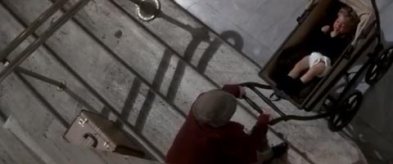
Now, should the enemy gunmen just come in and everybody shoot? Not good enough. Let’s do Act One, let’s build up the tension. Ness sees Stone crossing the train station – he will be too far away to be of sudden help, we gather. There are two janitors cleaning the floor, minding their businesses. What are they talking about? What kind of foul stain are they cleaning on their knees? The clock shows the time: 11:56. A baby cries downstairs. Ness looks down. A lady comes pushing a baby cart with a crying baby towards the steps. She also carries two heavy suitcases. She puts the suitcases down so she can calm the baby down. Through this, we are waiting, just like Eliot Ness is. We are feeling the tension rising as he is.

The loudspeaker warns passengers to board the train. The baby is still crying as the woman is having trouble calming him down. The main doors open. Who is coming? A couple with their suitcases. They go downstairs and around the baby cart, moving away. Nothing here is important, seemingly. There are no plot-points, nothing major going on. But every detail is important notwithstanding. The way the doors open and we don’t know who will enter. The way the loudspeaker urges people towards the train – we know the time is running out. The fact that the mother and the baby are in a dangerous place without knowing, without having a chance to escape… All of this is well thought and plays a part in the building up.

03Then Ness takes notice of a well-dressed man stopping by a pillar. By Ness’s reaction, he must be a gangster. Is he? Slowly, the lady turns the cart around and starts pulling it up the stairs. She puts one suitcase on a step behind her, and then the other, and then she pulls the cart one step. Then she begins again: one case, then another, then pulling the cart one more step. Ness is becoming more and more nervous. More people come in, the clock keeps moving, the main doors open, the speaker warns. A woman comes downstairs and kisses the man by the pillar and they go away. He wasn’t a gangster after all. Finally, a plot-point: Ness decides he must do something about the woman and the child and he abandons his position to help them. As he starts pulling the cart up, the first gangsters arrive. And the Second Act begins. The whole First Act served the essential purpose: it raised the tension.
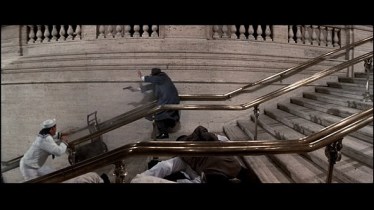
The Second Act begins as one after the other, several gangsters come into the station and go down the stairs. Ness just wants to drag the baby cart to safety but he knows everything is about to happen. He starts pulling it more urgently. But as he is on the final steps another gangster comes in and recognizes him. And the shootout begins. As he shoots the first gunman, he inadvertently pushes the baby cart and it slides down the steps.

untouchables6And suddenly Ness has two conflicting purposes: he must shoot the bad guys to survive and he must get hold of the baby cart before it crashes on the bottom of the stairs. De Palma shoots all this in slow-motion or the whole thing wouldn’t work, there are too many moving parts. But it works: bad guys and bystanders die, and at the last moment Stone comes running from the other end of the station and is able to catch the baby cart before it crashes. Break into the Third Act.
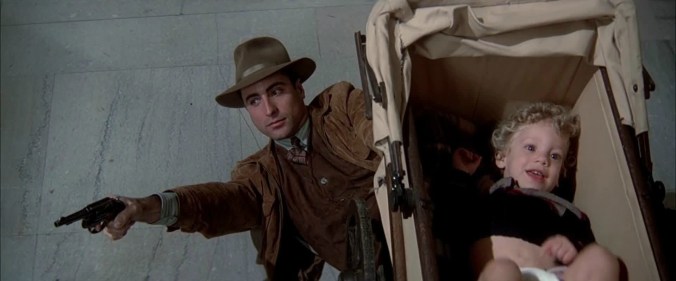

In the Third Act of the scene, there’s a hostage situation. The last gangster holds the bookkeeper at gunpoint and threatens to kill him. The bookkeeper, on the other hand, promises to spill all the beans as long as the lawmen save him. Maintaining his coolness, Ness orders Stone to take the shot and it’s perfect.

the-untouchables-1987-union-station

The Second and Third Acts of this scene might be evident and you would not be surprised to find something similar in a normal action movie. But what makes this such a great action scene is the First Act. The set-up. De Palma confessed he took inspiration for the baby cart from this scene of Eisenstein’s BATTLESHIP POTEMKIN. Was it necessary? Was the baby cart important for the overall story? No. But it was important for the story of this scene. It raised the stakes. It made it different. It created tension.

Can you manage the tension and the energy of your scenes like this? Can you make complex but structured scenes? I try to do it all the time and I’m always excited when it works. Until next time, fellow knights.

Should Writers Get into Politics?

A few days ago I read a post on Facebook asking a similar question. Many would then answer that ‘No. Writers should stay off politics for their own sake. People will be turned off from your books if you’re political.’ I often wonder that myself. A few years ago I was severely criticized by a consulting client of mine for being political: not that I was politicizing the work I did for her – not in the slightest – but still she complained about the political posts I would publish on my personal Facebook page. She even said that she cut me off a project because her client researched my Facebook page and disliked some of my political posts.  ‘Not professional’, I was told. And I guess I wonder as well if I would have more followers to this blog if I didn’t take any political stance at all in some of the posts. If I was famous and very successful, I’d probably wouldn’t need to think about these things (or would I?), but as I’m still making my name, maybe a political stance is disadvantageous and turns away some parts of the market. So let me speak a little bit about what I think about that, please bear with me.

us-constitution

As you may know by reading this blog, I’m a fan of Hannah Arendt. And even if you believe with Weber that the bureaucracies and the System actually protect us and prevent the savagery of the wild, I would still argue that you should believe with Arendt that the System itself is absolutely dependent on the people that operate it and on the Ethics of these people. The Evil in the System, tyrannies and autocracies, come from banal ignorance, superficial opportunism and fear of investment. Let me explain what I mean by this and why I speak of this.

A few months back I wrote here a four-post series about the MATRIX TRILOGY. It shows how those movies inspired me and had a great impact on me. In those posts, I explained how I believe we develop as people and how we can mature into solid, ethical and free individuals. I also say that I believe there are three kinds of people: 1) The submissive slaves; 2) the rebels and radicals; and 3) the Thinking People.

1984_1956-1024x585So, in the beginning, we are taught conformity. Even though as babies and children we feel we are the center of the world, we are taught since the get-go that we need to conform to norms and other people. And it’s important that we learn the lesson, otherwise we will be unable to relate with other people and even ourselves, as we face the frustration of reality. Conformity to norms enables us to live with others and thrive. Remember, it seems the Neanderthals had a bigger brain and were stronger than Homo Sapiens, but our species knew how to work together and face the challenges of the elements by socializing.  However, if conformity goes unchecked, we become submissive slaves, unable to make our own minds about what surrounds us, maybe hiding our more honest opinions deep inside ourselves so not to offend the Other or from fear of retaliation. Still, submissive slaves are de pillars of what Arendt calls: ‘the banality of Evil’. People who will do anything the System will ask of them without much question allow the most catastrophic wrong-doing to happen. They even support this wrong-doing, as we have seen in Nazi Germany.

480342047-56a90ebd5f9b58b7d0f7b923To overcome the entrapment of conformity, we can rebel and break the rules, even becoming radicals. Well, I do believe that this rebellion is very much necessary and enables us to innovate and become better as individuals and as a society. But breaking the rules and rebelling is nothing more than allowing the ‘wild’ to return within ourselves. It’s releasing our inner Neanderthal. But a sustainable System, needing balance, is usually able to counter this rebellion: madhouses and prisons and medications are made for that. I also do not believe that our most wild ‘self’ is our ‘real’ self, as some would argue. Breaking the rules for the sake of breaking the rules brings us nothing but violence and extreme behavior. It’s just another way of conformity, another way of being a slave. Just think of some of the things we are ‘supposed’ to do: in Universities, we are supposed to ‘experiment’, we are supposed to ‘try drugs’, we are supposed to ‘get drunk in parties’ ‘get wild at Spring Break’, etc. Are really all those things ‘breaking the rules’ or just another form of conformity? And how about cops and lawyers that aren’t supposed to ‘snitch’ on each other? Or CEO’s that should be allowed ‘to bend the laws’ to save the bottom line? Or flat-earthers? Or ‘jihadists’? Aren’t all these people another kind of ‘slaves’ to the System, in some kind of illusion of liberty for being ‘radicals’ and ‘rebels’?
An Ethical, whole Human Being, a free person, should be able to rise above both these kinds of conformity and be able to live according to the Reality Principle: understanding that choice is a complex ethical thing, that you have to deal with consequences when you choose freely, but that sometimes the only way to do that is to break the rules, and sometimes it is important to obey the rules. This is the core of what makes us Human. Our ability to think in a complex way – taking into account feelings and emotions, other people, principles and laws, ethical standards, etc.

What does all this have to do with politics? Arendt found out in the 20th Century that the origins of totalitarianism reside in the abnegation of political life from a considerable portion of the population. Meaning: when a considerable portion of the population starts to detach itself from politics and focus on their own narrow lives, political stupidity rises to the center. Populists with charismatic traits and easy stupid ideas that merely sound good become able to move the masses of submissive and rebel slaves alike. As people stop thinking deeply about complicated things it is easy to mislead them by going against what’s uncomfortable or unpleasant. Submissive slaves want nothing more than being comfortable; rebellious slaves want nothing more than being pleased. And yet, most important issues are complex, and most useful and effective solutions are uncomfortable or unpleasant. Populists just need easy answers to raise the crowds, and populism is the first step towards totalitarianism.

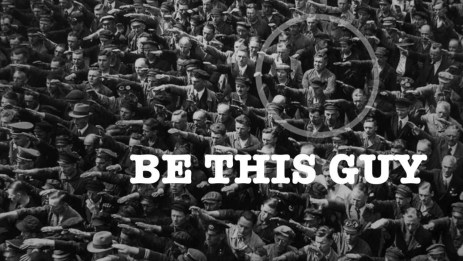
bethisguyHow can we counter this? We can counter this by becoming Thinking People. People who can make complex and intelligent choices. And then, we must become engaged people. We must count in a political world. We must be heard. And it will become uncomfortable for us, and it will become unpleasant. But if we are engaged we can change things, and we can prevent something horrible or disastrous to happen – just by being engaged along with many others we engage and inspire. Our opinions matter.
Fiction exists to educate. Since the beginning of storytelling, this is so. All I am as a writer is because of what I read, what I watched, and what I heard. And what I thought. Could I be more successful if I avoid politics altogether? It may seem so at first glance, but it would be a perversion of all that I believe in. I believe we must get engaged. And what I believe in constitutes my Voice. And before I knew my own Voice, my writing sucked. Read about it here.

Am I wrong? Even wrong opinions are important and should be voiced – I would love to talk to you some more about ON LIBERTY by John Stuart Mill and freedom of expression, but I’ll do that another time. See you around the next campfire, fellow warriors.

Catharsis and Finishing up: ‘Use the Force, Luke’

I’m writing an article for a Portuguese magazine on how to finish a story and I thought I’d write something of the sort up here. First things first. I see many people intensely focused on getting the first sentence right – I believe, in my heart, that the last sentence is far more consequent. You are able to forgive and forget an average or mediocre first sentence – as long as the first scene is good, the first sentence doesn’t really have a lot of weight, that’s what I believe. You can start with ‘It was a dark and stormy night’ all you want – very few people, I believe, would stop reading because of that. The last sentence, however, will be responsible for your reader’s lasting impression of the book and will have an impact on the Word of Mouth we all need. This said, this post is not about the last sentence so much as the last full Act altogether.  The last Act is where it all fits together and that’s one of the most important parts. In my view it’s not necessarily the most difficult part – I actually think the second Act progression to be more difficult to achieve. When we start a story, or at least when I start a story, I usually know Point A (where the protagonist is starting) and Point B (where the story will end). Being able to steer from one to the other in an interesting way is, on the whole, the hardest challenge. However, the final Act has its own difficulties and that’s what I’d like to talk a little bit today.71o0tgiz5zl._sx425_

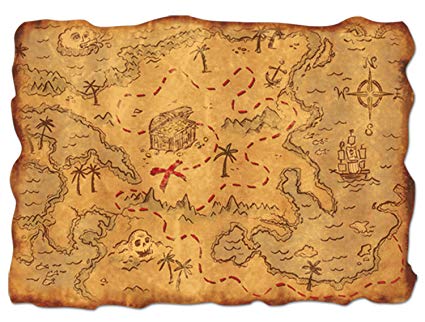
A story is like a treasure map. The reader starts at the edge of the map and starts following it until he/she reaches the X. The X is the place where the treasure is buried, the last few pages, and if the treasure is not there, the reader will feel furious and frustrated. So whatever we do, we have to show the reader the treasure he was promised. Some people believe this to be a ‘happy ending’, but that’s not true. The treasure is not a happy ending, the treasure is Catharsis.

Let’s go back a few thousand years. Aristotle believed that the genesis of tragedy, and subsequent dramatic narratives and (let’s say) fiction writing as we know it today, started in religious rituals, in traditions linked to Dionysius. As people reveled in storytelling, they would purify their souls with the emotional jolt, mostly unhappiness (but let’s argue for happiness as well), at the end of the narratives. So Catharsis is that thing we feel at the end of a story when heroes triumph or perish.

rocky-iv_610_0I remember when I was 15 or 16 I went to watch ROCKY IV with my brother at a theater and that moment in the end when Rocky finally was able to punch the seemingly invincible Drago and draw blood the whole theater went wild and jumped in their seats. Also, every time I watch Zwick’s GLORY I cry at the end when the whole Regiment is slaughtered. This is Catharsis – this emotional jolt you get from stories. And that’s the treasure we promised our audience. To get it we have to invest and carefully build-up our characters so people care about the final situation. But it’s the final Act that will deliver the blow.

We must make sure that the final Act is satisfying. I often speak (see here) about a plotting tool I use, called the Snyder’s Beat-Sheet. The problem is that Blake Snyder’s 15 beats finish with these mysterious items: Break into Three; Finale; Final Image. Three beats that don’t tell you a whole damn lot about what to do in the Final Act. I only use the BS2 when I’m in trouble and need help figuring out what to do at a certain point – and Snyder’s last beats are not of much help – they just don’t tell you much. Fortunately, Snyder had a trick up his sleeve, what he called The Five-Step Finale. He said that you should look at a finale in terms of ‘Storming the Castle’. So here are the five steps:

  • THE PLAN – The hero and his team come up with a plan to ‘storm the castle’, to solve the final problem. Remember in STAR WARS that last Resistance meeting where they plan the raid on the Death Star and show the plans and tell everybody about that shaft where you could put a bomb in and blow everything to smithereens? That’s the scene.
  • THE OPERATION BEGINS – Following the plan, the hero and the team ‘storm the castle’. In STAR WARS the attack on the Death Star commences.
  • IT’S A TRAP – As the attack continues, the hero and the team face failure as they see that what they want is not there, or it is impossible to achieve. In STAR WARS it becomes clear, as the fighters are destroyed one by one, that the task of reaching the shaft on the space station will not be achieved. No-one seems to be able to reach the target.
  • THE NEW PLAN – It’s time for the hero to come up with a new plan, overcome difficulties and go for the gold. As Luke Skywalker dives towards the Death Star, the voice of Obi-Wan comes into his mind and says ‘Use the Force, Luke.’ Luke has seen that the other pilots were unable to find the target using the computer, so he turns it off and decides to use the Force.
  • VICTORY – The hero executes the new plan and finally wins. Luke uses the Force and shoots into the shaft, blowing up the Death Star. He won.

Snyder’s Five-Step Finale is very useful when we are planning a satisfying ending. I usually try to have the protagonist face as much danger and hardship he cans at the final battle/challenge (could be a love story, works the same way). And if I planned it well and did my job, then the Final Image at the end will complete the full circle from the Initial Image at the beginning. See, for instance, in ALIEN: Ripley was awoken from crio-sleep at the beginning of the movie, and she goes back to crio-sleep, now alone with her cat, at the end of the movie. Or LOTR: Frodo and his friends were living happily on the Shire at the beginning of the story, and they are again happy on the Shire at the end, even though struggling with their scars.

rotk2438

The Full Circle is an important standard, but there is something even more important. People sometimes ask: can I or should I kill my MC at the end of the story? I normally reply: it depends on your Theme and your Message. I spoke a little bit about this here. What is the Message you want to convey? What is your Theme? Your whole story should be saying something. It should reflect something you want to say. And the best way to have a consistent ending is to understand exactly what you want to say. The underlying Theme of STAR WARS is, one way or another, Man against Machine. So the ending of the movie must be Luke defeating the Machine of the Empire, the Death Star, Darth Vader, using Human instinct and the spiritual Force. He turns off the computer because he is better than the computer. And he must live. If he had died at that point, the Machine would have won. The same reason for the MC’s to have died at the end of ROGUE ONE: because it is a movie about Sacrifice for a higher cause.

anh_luke-xwing

Well, that’s all I have to say about Endings at this point. Don’t forget to dot the ‘I’s and cross the ‘T’s, and take care of all loose ends. And good luck to you, fellow warriors. I hope this was useful. See you around the next campfire.

3 Mysterious Writing Phenomena

The-Script-WriterThere are a few things about writing that are a mystery to pretty much everyone who never tried it. There are a few phenomena, in my experience, that happen to many or even most fiction writers that seem wild and almost crazy for someone on the outside. Something like Writer’s Block is commonly known and widely discussed. But there are other things that happen that not even writers understand, many figuring it is something that only happens to each of them. Over the years I have been meeting more and more writers and talked with many about their writing and confirmed that these kinds of phenomena are not a figment of the imagination. So today I’d like to talk about three of these things – see if they make sense to you.

  • THE SORCERER’S APPRENTICE EFFECT

film3_3You know that Disney short movie in FANTASIA where Mickey Mouse plays the Sorcerer’s Apprentice who tries to wield his insipient magic to complete his domestic tasks by enchanting brooms and scrubs, making them wash dishes and clean the kitchen, and then they get out of hand and the apprentice loses control and soon the whole place is flooding and plates are breaking and everything becoming chaos? Well, sometimes that happens with our writing. I’m speaking in particular about the characters and how they sometimes refuse to do what we ask them to do. Maybe the Sorcerer’s Apprentice is not the right metaphor, as in the movie this happens because of the incompetence of Mickey Mouse, and in writing it happens, I believe, in spite of or because of a high level of competence of the writer.

Here are a couple of examples: in a recent WIP I had plotted that Character X would save the protagonist in the last Act. For that, Character X would have to get separated from his group in a fight. However, as I wrote the fight, it didn’t make sense that Character X, because of several of his characteristics, would be in a certain position and get separated – it would have become a mess. Instead, I took a seemingly major step (but actually quite simple to take) and decided to have Character Y get separated, and he’s the one appearing in the last Act and doing the saving.

Let me give you another fictional (but maybe better) example of the phenomenon: imagine a woman who comes home and finds her husband in bed with another woman; now, you have plotted the story and it requires that your character just runs out of the house and runs into the man she will eventually fall in love with. The problem is that you have been carefully building your female character and making her grow and even have some rebellious streak in this or that scene – and as she finds her husband with another woman, your character stops obeying your orders: she doesn’t want to run away, she wants to confront her husband right there and expel him from the home she mostly paid over the years. But if she does this, she won’t run into her new love interest. And now you have a problem. Should you ‘force’ her to run away? Or let her stay and fight?

Many people see this problem as a plotting/outlining problem, and thus it denounces a lack of preparation. I don’t see it that way. First, because not everyone is an Outliner, some people need to be looser as they write, and preparation will restrain their spontaneity and creativity. Second, because as you yourself get involved with your characters, you make them more real and you start adding small details and characteristics that you hadn’t thought of before, characters start moving in directions that are richer but not intentional. In my view, if you are doing the right things and writing from your heart, not only from your mind, you will have better characters and better stories. Characters become organic. And as characters become organic, you lose a bit of control over them. That may give you plot problems, and that’s a curious phenomenon. But you shouldn’t either feel incompetent nor overwhelmed – just fix the problem, either by re-writing the character or changing the plot. Remember: if you encounter this phenomenon you are doing something right.

  • THE EMOTIONAL LINK

hombre-triste-598x425Say your story is developing very well. All the plot points were at the right places and happened just as you planned, and your characters have become bigger and fuller and richer and stronger. But then you have to kill one of them. It’s imperative. Your story demands it. But as you start to write the scene where the painful departure is going to happen, you feel anguish and sorrow. As you write it, your eyes swell and you start to cry. You are still writing and it’s incredible that you can even do it as tears flow down your face. You have to stop for a few minutes to dry them until you are able to resume your writing. As you finally finish and your beloved character is dead, you feel an overwhelming sense of loss. It’s as if that character was a real person. A person that really died in your life. But how silly is that? It came from your imagination, right? It was your puppet. Why is it affecting you so much? Is this normal?

I think anyone who ever cried at the end of a movie or jumped in triumph when the hero overcame impossible odds must be able to understand this phenomenon. Studies say that we experience in our brains the same things a character experiences on the screen or on the pages of a book. It’s that amazing identification phenomenon usually called ‘The Suspension of Disbelief’. To ‘enter’ the story and the characters, we suspend in our minds the obvious truth that those events are not really happening. Writers, however, must go much deeper than the usual audience. They must develop a true Emotional Link with them. I think it was David Mamet who said ‘Writers must be a bit schizophrenic.’  This happens, in my view, for two reasons: a) the characters we create are projections of our inner selves, our angels and demons inside of us, and; b) to make characters and scenes writers must ‘incarnate’ a character just as much as an actor does.

I think each of these reasons deserves a post for itself in the future. I’ll speak of Freud as the basis for a). As for b), I will probably write a post on Stanislavski’s system and Method acting. What do you think?

  • THE CAESURA EFFECT

1_egox2guxetol69ep_wmpcwHere’s a strange one. So you’ve been writing for a while, maybe years, on that book you really wanted to write. You are coming to its end and you have been satisfied with all that’s been done until then. But suddenly, as the end approaches, the doubts start to appear. Is it good enough? Have I made the right choices? Will anyone like the story or the characters? And the act of writing itself becomes more and more difficult. Maybe you get blocked and can’t sit down to write any word at all. Maybe you procrastinate and find any excuse not to write. Because every time you sit in front of the computer it seems the weight of the world is on your shoulders. And as you get closer and closer to the end, it all becomes harder and harder.

This is what I call the Caesura Effect and I have been talking and writing about it since the 1990s. It happened to me several times before I identified it as a real phenomenon. What happens, I believe, is that you start to realize, consciously or not, that sometime in the near future you will lose control over your text. You will want to release it to the world, have it read, maybe publish it. And that feeling of powerlessness over the evaluation and criticism of others, that feeling you may be rejected, starts to become real to you. And if you invested a lot in your work, as you should, it will scare the bejesus out of you. But you must overcome it. You must cut the umbilical link. You must understand that if you never finish your story and free it to the world you are betraying yourself, your work, your characters, and your story. None deserves such a fate. If it becomes really hard to do the work just write it without care until the end and finish it anyway. You will have time to re-write afterward and submit it to an editor. If you do it after you have a few beta-readers going over it, better still. I promise you will be much happier if you do this. Finishing writing a novel or another great work is a feeling close to an orgasm. You will not forget it.

And that’s it, fellow warriors. Do you recognize these phenomena? Have you experienced them? Do drop a line and tell me about it. See you around the next campfire.

The 21st Century by 2018: So Far So Good

As we approach the end of another wild year, it came to me that in some respects we are actually living one of the best beginnings of a century in a long long time.  Today, at the final post of the year, I will analyze it by the war track. So far, this century has avoided a catastrophic war – a war involving many nations, including some of the better armed and ferocious on the planet. How have the latest centuries fare in that regard? Let’s take a look. For management’s sake, I’ll focus mainly on Europe, where the most destructive powers on Earth were usually based.


1_2aw9452tX_RTr8Uq5wqQvw.jpeg

The 16th Century by 1518:

The 16th century didn’t start particularly bad. There were a few wars all around. My motherland Portugal, for instance, was busy fighting the Mamluks and Ottomans and other hostiles in the Indian Ocean. But armies and navies were not numerous and in spite of some intense battles, casualties were not massive. In Europe, the Great Wars of Italy were going on, pulling in powers like France, Spain, England, the Holy Roman Empire, and many others. The first 18 years of the century saw the fighting of the Second Italian War and the War of the League of Cambrai. We can safely say this was a hell of a mess, but most of the fighting was done in Italy, so much of Europe was spared the general destruction. Still, many men of many nationalities were lost and many families suffered from it.

30_year_war

The 17th Century by 1618:

At the start of this century, the horrifying Japanese Civil War that brought the rise of the Shoguns was blossoming and the famous Battle of Sekigahara happened in 1600 with casualties amounting to tens of thousands (at least two or three times the casualties of WWII’s D-day). Still, in Europe no major wars were going on, even though the Dutch and the Portuguese were fighting over their colonies, and the Poles and the Swedes were at each other’s throats. There was also the end of the Long Turkish War that plagued the south of Europe until 1606, but nothing of the sort of what was about to be. By the end of 1618, though, the bloody Thirty Year War had started. A war that ended up killing more than 8 million people all over Europe, consuming most of Germany and Austria, and drawing in France, England, Spain, Denmark, Sweden, Hungary, and many other nations.

1028970_slice

The 18th Century by 1718:

Between 1701 and 1714, another major war was fought in Europe: Charles II of Spain died and his throne was left to the son of France’s Louis XIV, Le Roi Soleil – that triggered a major conflict, the War of the Spanish Succession, implicating Spain, France, England, Portugal, Prussia, the Holy Roman Empire, the Dutch Empire, etc. Many hundreds of thousands are estimated to have been killed in battle, devastating large portions of many European countries.

Napoleon_returned

The 19th Century by 1818:

By 1818, the 19th century was already catastrophic, seeing the worst war ever fought all over the World. I’m speaking, of course, of the Napoleonic Wars. One of Napoleon Bonaparte’s many innovations was the ability to raise immense armies. It is said that his Grande Armée reached over 1,000,000 men just before the invasion of Russia in 1812. Nothing like this had been seen before and the destructive power of this kind of army, with its modern canons and firearms, was breathtaking. Many millions were dead by 1815, including military and civilians from more than a dozen nations from North America to the Indian Ocean, and Europe was devastated from Moscow to Lisbon. In the last battle of the war, the Battle of Waterloo, in 1815, more than 50,000 casualties fell in one day.

apocalypseWorldWar1

The 20th Century by 1918:

But it became a lot worst. By 1918, the record for the worst war ever had once again been toppled. More than 30 million people died in Europe between 1914 and 1918 in World War I. In the Battle of the Somme alone more than 1.2 million fell to the ground. Once more, nothing of the sort had ever been seen. Battle after battle, campaign after campaign, each claimed hundreds of thousands at a time. It was a complete catastrophe, implicating dozens of countries and destroying half of Europe. It’s now known as the second-worst war in History, left behind only by the terrifying WWII.

So we can now safely say that the 21st Century judged by its first 18 years is probably the most successful, peaceful and progressive century in at least 500 years. Especially in Europe. If many now believe the Europeans to be pacifists, preferring diplomacy and soft power to the military and hard power, this happens because of our bloody past over the last millennia. I think that in spite of the horrible events that plagued other continents, we can risk the statement that Europe is the continent more devastated by war in History. And of course there are wars going on right now, and tragic ones for that matter, but if you analyze the record above I believe that you will agree that the wars we are facing, and have faced over the last few decades, are nothing compared with the seriousness of the ones behind us.

But why has the 21st Century been different? Why is Europe mostly at peace at the moment? I’m sure there are many factors, but four of them come to my mind:

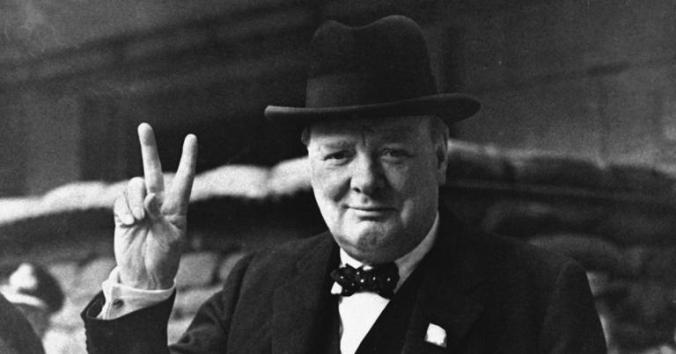
  • The European Union – A United Europe is an idea coming from the great mind of Winston Churchill himself. In his groundbreaking speech at the University of Zurich in 1946, he explained how it was essential for peace that the European powers stick together. And the fact is: treaty after treaty, what the European Union is today seemed almost unimaginable just 50 years ago. Today, 28 countries have relinquished some sovereignty to make it possible to create a powerful democratic block of 500 million people. Who could have guessed it could be this successful?
  • NATO – The Western powers are the most impressive and mighty military force on the planet. And their strength protects one and all. 29 countries that are committed to each other and that will come in aid of any that is attacked. 29 countries that are allies instead of rivals.
  • The UN – An organization committed to peace on Earth, in spite of all the criticism, has been a forum to discuss what divides the nations and a way to prevent grave conflict.
  • The Liberal Agenda – Once more I praise the philosophy that stands for democracy, equality, freedom of expression, freedom of religion, the Rule of Law, freedom of association, freedom of sexual orientation, etc. It’s a philosophy that has gained ground in the last few decades and which seems particularly successful in opposing war or, at least, finding alternatives to it.

19jul16

Nothing is assured, though, and it is really troubling that the arsenals of weapons have been growing considerably all over the planet. I’m not sure that there ever was such an arms race without the eventual use of the weapons. It is also scary how Europe itself seems unprepared for a major conflict, which can be closer than we think. Still, as we come to the end of another year in this strange and intense century I have to say: so far so good. There is still time to prevent the worst, I guess. Cross your fingers and fight for what’s right. See you next year.


5 Xmas Movies

So here we are again at this time of the year. Twelve months ago, when this blog was still at its infancy, I wrote about why I celebrate Christmas. Here it is. This time, however, I’ll speak about another curious ritual: Xmas Movies. It seems there are these films that for one reason or another, we end up watching again and again in late December. I’m sure you have a few favorites but I’ll focus on 5 that come to my mind, even though some of them you wouldn’t be able to drag me to watch again if you pulled a gun to my head. Still, these are movies you can see on TV every year, so prepare yourself. I hope you enjoy the list.

  1. HOME ALONE

home-alone

Do you know that story about the boy who had a big family that inadvertently left him alone in a big house as they traveled for the holidays and then he defended it from burglars using his MacGyver-like skills and wits? You do? Well, it might surprise you that no-one did before 1990 when this Chris Colombus film featured an amazing Macaulay Culkin and a hilarious Joe Pesci. You have probably now watched it dozens of times or others like it. It’s still a fun movie to watch, actually – it’s funny, moving and tender – if you manage to convince yourself to watch it. You can revel on Culkin’s pseudo-Dirty Harry one-liners as: “Are you thirsty for more?”

  1. IT’S A WONDERFUL LIFE

its_a_wonderful_life_still

This is the last or one of the last movies Frank Capra ever made. It was a massive flop at the Box Office, but now it’s one of the classics everyone knows. I watched it for the first time when I was a young teen and promised myself never to watch it again as I wept like a little baby. I still weep like a little baby watching it, even though I only did it once or twice more. It’s another movie that lives of a tremendous performance by a tremendous actor – in this case Jimmy Stewart. It’s actually also a very dark movie before being positive.  Capra had gone through life-changing experiences covering World War II and this movie has a strange kind of maturity to it, while still retaining his particular kind of naiveté.

  1. LOVE ACTUALLY

8173d1P7CPL._SX355_I’m always baffled that this Richard Curtis ensemble movie became such a success. I find it deeply flawed. It’s always difficult to make an ensemble-short-story-pastiche work and this movie seems to work for far too many people, in my view. It actually annoys me that it became a sorta-classic-Xmas-movie. Most of the too-many stories in the movie are very poor, in my view, but I have to say there are a few that I still enjoy taking a peek at. The central PM-Hugh Grant and the help-Martine McCutcheon plot actually seems funny and solid. It has nothing to it, but it’s well… nice. And it works. However, the better parts of the movie are, in my view, three other tender and clever plots. First, the delicious sorta-love-story between the rock star played by the brilliant Bill Nighy and his agent played by Gregor Fisher – it’s a story both surprising and improbable. Then, the short Martin Freeman and Joanna Page plot about two body-doubles that fall in love as they interact pretending to have sex in movies. And then, for me the most entertaining and intelligent story, the one where Liam Neeson runs to support his teenage son’s first love. That one I really like – with the background of the death of the characters’ wife and mother, it becomes such a good story about the bonding of father and son. It’s too bad I have to suffer through the whole lot to watch these bits. But that’s Christmas…

  1. DIE HARD

die-hard-poster

I watched this McTiernan movie in the theater as it came out in my teens. I loved it from the start and it’s still one of my favorite movies. It actually changed the paradigm on these kinds of action pictures for at least two reasons: 1) the good guy got hurt; 2) the bad guys had names and faces – they weren’t just some red-shirts dying a dime a dozen. Curiously enough, it also became a Xmas classic – how can you forget the McLane’s last kiss to the sound of Frank Sinatra (or was it Bing Crosby?) ‘Let it snow, let it snow, let it snow’? It also made Bruce Willis a movie star. The movie is very well built with realistic believable characters and very balanced emotional energy: it has the right amount of drama, the right amount of action and the right amount of humor. This movie is always a blast to watch and I try not to miss it at Christmas time.

  1. THE SOUND OF MUSIC

Sound_of_Music_-_Maria_on_the_hill

This Robert Wise picture is an incredible movie. It’s a classic by all accounts and a deserving classic too. Very well written and performed, I don’t believe there is a movie-goer in the planet that never watched this one. Rogers & Hammerstein’s quintessential songs are amazing and amazingly adequate to the story – based on the real story of the Von Trapp singer family that, as far as I know, fled the Nazi annexation of Austria in the 1930s. I know that many will be irritated by the regular screening of this movie at this time of the year, and many will perhaps hate it by now from sheer fatigue, but if you ever happen to watch it with a clear mind I think you will see how good it truly is. Each scene is a treat, and this is one of those movies I often talk about in screenwriting classes because of its classic and flawless format.

And so here it is. A small list of movies I happen to watch from time to time at Christmas. Tell me what you think and what you generally watch at this time. And meanwhile, Merry Christmas!! Enjoy your family and your friends, and rest, for a change. See you around, fellow warriors.

‘The Alex 9 Saga’ and Interwoven Plotlines

Let me do something I usually don’t do. Let me write two Creative Writing articles in a row. Forgive me the laymen.  Last week I wrote about ‘Melodic Writing’, a concept about layered writing I picked up from Virginia Woolf, and today I’d like to introduce another concept about writing: ‘Interwoven Plotlines’. I want to do this because today I woke up and picked up one of my novels from the shelf and felt like reading it for a while. ‘You still read your own writing, you narcissistic prick?’ Yes, I read my own writing. I’ve written it because it was fun, it’s still fun, I’m still reading it from time to time. And as I hadn’t read THE ALEX 9 SAGA for a while, I was surprised by some of what I found. This time I was positively surprised (I hope I am still able to write as good as I did), by how effective one of the most troublesome and intensive techniques I used was. I’m speaking, of course, of the Interwoven Plotlines.

A Saga de Alex 9

Interweaving plotlines is a very common thing for a writer. You have a plotline, with a particular POV, characters doing their own thing, and then you stop and present a piece of another plotline, with another character and another POV, and then bring back the story to the initial plotline, and the initial POV, or maybe even a third one and so on. Why am I saying ‘plotline’ and not ‘storyline’? Because a storyline could mean a different story. Your B-Story or C-Story. A plotline is a different POV but could be the same story. Like two cars that are speeding for very different reasons (fleeing from a robbery and taking an injured party to a hospital, for instance), into the same intersection where they will crash. So, in my view, plotlines are not necessarily within the same storyline, but they could be. Now back to the interwoven thing. There are many advantages to the Interwoven Plotlines technique, here are some:  1) It enriches the story, giving you more background and diversifying the POV’s; it also allows the story to breathe and grow, becoming larger and larger as it implicates more characters and more events. 2) It helps the build-up towards an important event – as we see the points of view getting closer to this event we get emotionally involved and when it happens it will have a larger emotional impact. 3) It allows you to increase or decrease the rhythm of the story. Let me focus on this last point.

The rhythm of a story, in my view, depends essentially on two things: the action itself and the succession of plot-points. Plot-points are those moments that actually advance the story. You can have a high rhythm if you are describing an intense action scene, but you can also grab the reader by doing something that will change the relationship between the characters, like a kiss or an argument. When you interweave the plotlines you can always have one of those things happening. Or you can also stop one of those things from happening, by changing the plotline at the height of the emotional graph, for instance – what we regularly call ‘cliffhangers’.  Let me tell you what I did in my novels.

Bruno_Martins_Soares_K (1)

In THE DARK SEA WAR CHRONICLES each chapter was actually very contained – in the sense it almost reads like a sequence of short-stories. Each chapter has its own POV, never changing for that piece. So even though it is intense and goes to ‘page-turner’ status at some points, I don’t really use the Interwoven Plotline technique for rhythm in these books. That is deliberate. I wanted to have a slower paced story, slowly building towards the end, and so all I used were plot-points and action sequences to increase the pace. I had several storylines and plotlines, to enrich the story, but the pace was not much changed by this, I think.

In LAURA AND THE SHADOW KING the technique shows up a little bit more, one storyline is slower than the others and the whole story becomes more intense by interweaving the plotlines – so even though JJ Berger’s team is quietly having lunch with their allies, Maria and her daughter are desperately running away from their captors, going from one POV to the other changed the rhythm. Doing this I could also use the slower pace of one plotline to stop an intense scene and this way inflate a cliffhanger. Like this:

Maria closed the door, went around and sat behind the wheel. As she was about to turn the key and start the car, she heard a sound.

                ‘Shhhh!’ She whispered to her daughter.

                Something was outside. They waited a moment. There it was again. A familiar sound. What was it? Hoofs! It was hoofs! And the next moment, at the entrance of the shed, they saw a figure that almost made them scream. A man, on a horse, with an AK-47 in his hands.

*

‘Coming into the square.’

                ‘Eyes on, 1-1. You’re doing fine. You have multiple subs 150 meters East.’

                ‘Roger that, Zero. Popping smoke.’

                ‘Copy.’


As I changed the plotline, I stopped one sequence and it became a cliffhanger.

All this may seem pretty obvious to you. But what I re-appreciated today was how I did it in my ScF/F-trilogy THE ALEX 9 SAGA. I actually have more than a hundred characters and dozens of plotlines in those 600+ pages and they are relentlessly interwoven.  In some cases, a plotline doesn’t get more than three or four lines before I trade it. A normal editor would never let me go through with it. But it went through and it got published (alas, only in Portuguese, so far). The effect is of a roller-coaster. It is confusing sometimes and I bet some people get annoyed here and there, but in my view it’s worth it: it just doesn’t stop. The rhythm is tremendous. There’s always something happening, always action, always cliffhangers – big and small. It feels like you are falling over a waterfall, unable to stop.  Some of it, I remember, was actually inspired by the TV series 24 – if you recall, the Jack Bauer thrillers were also relentless in their pace and used the Interwoven Plotlines very well.

CapaAlex

I remember it took me a long time to intertwine the plotlines correctly. It was one thing that I invested a lot of effort in. I used a lot of foreshadowing, jumping ahead and coming back again – always to keep the pace very high. Also, the fact that there are so many plotlines makes you feel like the story is immense – it is epic. And when it works it feels awesome to me! I also used small plotlines, with characters that would appear and die in a few paragraphs or a couple of chapters, to intertwine with the MC’s plotlines. That way I could make cliffhangers almost as I pleased and always have action and plot-points on the page. I had at each chapter from two to six plotlines interweaving. It got messy at times! But also enjoyable, in my view.

As I write this today it becomes very obvious that I will again use this high-paced Interwoven Plotlines’ technique in the future for sure. It’s a lot of fun to write and to read, even though it takes a lot to get it right. I hope all this makes sense to you and that is useful. Writing is fun. I promise. See you around the next campfire.

On Woolf and Melodic Writing: Rhythm and Editing

First of all: hail to all editors. Editing is an art I have undervalued for a long time and which I never really had a lot of luck with. I always edited and proofread my own work even though I knew I had ‘a fool for a client’. I’m not good at editing. I’m not good at proofreading. But I did not have any good options. Editing is not given much importance in the Portuguese publishing world, as far as I’m concerned. Only now do we see people actually asking for that kind of professional care. At least that’s my experience. So it took me all these years to finally have some experts editing my work. And a couple of first experiences weren’t that good. But now they are: I have a couple of editors working on my texts, both in Portuguese and English. And I am particularly happy with the editing of my new novel LAURA AND THE SHADOW KING.

o-virginia-woolf-facebook.jpg

But there are a few things I do that editors are not particularly keen to accept or understand – so I had a few struggles about this with the ones I work with. Let me speak to you today about what I call Melodic Writing. It’s something I picked up long ago from Virginia Woolf and then Jack Kerouac, and which I noticed many brilliant writers practice, even if maybe they are not aware of.

Virginia Woolf is one of my favorite authors. Even though I could never get into some of her work, as ORLANDO, other pieces still blow my mind. TO THE LIGHTHOUSE is one of my favorite novels. But the first book of her I read, back in my twenties, was THE WAVES. And I was completely struck by the opening to the book. Let me transcribe the first two paragraphs:

sea-01

The sun had not yet risen. The sea was indistinguishable from the sky, except that the sea was slightly creased as if a cloth had wrinkles in it. Gradually as the sky whitened a dark line lay on the horizon dividing the sea from the sky and the grey cloth became barred with thick strokes moving, one after another, beneath the surface, following each other, pursuing each other, perpetually.

As they neared the shore each bar rose, heaped itself, broke and swept a thin veil of white water across the sand. The wave paused, and then drew out again.

This is a beautiful piece, by any standard. But there is one thing that absolutely blows my mind each time I read it and completely changed the way I write: even though you can develop an image in your head of the waves reaching the shore… you can also feel them. Please read the opening again, but now notice one thing: the sentences feel as waves themselves. They have a cadence so well structured that it is as if the sentences themselves are waves. Look particularly at the last wave:

As they neared the shore each bar rose, (the wave swells)

heaped itself,  (it peaks)

broke and swept a thin veil of white water across the sand. (it stretches across the sand)

The wave paused,  (the wave stops, as stretched as it can be)

and then drew out again. (and then goes back.)

This is brilliant writing. Every comma, every stop, every word is there for the specific rhythm you need. There’s no rule to that. If you edit this text with the idea that commas have a specific function and should be put here or there because of some rule, you might just ruin the whole thing. It would be easy to take out the last one, for instance, and just have: «The wave paused and drew out again.» But that is not what happened: «The wave paused – comma – and drew out again.» And suddenly the sentence pauses as well and mimics the action of the wave.

I don’t know if anyone ever studied this in Literature classes. I never did. But as far as Creative Writing is concerned, this melodic writing is extremely powerful. Remember when I spoke about Pragmatics here and the fact that every single thing, every single omission, every single word has an effect on the text? Remember I said that subtle intelligent writing lives of the subtext, of what’s implicit? Melodic Writing takes this to a whole new level. It works on your unconscious. It taps into your emotions at another level. And it’s not just Woolf that does it. I recognized it later in Jack Kerouac, for instance, in LONESOME TRAVELER, as he describes in several pages how a railroad worker runs to catch a train. And in Hemingway. And in Whitman. Here’s a verse from SONG OF MYSELF:

The smoke of my own breath,

Echoes, ripples, buzz’d whispers, love-root, silk-thread, crotch and vine

breath

 I don’t know about you, but the second sentence seems to me as a cloud of smoke moving through the air out of one’s mouth.

I believe Melodic Writing is a thing. I don’t know if writers do it on purpose or by instinct, but they do it, and some in a really brilliant way. So I’m very careful with people that tell me that one sentence is unnecessary or a particular word is excessive. Rhythm takes precedent. Editors have a difficult time understanding me on this. I think I’m finally working with one that is starting to understand. Let me give you an example from my own work (far inferior to the other examples, but bear with me).

The soldiers were trying to convince the injured nurse to let herself be carried on a blanket and she was trying to convince them she could walk. Then, a gunshot sounded in the next room and everyone shut up.

In this text, the first thing that my editor tried to get rid of was the word ‘Then’. Unnecessary to editors, of course. It just seems not to convey any information. The impact, she said, is conveyed by the dry sentence: A gunshot sounded in the next room and everyone shut up. But the thing is: ‘Then’ mimics the shot. It is there for a reason. I could just have said: Bang, a gunshot sounded in the next room. It just manipulates the rhythm and the attention span of the reader towards a specific event.

This may not seem a lot to you, but in the overall writing, it has an impact. And as it gets more and more refined, it has a higher and higher impact, just as the opening of THE WAVES had on me. I hope one day I’ll be able to write that well. Kudos to Woolf. I’ll keep training and applying and admiring from afar.

Call to Action – LAURA AND THE SHADOW KING – Chapter 2

My friends, on February 9, 2019, I will be launching the first volume of my new novel LAURA AND THE SHADOW KING at Amazon. It’s a kind of zombie-apocalypse military action thriller with an emotional side to it, as usual. Here’s the blurb:

In a world devastated by a rampant maddening disease, Lieutenant J.J. Berger takes his Special Operations team into Southern Portugal to search for his lost comrades.  His path will cross with a mysterious woman and her little daughter, escaping from their captors. They might hold the key to a better world.

Today, I start a new phase, that of recruiting my Launch Team. The team is made up of volunteers that will receive the whole book a month in advance and complete tasks like: download it for free when the time comes and post an honest review at the Amazon book page. Anyone willing to do that, please subscribe to the Launch Team list by clicking here:

 LAUNCH TEAM LIST.

For now, let me give you a taste of the book. In three posts I will be showing you the Introduction (Chapter 0), Chapter 1 and Chapter 2. They are all independent – you can read them as you wish. I hope you like it!


LASK1

***

LAURA AND THE SHADOW KING

2.

Maria flinched. She could see the way Dmitri looked at the little girl playing on the ground and she froze, terrified. It was a greedy look. A drooling look. She wanted to scream, and her heart was racing. And then she made the mistake. She knew it was a mistake as soon as she made it. But the instinct was stronger than her. She stepped forward and called her daughter, and the little girl looked at her, held her arms out and let herself be lifted by her mother. Maria glanced at Dmitri and knew what she’d done. She should have kept her cool. She should have ignored that predatory look. Now he knew she knew. He knew she would stand between him and the girl. And that put them both in danger.

That episode made Maria even more determined. She made her plans. She knew the moment they’d find out her secret they’d take her daughter away and she’d never see her again. So, she had been plotting for weeks. And that’s when they’d brought in the soldiers.

She had been sent to take care of one of them, to treat him, and she’d done just that. And, in a rare lucid moment of consciousness, the soldier had turned to her and said, ‘Mérci. Mérci.’

‘Je vous en prie,’ she replied automatically in French. And he had smiled and squeezed her hand. She felt he was putting something in her hand and she looked and saw a device with a blinking red light. She feared it was a grenade or something and immediately jumped to her feet, dropping it on the floor. She looked at the device then at his eyes and understood she was wrong. It wasn’t a grenade. It was a tracking device or something. She looked around to make sure no-one else had seen it, and quickly picked it up and hid it in her skirt.

‘Allez Ouest,’ the soldier had said. ‘Go west and tell them.’

She didn’t really know who or what she was supposed to tell, but the soldier was well dressed, well fed, well equipped, and looked like soldiers used to look before. So, suddenly, she had a place to go. Another place, a chance for survival, surely a better place than here, in Dmitri’s court. Her plans looked much better all of a sudden.

But now she knew she had to be quick. She couldn’t take her time, she had to act. Each moment they stayed they would be in danger. Dmitri could decide to separate them at any moment. She knew he would, eventually. She was surprised he hadn’t yet. Maybe he thought she would cooperate better if she kept her daughter close. But now, after her mistake, he would soon change his mind. He would think that he could control her just as well if he separated them both. And he would be right. And the girl would be at his mercy. Maria shivered at the thought. It had to be now. It had to be tonight. And she was ready.

*

Boris was a nice young man with blond hair and blue eyes. She knew he craved her, and she had led him the best she could without putting them in danger. She had talked to him, so she listened and smiled, and he touched her hair in a sensuous way when she knew he was looking and nobody else was paying attention.

He was a mechanic. Some time ago, Maria, already planning to escape, had asked Dmitri for driving lessons. She wanted to be useful, she said. But he had been firm: no driving lessons, she was very useful already. So, Maria turned to Boris. In her seductive way, she had convinced the boy to give her private driving lessons. His first instinct was to say no. If they got caught it would mean their lives. At least for Boris. Something even worse for her, perhaps. But she had been convincing. Very convincing. She knew he was thinking the driving lessons would lead to something more pleasurable. And so, he said yes. And the first one would be tonight.

She couldn’t take any provisions or anything else, because they would know. No. Nothing more than an apple and a pocket knife and a compass. That night she looked at her daughter, lied to her and gave her a sleeping pill. Maria had considered only giving her half a pill, for fear it was too much, but the risk would have been much greater if the amount was too little and the girl woke up at the wrong moment. So, she gave her the whole pill with some sweet chamomile tea. The rest of the pills had gone into the tea and she poured a cup for Virginie, her . . . what to call her? Maid-guard? The young woman was nice and helpful, but she also would’ve betrayed her in a heartbeat. Soon, the maid was unconscious as well. For a few hours, at least.

Then Maria took some warm clothes, hid them under her regular clothes, picked up the sleeping girl and left the building before Dmitri or Alexei or any of the others noticed.

If she had timed her plan correctly, Bartosz, the huge Polish assassin who watched her all the time, would be in the toilet. That was his only flawed routine. Every night, exactly one hour after he had dinner, he would go to the toilet for eleven minutes precisely. But that was enough for Maria to slip out before he saw her.

She walked through the shadows, avoiding the eyes of the armed men and women around, and went to the outskirts of the town—a ruined Spanish village where the force was staying. To the northwest, there was a large abandoned factory where she had agreed to meet Boris. It was far away enough to be isolated, but still inside the guarded perimeter of the group.

She didn’t go directly through the front gate. She went around to the back entrance. And her heart started pounding as she anticipated what she was going to do.

She looked for some thick bushes and laid the little girl down under them. As she looked at her face, sleeping soundly by the moonlight, she felt like she couldn’t breathe. She was leaving her daughter, her whole life all alone, fragile and vulnerable, on the ground behind the bushes. If something happened . . . But this was the moment to risk everything. If they didn’t manage to escape all was lost. Gathering her strength, Maria covered the child with some vegetation, protecting her as best she could, then went back around the factory and entered the building through the main gate.

Boris was there waiting for her with an old black Volkswagen Golf he’d fixed himself. He smiled as soon as he saw her, and she forced herself to smile as well, trying to seem as relaxed as she could.

‘Nervous?’ he asked.

‘Very,’ she said.

‘How long do you think we have?’

She shrugged. ‘Twenty minutes. Virginie is looking after my daughter, but if she sees I’m gone . . . Maybe half an hour.’

‘That’s plenty,’ he said, opening the passenger-side door for her. ‘Come on.’

She was a little disappointed he didn’t put her at the wheel immediately, but she decided to play along. She got in and Boris went around and got behind the wheel. He looked at her.

‘You look very pretty tonight.’

She smiled and looked away. Just a little bit more, she thought.

Boris turned the key and the car started.

‘I’m going to take you around the factory so you can see what I do, okay?’

Her heart missed a beat. This was going to take too long.

‘Why can’t I do it myself? I don’t know if I’m going to understand what you do.’

‘Don’t worry. Just pay attention, okay?’

Maria nodded. She had to play along. If he became suspicious, everything would fall apart.

Boris put the car in motion. ‘See that pedal on the left?’ Boris said, starting his lesson. ‘That’s the clutch. See how I press it before I change gears? That’s going to be one of the most confusing things for you, so see how I do it.’

‘Hmm-hmm.’ She looked at the fuel meter instead. It was only a quarter full. But there was nothing she could do about that.

‘See . . .’ continued Boris as he drove slowly around the empty factory. ‘I use my left foot only for the clutch and my right foot manages both the gas and the brakes.’

‘Hmm-hmm.’ This was taking too long. ‘Why don’t you let me try?’

‘Just a little bit more.’

‘No, we don’t have much time. Please let me try.’

He looked at her and she smiled at him, looking excited. He hadn’t seen her that excited yet. He hesitated. If something happened to her, he was dead. But he had been the one to suggest this. Or had he? He was still undecided when she put a hand on his arm.

‘Please?’

It was enough. All his doubts evaporated with her warm touch. She was so beautiful.

‘Alright,’ he said, stopping the car. ‘Get behind the wheel.’

Her smile widened and he stepped out of the car and went around as she climbed over the gearbox to the driver’s seat. And then she did something unbelievable. She leaned back and locked the passenger’s door. Surprised, Boris tried to open the door, unsuccessfully.

‘Maria? What are you doing, Maria?’

And then she locked the driver’s door and started the car.

‘Maria? Please stop kidding around. We don’t have much time.’

And then he saw her looking at him and watched her lips form the words, ‘I’m sorry,’ and his whole world crumbled beneath him.

Before the disease, Maria had known a very good life. She grew up in a big beautiful house with two older brothers and two shaggy old dogs. Her father was not rich enough to be famous but was rich enough to have expensive tastes. And his main hobby was cars. Racing cars. He raced in amateur competitions on the track and on the road. And he taught her. Since she was ten she had been competing in kart races. When she was sixteen, she’d been racing in rallies. And as soon as she sat behind the wheel of that VW, she remembered everything. Everything was as familiar as brushing her teeth.

She put the car in first gear, stepped on the gas and released the clutch. The car jumped forward, leaving poor Boris behind, screaming in desperation.

‘MARIA!’

The tires were old and the car was made of spare parts, but it worked. By God, it worked! Maria sped toward the back of the factory and went through the fence without losing speed. She turned left and stepped hard on the brakes. The car stopped in a cloud of dust. Maria jumped out.

‘MARIA! STOP!’

She could see Boris running after her. She had to be quick. She pushed the bushes aside and felt the relief flow through her as she saw the little girl still there, safe, still asleep. She picked her up. She was warm, she was breathing, she was safe. Maria ran to the other side of the car and tried to open the door, but it was still locked. She’d forget to unlock it! ‘No! No!’

‘MARIA!’

Boris was running and running.

Maria went around again.

‘Mommy?’ The girl was waking up.

‘Everything’s alright, baby! Everything’s alright!’

Boris was now fifty meters away or less.

Maria went into the driver’s seat, carrying the girl in her arms, and she twisted and the girl hit her head.

‘Ai! Mommy!’

‘I’m sorry, baby!’

‘Mommy!’ the girl protested as Maria almost threw her into the passenger seat. ‘You hurt me!’

But there was no time. A bruise was a small price to pay for freedom.

‘I’m sorry, baby.’

The car had stalled and she turned the key and the car wouldn’t start. It wouldn’t start! And Boris was there. She locked her door.

‘Maria! Stop! Stop, Maria!’

He tried to open her door and he couldn’t, so he looked down and picked up a big stone! Maria turned the key again and again. But the car vibrated and choked, and Boris swung the stone and smashed it against the side window. The glass broke all over her.

‘AAAAAAAAAH!’ cried the girl.

‘Nooo!’ cried Maria.

And Boris dropped the stone and tried to grab the wheel, but then Maria turned the key once more and stepped on the gas, and the car started and the wheels turned and it jumped forward.

‘MOMMY!’

‘STOP, MARIA!’

But she wouldn’t stop. She shoved his arm away and drove through the bushes into the muddy road, and he tried to hold on to the car but couldn’t and got scraped off by the branches. Maria drove away as he fell to the floor.

‘Everything’s okay, baby. Everything’s okay.’

Maria sighed with relief, feeling the cold air running through her hair and looking at the open road in front of her. The easy part was done.


nmD_tUZc

Call to Action – LAURA AND THE SHADOW KING – Chapter 1

My friends, on February 9, 2019, I will be launching the first volume of my new novel LAURA AND THE SHADOW KING at Amazon. It’s a kind of zombie-apocalypse military action thriller with an emotional side to it, as usual. Here’s the blurb:

In a world devastated by a rampant maddening disease, Lieutenant J.J. Berger takes his Special Operations team into Southern Portugal to search for his lost comrades.  His path will cross with a mysterious woman and her little daughter, escaping from their captors. They might hold the key to a better world.

Today, I start a new phase, that of recruiting my Launch Team. The team is made up of volunteers that will receive the whole book a month in advance and complete tasks like: download it for free when the time comes and post an honest review at the Amazon book page. Anyone willing to do that, please subscribe to the Launch Team list by clicking here:

 LAUNCH TEAM LIST.

For now, let me give you a taste of the book. In three posts I will be showing you the Introduction (Chapter 0), Chapter 1 and Chapter 2. They are all independent – you can read them as you wish. I hope you like it!


LASK1

***

LAURA AND THE SHADOW KING

1.

For a second it felt like paradise. Maybe more than a second. I could feel the sun burning against my skin and the breeze taking away the heat, and the sea chanting nearby. I’d taken a swim in the Atlantic Ocean a few minutes before and felt the salt drying on me. The fresh Coke in my hand took care of the thirst. I looked around. The island was like a mountain in the middle of the sea. It was green and lush. The city crouched against the amphitheater-like geography, culminating on the harbor down where all the vessels rested in safety. The sky was clear and the sea was calm. The island didn’t have many beaches, but the pontoons around the bay allowed us to dive and swim in the open sea.

Madeira Island used to be Portuguese. It surged out of the Atlantic Ocean at about the same latitude as Casablanca, eight hundred miles southwest of Lisbon. Its remoteness had spared her three hundred thousand peaceful inhabitants, but now another two hundred thousand or so not-so-gentle folk were squeezed in with them.

‘LT?’

I looked over my sunglasses at the orderly in fatigues.

‘LT, you’re called to Major Dalton, sir.’

I sighed. I was supposed to have the whole week to myself. It hadn’t lasted two whole days.

‘ASAP, sir,’ continued the young man.

‘Has a nuclear bomb fallen somewhere?’

‘No, sir.’

‘Maybe a carrier sank or something?’

‘Not to my knowledge, sir.’

‘Then don’t ASAP me, Coulter. I was promised absolute R&R for a week. Major Dalton can fucking wait.’

‘Just doing my job, sir.’

‘Okay. Dismissed.’

‘I’m supposed to impress upon you the urgency, sir. Exact quote, sir.’

‘Coulter, seriously, fuck off. I’ll be there in a few minutes.’

‘Yes, sir.’ He saluted and went away.

I sighed and laid down my head on the chair once more. Just for thirty seconds. I looked around, gathering the energy to get up. All around the pool of what used to be, and still felt like, a five-star hotel, the servicemen and women of the Coalition were relaxing as they could, drinking strange cocktails and laughing at each other’s jokes.


I noticed Paige Drexler in a corner. She was showing that perfect body of hers on a lounge chair with her back toward the sun, her bikini lines branding her beautiful skin. She seemed relaxed, but I could tell the rest of the story just by looking at her. Beneath her sunglasses, she was passed out. Probably drunk as well.

I called the waiter, signaling for the check. He came around with the piece of paper and a pen.

‘What room, please?’

‘212.’ I didn’t have to pay the bill, but I picked a couple of notes from my wallet and gave them to him. ‘Listen, see that woman over there?’

‘Miss Drexler, sir?’

‘Yes. She’ll be sick if she stays like that in the sun. Would you please take her to her room?’

The waiter took the currency. ‘Yes, sir. Of course, sir.’

‘Don’t take too long.’

‘Of course, sir.’

‘Thank you.’

‘Anytime, sir.’

I got up and put on my shirt and slippers. As I passed by Paige’s chair, I noticed she had a new tattoo. On her shoulder blade. A Navy SEAL trident inside a heart. Of course . . .

*

I went to my room and put on the uniform before I went to find Dalton.

The hotel had been designed by a legendary architect, the same that designed the capital of Brazil, as it turned out. It rested near the ocean, up the cliff. Next to it, designed by the same architect, was a strange-looking cuneiform building that used to be the casino. Now it was the Coalition’s HQ, filled with offices, desks, desk jockeys and the like. They made a heliport on the top for Little Birds, and another on the gardens for heavier helicopters. Blackhawks and Ospreys were always coming and going from there, as well as black Escalades, brown Humvies and other cars coming and going from the parking lots. Other hotels were bases for all kinds of officials, lab rats and other military personnel, so the activity was constant.

Who would have known a few years prior that the island would look like this now?

*

The first outbreak happened six and a half years before, somewhere in Africa. It had spread fast and been deadly, killing about 38% of the world’s population. It lasted for almost a year before a vaccine was found, and that was enough to collapse the fabric of our civilization. Energy faltered, then water, then everything else. The climate changes going on, including the drought in the south and the rising seas everywhere, didn’t make anything any easier. Still, the disease had been defeated and mostly eradicated.

It wasn’t finished though. A second strain surged out of Asia almost immediately. It wasn’t airborne as the first, so it was less deadly, but it spread through bodily fluids and infected wounds, and didn’t kill the subjects but made them psychotic and extremely aggressive. The real damage had been done by the first strain, and chaos was the norm by then, but this strain made reconstruction basically impossible. Those infected wandered around in the wilderness. They were called zombies at first, but actually they behaved more like apes, violent apes. Still, they wandered around almost everywhere, eating almost anything and competing with other wild animals.

Civilization survived. It fled to the colder places, where the virus didn’t spread well. People survived around Canada, Alaska, Siberia, Scandinavia, Scotland, Greenland, etc. But that’s mostly it. The US collapsed, as well as Europe, Africa, Central and South Asia, Central and South America, Australia . . . Most of the world.

At first, the countries tried to take care of themselves, but soon it became obvious that only an international effort could help the situation. Then the main defense was assured by the UN, but soon NATO had to take over, using its strength and military organization to protect and evacuate huge numbers of people. After that, other countries asked for help and the organization expanded to Australia, Japan, Korea, and India. China and Russia tried to fend for themselves, and we didn’t know much of what happened to them. Most other countries, however, joined what became known as The Coalition.

We hadn’t given up. Several Forward Operating Bases had been set up all over Europe, supported by more than thirty bases in isolated islands on the Atlantic Ocean and the Mediterranean Sea. Little by little we had been cleaning up territory and reclaiming sovereignty. Still, we all knew the score: we were no closer to finding a cure for the disease and, without one, the only real alternative was containment.

*

I identified myself at the entrance and went up to the last floor of HQ, where I had to identify myself again before they let me into Dalton’s office. He was the SOCOM C.O. on the island, and so, my C.O. We had a multitude of teams that went into the wilderness for a multitude of objectives. My team’s specialty was contact with local militias, and I expected this mission to be no different.

After being announced, I knocked on the door.

‘Come in.’

I went in and saluted him. He pointed to the chair and I sat.

‘How are you, JJ?’

‘Pissed.’

‘Sorry I took you off the pool.’

‘Yeah, right.’

‘I need you to go in.’

‘No shit. Where?’

‘Southern Portugal. Your territory.’

‘Algarve?’

‘Further north. We have a team missing.’

I frowned. That was unusual. ‘A whole team?’

‘A whole team.’

‘Who?’

‘Fournier and the Belgians.’

I frowned even more. ‘Those guys are pretty good. How long have they been dark?’

‘Seventy-two hours.’

That was a lot. Communications weren’t as smooth as before. Satellites and satellite communications had failed maintenance for years, so there were a lot of flaws. Still, southern Portugal wasn’t the worst place in the world, and not too far from the ocean. They should have been able to contact somebody.

‘What were they doing out there?’

‘Can’t tell you.’

I raised my eyebrow. What the hell did he mean by that? ‘You can’t tell me?’

‘Something’s going on. You need to report to General Rajani up in N6.’

My eyes widened. Hemal Rajani was a top-notch General, one of the top brass in SOCOM. What was he doing in Lisbon?

‘Rajani?’

‘Yeah. Your team here?’

‘In PS.’

‘Well, get to PS and take the transport to N6 at 1500. You’ll be briefed over there, but you’ll probably be dropped in Alentejo tonight. So, get geared up.’

I nodded. Then I had an idea. ‘I could use an extra hand, if you can spare it.’

He looked at me, annoyed. ‘I’m not sure I have a lot of extra hands. Who did you have in mind?’

‘Paige Drexler.’

He frowned. ‘The English girl? Are you sure?’

‘I’m sure.’

‘What the hell, JJ? Is she even trained?’

‘She worked with Davis, you know that.’

‘Yes. And I never questioned it because I knew they were a pair, and they were doing their own shit and Davis knew what he was doing. But, damn . . .’

‘I know what I’m doing.’

‘But is she well? She lost her whole crew.’

‘She’s upset, but she deserves to get out there as soon as possible. She deserves a chance.’

‘I thought you didn’t even like Davis.’

‘I respected him. He was one of the best. He was one of us.’

‘You sure you want her?’

‘She’s a good operative.’

‘I don’t know who trained her. Do you know who trained her?’

‘No-one knows. Black ops somewhere. But she’s good. I’ve seen her out there. She has the best eyes I’ve ever seen.’

Dalton smirked. ‘You mean, green?’

I smiled a little. The bastard . . .

‘I mean she sees everything. She spots trouble before anyone else. And she’s smart. And she knows languages. I can use her. Morris is not coming back for a while.’

‘Okay, take her. Just don’t be late. 1500 out of PS.’ He picked up the phone and punched the numbers. ‘I’ll get you a Blackhawk. Get a steak or something, get Drexler and get ready. I want you downstairs at 1300. Now, get going.’

‘Yes, sir.’

*

I went to the hotel’s front desk and waved at a receptionist.

‘Hey, Mario. I need your help.’

‘Of course, sir.’

‘I need you to get the master key and unlock a room for me.’

He seemed uncomfortable. ‘A room, sir?’

‘Just do it, Mario. Major Dalton’s orders.’

‘Yes, sir. Which room?’

‘103, I think.’

The man picked up a card and we boarded the elevator. Mario was very uncomfortable.

‘I’m going to leave on a mission today, Mario. One of my team members is drunk and asleep. I need to get her ready.’

‘Yes, sir.’ He seemed satisfied with this.

When we got to the room, we knocked a few times, but, as predicted, no-one answered. So, Mario opened the door.

Paige was on the bed, still in her bikini, sound asleep.

‘Paige. Paige.’ She didn’t react, so I got closer. I sat on the bed and shook her a little bit, and the next thing I know I had a 9 mm pointed at my nose. Jesus, she was fast! But I was faster and I was sober, so I rolled to my knees and up, twisted her wrist, took the gun, and she immediately rolled over, jumped, and was up and ready on the other side of the bed.

‘Hey! It’s me. It’s J.J. Berger.’

She finally recognized me. ‘King? Bloody hell!’ She felt dizzy for a moment and had to grab the wall.

‘Hey. Take it easy,’ I said.

‘What the fuck are you doing here?’

‘I need you to get ready. We have a mission.’

She was surprised. ‘A mission? Me? What the hell do you need me for?’

‘I’m a man short.’

She still didn’t believe it. ‘Why me? I’ve been out of it for weeks.’

‘I don’t know. Major’s orders. Come on, we’re having lunch. Downstairs in twenty.’

‘King, for Heaven’s sake . . .’

‘Wheels up at 1300, so hurry up.’

‘Fuck. What time is it?’

‘1215. Let’s go.’

‘Fuck, King, give a girl a break, will you? Let me powder my nose and shit. I’ll be down in twenty.’

‘Don’t be late.’

‘Go to hell.’

*

Twenty minutes was enough for me to have a long hot shower (my last hot shower for a while, I figured), put on my fatigues, get packed and go downstairs to the restaurant—a large hall with huge glass windows with a great view over the ocean where officers of several original armies were starting to have lunch.

Paige showed up two minutes late, just as I was starting to get annoyed. She looked clean and ready, dressed in Portuguese army fatigues, a bit greener than mine, with her sleeves rolled up above the elbows. She used to have shoulder length red hair, but after Davis’ death she cut it short. She also wore a black US Navy cap and black cut-off combat gloves. She saluted me American style, probably something the SEALs taught her.

‘Sit down,’ I said. ‘You want a steak?’

She took her cap off and sat. ‘Sure.’

Madeira Island had limited agriculture because it was so tiny and rocky. Still, the Azores had been isolated as well, and even though much of its beef went to the Canadian colonies, we had a regular provision of meat, milk and cheese here on the island. Madeira even had a brewery that produced some light beer and soda. So, I ordered a couple of steaks and two orange-flavored sodas that had barely any orange in them.

I looked at Paige. She looked okay, if not for the black around the eyes.

She leaned back and looked at me, too. ‘You used to be an NCO before you were an officer?’ she asked me.

‘Yes.’

‘Combat promotion?’

‘Field promotion, yes. About a year ago.’

‘Good for you. So, whose idea was it to get me an assignment?’

‘Dalton’s, far as I know.’

‘I bet. Does he even know my name?’

‘He has a file on you.’

She smirked. ‘He does not.’

‘You worked with Davis, you think he wouldn’t have a file? He probably feels you should start earning your keep again.’

‘And he puts me in Shadow team? I think not.’

The waiters brought the steaks with fake mashed potatoes and the sodas. The mashed potatoes had probably expired, but the meat was enough for me, and they’d found onions God-knows-where, which was brilliant. We started eating.

Bon appétit,’ she said.

After taking a few bites of some really good beef, I turned to her again. ‘Look, what I need to know is that your mind is in this thing. Is it?’

She looked at me. ‘Yes. It is.’

‘How about the rest of you?’

She almost laughed. ‘You tell me. You took a good look.’

I clenched my teeth, irritated.

She stopped smiling. ‘I can handle it. I’ve been working out. A bit too much, actually.’

‘Target practicing?’

She hadn’t, I could tell.

‘I’ll be alright.’

I stopped eating and looked deep into her eyes. ‘I need you to have my back, Drexler. Can you handle it?’

She stopped eating too and looked back deep into my eyes. ‘I’ll have your back, .’ And she was serious. ‘Thank you,’ she added.

That was good enough for me. I wiped my mouth and prepared to leave. ‘Good,’ I said, getting up. ‘Let’s grab some bananas, we need to go.’

She looked at her steak, half-eaten on the plate, and hesitated. Finally, she picked it up with her fingers, put the beef in her mouth like a dog, and got up, ready to go.

I laughed and turned away.

*

A few minutes later we flew along the eastern coast of the island on a Blackhawk toward PS. I looked at Paige sitting across from me and could see she was nervous. She had her suppressed German-made G36 rifle on her lap, the mag off, and was pulling the bolt from time to time. She had her cap pulled to her ears and her expression was troubled. When I saw her look outside and pull the bolt a few more times, I looked behind my shoulder and saw we were going past the Funchal International Airport, a scary one-runway-airport surrounded by sea on three sides and a mountain on the other. We called it FUX, for short. That’s where most of the planes coming in would land. Mostly people coming to help in our efforts or survivors collected from the mainland. We even had a regular flight to and from Canada. It was also heavily defended and scrutinized. No-one with signs of infection would pass those gates or the guards with the .50s on the checkpoints.

It had also been where, a few weeks before, an unsuspicious passenger coming in from somewhere in southern Spain had detonated a powerful bomb and killed Paige’s whole team, including Matt Davis, her fiancé, along with twenty-three others. She had been there but at a distance, and she had been thrown and dislocated a shoulder, but remained untouched otherwise. Physically, I mean.

No-one could understand what that bomb was about. There was no claim from anyone, and no-one knew of any terrorist groups capable or willing to do something like that. It disturbed us all.


nmD_tUZc