The Fallacies About Capitalism and Why They Matter

So, I’m late again with my post. This weekend I was busy at a kick-off event for the multinational I work for. Thousands of people crammed up inside a theatre listening to tired old speeches about beating the market. I was not impressed. It is sad to acknowledge the deep problems of coherence many organizations seem to suffer from. As I think I’ve told you before, I don’t believe in the Left-Right Political Spectrum in today’s world. I made an XL table a while back listing a few political parties in the Western world and what they believe in (I write about it here). I ended up identifying the most with the American Democratic Party, even though that would make me left-wing in the US and right-wing in most of Europe. But even this identification with a kind of liberalism is vague and somewhat incoherent as well: the great struggles of our day are not between Left and Right anymore. They happen in two different arenas: in the first we see the geopolitical fight of the Liberals, defending the ideals of the American Constitution (the Rule of Law, Freedom of Expression, Freedom of Religion, Democratic Values, etc.), against the National-Traditionalists, defending a return to a more divided, nationalistic, religious-based kind of world. This struggle is the most urgent and scary, as defeat can take us back to the environment that gave us two disastrous World Wars – actually, three, if you count the Napoleonic Wars – and would also leave us helpless against such global threats as Climate Change.

freedomequalityindependence-1280x518

The other arena is a deeper and less obvious struggle. Along with the rise of Liberalism we saw in the last 200 years the rise of modern Capitalism. True capitalism, no matter what some people may say, has been here for millennia. In the ancient world, some landowners would ‘lend’ their properties and cattle for others to work them, getting back most of the ‘profits’ of that deal. Ancient Roman Empire, as recent studies show (it seems there were more stores found in Pompeii than actual homes), was based on an intricate system of international trade. Ancient Chinese Emperors had to ban interest-taking for the massive impact it was having on the unregulated economy. And some authors suggest that the Magna Carta would have never been possible in England if it was not for the rising merchants emboldened by some liberalization of financing.

GettyImages-748344213-5bca50f646e0fb0026e39d63Still, modern capitalism with its limited liability companies, public shares, banking system and innovative drive is a considerably more sophisticated animal. This animal has accompanied Liberalism through its journey, inspiring an economic rise of Humanity that was unthinkable not long ago. It has also been blamed for much of the misery going on in the world. Left and Right political stands have been judged by the way they viewed Capitalism. For some, the ‘capitalistic spirit’, or work ethic is too opportunistic, materialistic and egotistical. For others, it is called ‘The American Dream’ and is almost synonymous with happiness. In my opinion, both these views are based on actual fallacies, undermining the true value of Capitalism and blinding us to what actually are the illnesses of our society. Let me speak a little bit about these.

  1. The Fallacy of Competition – it is said that Capitalism is based in competition and that this is prejudicial to most people. That is not true: Capitalism survives just as well in economies dominated by monopolies or oligopolies – meaning: with little or no competition. In truth, at the center of Capitalism we have collaboration. Before the 18th century, the chairs we sat on, the pens we wrote with, other tools we used, the shoes we walked with, they were all made by one professional or a small group of artisans with their helpers. After the Industrial Revolution and the advent of Modern Capitalism, a simple pen demands the work of thousands of workers around the world: the ones that designed it, the ones who made the plastic, the ones who worked the factory, the ones that did the advertising, the ones that transported them to the shops, the ones who sold them at the shops, etc. Maybe the main virtue of Capitalism is actually its ability to instill collaboration in the workers of the world. The fallacy of competition, however, suggests that dangerous competition is the cause and/or justification for all kinds of unfair disloyal cruel and inhuman practices. All in favor of profit. But profit as a need is itself a fallacy.nationalism-carving-up-the-earth
  2. The Fallacy of Profit – a very common fallacy is that the function of all companies is to create profit. That is a lie. Management theoreticians have known for decades it is not so. Peter Drucker, father of modern management said it: the function of companies is to satisfy the needs of their customers. Profit is the function of capitalists – it is what they aim for. But workers work for their salaries, customers want their products, suppliers want their pay – the profit of the company doesn’t really interest them much. The economy does not live on profits, no matter what people say. If today all the companies in the world awoke without a cent of profit the economy would still thrive for a long time, or at least solidly survive for a long time, as long as those companies didn’t have a cent of loss either. A ‘break-even’ world would still be a functioning capitalistic society – Buffet’s Berkshire Hathaway, for instance, is famous for never paying dividends, investors only earn with the valuation of their investments. Just as most countries in the world survive with deficits, many companies also survive and keep the economy going even though they do not have profits. And the fabric of our society, small or very small companies, often just pay the owners their salaries, not depending on profit for success. What is important is the health of the company. If the company is healthy, profit is a natural fruit and reward. This leads us to a third fallacy.
  3. The Fallacy of Growth – the owners of companies believe that if these do not grow they will perish. But, as with profit, growth happens when a company is working well, not the other way around. There are studied cases of companies that haven’t grown for centuries and still remain healthy and profitable – they are even legendary in their own markets. But the capitalist buying shares on the stock market wants to profit from the growth of the company after a few months, selling it again, without regard for the health of the company itself, jobs, customer satisfaction, strategic investment, etc. The pure capitalist will remain immune if the company falls apart after he departs – even if no one else will.
  4. And then there’s the Fallacy of Private Sphere against the Public Sphere – as if they are actually different and independent fields, putting in check one another and balancing the corruption of the system. I’ll speak of this last fallacy another time: it is the basis of the Left-Right Fallacy. Looking at successfully integrated societies as the Nordic European countries, we wonder if we haven’t really cracked the macroeconomic enigmas already, overcoming this fallacy.

18

Only when we understand that on the left and on the right we have been misunderstanding Capitalism for centuries will we be able to leave behind our blindness and be able to tackle what’s actually wrong with our societies: the debris of aristocratic thinking that plagues most organizations (more about it here). We need sustainable systems, not greedy sociopathic ones. But ‘Small moves, Ellie, small moves.’ See you around the next campfire, fellow warriors.

On Feminism: Not an Ode To Women

First things first: I haven’t watched neither CAPTAIN MARVEL nor ALITA BATTLE ANGEL yet. I intend to watch both – and I probably will identify more with the latter because it is a story I know (see here) and love, unlike the Marvel hero, which I never followed nor have a specific affinity for. But the polemic about these movies, particularly the first, has climbed to a different level, far above the appreciation of this or that film. It is also not alien to the fact that this week we celebrated the Day of the Woman, and also to the fact that the Rights of Women have been gaining deserved attention in the last few years. I always thought of myself as a feminist of sorts, so here’s what I have to say about all this.

CM_Teaser_1_Sheet

In a basically unrelated matter, I have been having problems with my car. It’s in the shop, it has been for a month, and the insurance company has been dragging its feet to the matter. I spoke about this to a family member who basically said: ‘I should rely on the goodwill of people and just talk to them, the insurance company, and they would probably help me.’ I felt annoyed. In my experience, things rarely get solved that way. But I understood one thing: in the experience of that family member, doors are easily opened and knowing the right people will assure you will be helped and successful. What this family member does not understand is that she is privileged. Privilege in our society reinforces itself and makes the privileged believe that other people will do what is right for them most of the time. They don’t recognize that that is privilege itself: being naturally helped in situations where others would be ignored or nudged away. Privileged people even believe that this is their own merit – that they are able to be effective by doing things in a different way, in a successful way, in a positive way.

Being a white male in the Western world is being privileged. Women and black people and others have been trying to tell us this for a long time, but it is almost impossible for us to understand it. We just don’t experience it. I could understand in a world where the dominant individuals would need to wield a sword or push a plow that women would be at a disadvantage, as unjust as that may be. But today? When most jobs are not physically intensive and many rely on intellectual power? It is abhorrent to me that women are paid less for the same work – just because they are women. It is abhorrent to me that women have more barriers to climb the career ladders than men – just because they are women.  It is abhorrent to me that they find it more difficult to choose what they want to be, more difficult to be free – just because they are women. And this in the Western world alone. It is impossible for me to even imagine what a woman has to go through in other cultures.

Last week I had a meeting with a British investor, a man of Indian ascent (yes, I work for a living). I told him the negotiations we were engaging were difficult because we had eight people on the other side. ‘Eight?’ he raised his eyebrow. ‘You told me they were four.’ I shook my head: ‘Four brothers and sisters, plus their spouses.’ He sighed in disgust: ‘Their spouses? Why? If there are men who are married, their women have no business negotiating any deal – it’s the man’s job.’ I couldn’t believe what I was hearing and the meeting went south from then on. This was last week, my friends, not in the 1800s. Sometimes we forget that it was only in the last few decades that the most advanced societies in the world gave women the right to vote, the right to own property, the right to decide on conjugal matters, the right to have a job, to go to college, to keep the money they made, to get loans, to get married to whom they decide, to make decisions on their own bodies, etc. In many other countries, these rights are not yet asserted at all.

votesforwomen

And this without even mentioning the abhorrent subject of sexual harassment and other types of violent behavior. Men suffer from sexual harassment and other types of harassment – these problems are hardly discussed and as they differ in nature from women’s sexual harassment, they are not in anyone’s radar. They are clandestine and ignored. Much as sexual harassment over women was so ignored for so many years. But the nature of harassment to women is for sure much worse, pervasive, perverse and grave. With the unveiling of characters as Cosby, Weinstein, Trump and many others, sexual harassment to women is becoming more and more obvious and fought against. It’s about time. And still, on the other hand, the large majority of victims of other crimes as domestic violence and sexual assault are women. It’s time to stop that as well.

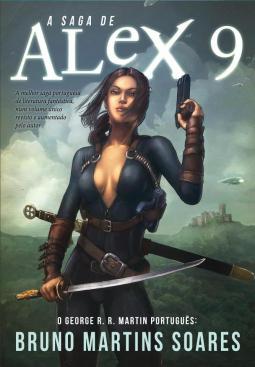
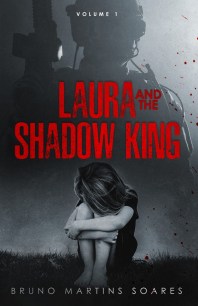
A Saga de Alex 9I’ve been heard to say in public, and even in conferences, that I believe oppression of women is one of the worst problems affecting Humanity in its History, as every man has a mother and so everyone is affected by it. I’m not the kind of guy who goes to marches and walks with signs, but I’ve tried to address the subject in all my writing. Let me focus on my Scifi novels alone. In THE ALEX 9 SAGA, the hero who changes several worlds is a woman – Alex 9 is a woman, a powerful woman who still has doubts and flaws, but whose will no-one will be able to ignore. She seems to be in a story well beyond her comprehension and her destiny seems to be prepared for her by others – but still, she makes her own mind and her own decisions. In THE DARK SEA WAR CHRONICLES, the story goes on in another solar system, but the scenario mimics Earth’s WW2. So it starts by being chauvinistic, of course. World War 2 had a major impact on the role of women – they were so important for the war effort that things were never the same again. As the novel goes on, the role of strong women like Mirany Cavo becomes more and more crucial – in fact, she almost single-handedly wins the war (a mild exaggeration). When it comes to my latest work, LAURA AND THE SHADOW KING, women get an even more important role, from the child, Laura, to her impressive mother, Maria. I intend to continue to develop strong female characters, I believe, and, in fact, fall in love with many of them (resigned eye-roll).

This text is not an Ode to Women. That was the first title I thought of: Ode to Women; but then it came to me that women do not need odes dedicated to them – they have those in excess. Odes to women are mediocre clichés. What they need is for facts to be recognized, for discrimination to end. I still want to be chivalrous – I still want to hold the door for a lady. But I also do it for older men or my bosses. It’s a sign of respect, of deference, and I believe in that – in being humble and respectful – so I’ll keep doing it. It’s a sign of character, in my book.

Women are not equal to men. They will never be. As someone said: ‘Vive la différence!’ We are naturally unequal. But what has to happen – what has to be completely obvious – is that this difference does not imply superiority from one or another. We are used to saying: ‘Men are better at this; women are better at that.’ But these generalizations are basic, useless and for the most part prejudicial. Men are said to run faster, jump higher, be stronger – but I personally know a number of women who run faster than me, jump higher than me, and are physically stronger. That doesn’t make me less of a man: it just makes those generalizations more ridiculous.

The future holds a better world. I strongly believe that. So let’s keep fighting, fellow warriors. We have our work cut out for us. See you around the next campfire.

Catastrophe Writing and Carnival Rambling

So life is a whirlwind. We all know that, I guess. Most of us are writers. And writers swirl in whirlwinds. So we know how it feels. It feels both exhilarating and desperate. So my life is a whirlwind right now. Things are just messy and challenging and almost overwhelming. Today is Carnival day here in Portugal (dunno how it goes in the rest of the world). Chaos and fun are supposed to run the streets even though it’s raining. As for me, I’ll run through the pages. This will be a different post. It will be mostly a ramble. I don’t have a particular structure in mind, which is unusual for me, but I believe I’ll speak about disasters and hope.

MV5BMTk0NDQ4MjE5OV5BMl5BanBnXkFtZTgwODgzMDczMzE@._V1_UX477_CR0,0,477,268_AL_I’m not a particular fan of disaster-writing, even though there are a few instances in the genre I enjoy. James Clavell, for example, had the habit of finishing off some of his novels, like TAI PAN, with characters dealing with a typhoon or something of the sort. It does give them something major to overcome, no? And instances where characters deal with real disasters, some that are much larger than them, project that feeling of being overwhelmed we often feel in life, no? That’s the appeal, right? Characters that face and overcome overwhelming odds. So how come so many disaster-fictions miss this simple premise? I was watching today Roland Emmerich’s 2012 movie and all I could think of was: what a lousy movie. I feel much the same way about things like Leder’s DEEP IMPACT.  They just over do it. They paint such a picture of the catastrophe and over reach in its impact that the survival of the characters hardly feels like victory (even if you accept the ridiculous premises). Something like Stone’s WORLD TRADE CENTER falls into similar traps – they feel stale.

And then there are those who do it right, like Gillermin in THE TOWERING INFERNO or, of course, Cameron in TITANIC. In these, characters are bigger than life. Even when life almost beats them, they act as true motors, as people rising through. As people ‘making it’. Hope is an integral part of our lives. Maybe it is at the core. And it is at the core of these movies.

I was writing last night and one of my characters said the darnedest thing: ‘He who controls hope, controls the world.’ The scenario this character moves in is a ‘zombie’ post-apocalyptic world similar to something like THE WALKING DEAD, but without proper zombies. The reason I write about this kind of scenario is probably the same reason disaster-fiction appeals to many: because I wanted to write about hope. Against overwhelming odds, the characters find hope and overcome disaster. That is also the reason I don’t enjoy most of THE WALKING DEAD fiction: most of the time it is devoid of hope – there seems to be nothing but survival in the horizon… and survival is not good enough.

cheshire-cat-alice-in-wonderland_2048xIf sometimes we feel lost and not knowing where to go and we feel we hear Cheshire cats in every tree saying: ‘If you don’t know where you’re going any road will do’; then we feel we are losing hope. And hope is actually a valuable commodity. Something that is worth dying for, I believe… or live for. That is probably what appeals to us all in disaster-fiction.

And hope is a part of our lives as much or even more than disasters. We overcome one obstacle and another and another, and the cumulative effect of overcoming more and more obstacles leads us closer to what we want and/or need. That is what I believe in and that is, in a nutshell, what I call hope – that particular belief. Disasters only come every so often. And hope should be here all the time. Even if it falters every so often.

Well, anyway… It’s alright to feel tired, I guess. And this is me rambling, I guess. This past week was a strange week. Things keep falling apart and I keep rising up. The world is turning in a strange way as well. Presidents who are criminals, tyrants who burn humanitarian help trucks, politicians discussing follies. You would think that we would be used to this, but I’m still taken aback by the sheer madness we’ve been seeing in these past few years. So what keeps us going? One step after another, one obstacle after another. Optimism. Hope. Each other. The fact that you get back on your feet after getting dragged down once more.

The-MistThere’s a very interesting movie about this that I often think about. I only saw it once. It’s Franck Darabont’s THE MIST, based on Stephen King’s novel. For all intents and purposes, it’s a disaster-movie: it’s about the way characters deal with a total disaster going on around them. The apocalypse has come and the survivors don’t know what to do. They are thrown into the brink of despair. Actually, they are thrown into the depths of despair. But when you expect that bad surprises will happen you can also expect that good surprises will happen. It’s when you lose that vision of a positive outcome that you actually lose it. The characters in this movie just lose it. And that’s when they are overcome. We know so little, my friends. And the Universe is so much larger than us. We just don’t know what’s coming next. It could be bad, it could be good. Assuming one or the other makes us unprepared for the rest.

Well, that’s it. That’s my ramble for this Carnival. Forget about it. See you next week. You’ll have me at my best again. I promise.


Dialogue Techniques – Part 2

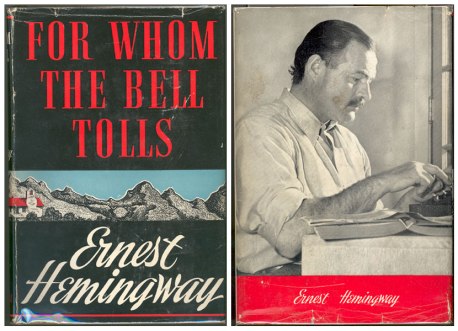
In Part 1 of this post about Dialogue I went through a few techniques I use. Dialogues are a very stimulating and complex part of the work for me. I wish I really knew how to write only in dialogues like Hemingway used to do. In my youth, I wrote a couple of short-stories just like that – only with dialogues. I don’t think they were very good stories, but it was interesting to try. I wrote a few theater plays and many movie and TV scripts – maybe that’s the closest I got to it. Anyway, in Part 2 I’d like to go through a few more techniques I learned or picked up or developed myself. See if it’s useful for you. I’ll continue the list from Part 1.

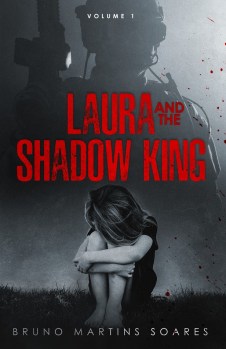
  1. Tone – When I write dialogues I like to focus on the music, on the rhythm, so descriptions are not the priority – descriptions will typically decrease the speed of the dialogue and that has a particular effect on the story. This said it becomes tricky to always convey the right tone to what’s being said. Emojis are very good for this, and that’s why we use them so much online.  I tried using emojis in fiction in the past, but it was messy and distracting. I don’t do it anymore. Still: context will give you tone most of the time, and other times you can use other tools. In spite of my editors’ complaints, I use other formatting at my disposal. Here’s a sample from my last novel LAURA AND THE SHADOW KING:LASK1

She’d put on the seatbelt just a moment before. Because her mother had screamed, ‘PUT THE SEATBELT ON! RIGHT NOW!’ Because she had cried instead of putting it on immediately. But this time she had obeyed. She had focused her attention and pulled the belt, but it got stuck and she whined. ‘Mommy!’ ‘Slowly! Pull it slowly!’

 See how I use the Caps? Caps means a different tone than a simple ‘!’. Or two simple ‘!!’. The context gives you part of the tone. The length of the sentences and the rhythm will also help. Read the first part of the post to see how to set the rhythm. But formatting also helps – use Caps, use punctuation, use what you can find.


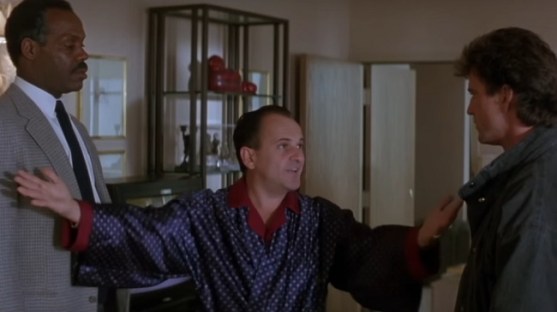
  1. Habits and Personality Traits – As I stated here, dialogues are great to develop characters. It’s not easy to get characters, especially characters that are of the same age and group, to speak in different fashions. Still, it’s important to try. It becomes boring if readers feel everybody is speaking the same way. I, for one, do my best to do both things at the same time: both develop characters and differentiate them. One of the ways I do it is by creating little habits in speech for this or that character. For instance: a word they use a lot, or an expression they use, or a quirk of some kind. You can invent a character that starts all his sentences by ‘Listen.’ Or someone who uses ‘Okay’, like Joe Pesci’s character in LETHAL WEAPON – ‘Okay, okay, okay…’.

lethal-weapon-2-joe-pesci-screenshot


  1. Accents – Be careful with accents. They can be used to differentiate characters, that’s for sure, but they can be annoying and distracting. I use them all the time, I try to phonetically reflect the way a character talks because of an accent, but I always do it with supporting characters and not very much. Otherwise, it is both cumbersome and irritating. I also make sure I don’t overdo it: I just pick a few words to alter, no more. Here is how I did it with a French captain who would, however, never turn out again in the book:

The captain seemed relieved to see the American. He saluted back, wiped the sweat and dirt from his neck and spoke with an unmistakable French accent.

            ‘Gangs. They arre trrying to brreach in multiple points. Twenty or thirty attackers at least. RPG’s, mortars, heavy fire. This is big. We arre all engaged. At least two of my guys arre down. You’re the reinforcements? What happened?’

            ‘Suicide bomb at the HQ. My troopers are right behind me.’

            ‘Putain. Casualties?’

            ‘Multiple. Where do you need us?’

            ‘Right flank. Therre is another attack a hundred meters to the West and they arre coming back this way as well. We need to hold them here. Go to the right. Therre arre only a couple of my men up there.’

            ‘We got it!’

  1. Plotpoints and Beats – What’s essential in dialogues, in my view, is that they serve the story. Just read a sentence by Stephen King: «In many cases, when a reader puts a story aside because it ‘got boring’, the boredom arose because the writer grew enchanted with his powers of description and lost sight of his priority, which is to keep the ball rolling.» In dialogues, the same thing happens: I read many authors, even some as experienced and high quality as Brandon Sanderson, who go on and on with dialogues way beyond the point they have been useful for the story. Way beyond the point when the ball stopped rolling. You must control your dialogues: they must have plotpoints and beats. What’s that? Plotpoints are changes in the direction of the story – readers will not feel the story is moving unless you have plotpoints. And beats are things happening, nuggets of action, an action-reaction combo. Let me show you – here’s an example from LAURA AND THE SHADOW KING I already used in Part 1:

After taking a few bites of some really good beef, I turned to her again. ‘Look, what I need to know is that your mind is in this thing. Is it?’

           She looked at me. ‘Yes. It is.’

           ‘How about the rest of you?’

           She almost laughed. ‘You tell me. You took a good look.’

           I clenched my teeth, irritated.

           She stopped smiling. ‘I can handle it. I’ve been working out. A bit too much, actually.’

           ‘Target practicing?’

           She hadn’t, I could tell.

           ‘I’ll be alright.’

           I stopped eating and looked deep into her eyes. ‘I need you to have my back, Drexler. Can you handle it?’

           She stopped eating too and looked back deep into my eyes. ‘I’ll have your back, King.’ And she was serious. ‘Thank you,’ she added. That was good enough for me. I wiped my mouth and prepared to leave. ‘Good,’ I said, getting up. ‘Let’s grab some bananas, we need to go.’

So in this dialogue, the reader needs to know a few things: that Paige Drexler will be serious about the mission, that she is capable, that she is grateful for the opportunity and that she will be loyal to Berger, and finally that Berger will accept her as his number two. So let’s make it short and sweet: 4 beats, 1 plotpoint. Beat 1: Is your mind on this thing- Yes, it is; Beat 2: How about the rest of you – I can handle it. Beat 3: I need you to have my back – I’ll have your back, King. Beat 4: Thank you – That was good enough for me. Plotpoint: ‘Good,’ I said, getting up. ‘Let’s grab some bananas, we need to go.’ And that’s it: everything that needed to be done is done – let the ball roll.

bell

  1. Subtext – Finally, subtext. I already spoke about it here. People talking to each other is a chaotic storm of implicit meanings. The more you are able to convey what’s implicit, the more interesting is the dialogue. Controlling the subtext in dialogues, my friends, is the mark of a master. Every time I happen to succeed at it I feel the luckiest guy alive. So go for it!

And that’s all I have to say at this point about dialogues. I hope it was useful for you. See you around the next campfire, fellow knights.

Rascunhos – An Online Interview in Portuguese

Influential and extremely nice Portuguese podcaster Cristina Alves recorded an interview with me about a week ago. Here it is:

Cristina Alves – RASCUNHOS – “Bruno Martins Soares is recognized in Portugal as the author of Alex 9, a YA series published in the TEEN collection by Saída de Emergência. But since then the author has been publishing mainly in English through Amazon! Bruno Martins Soares has an unusual view of the publishing market and shares this view with us in this interview, alongside some details of his creative process. Another distinguishing characteristic of Bruno as an author is his strong online presence through a blog where he talks about everything connected with his books.”

Here’s the interview, for those of you who can manage Portuguese: INTERVIEW.

Rascunhos

Thanks Cristina!

Dialogue Techniques – Part 1

I love dialogues. I like a good dialogue better than a good action sequence. They are not, however, the more obvious type of text. I also find that I go about them differently than many writers out there. I feel people get too hung up on words. I believe rhythm is much more important. I try to write dialogues in a musical way, following the reader’s mind. But that is not always simple to do. I end up using a bunch of techniques to help me – some I have learned somewhere, some I have figured out myself. I hope this post helps all of you out there trying to make it work – I’ll be posting the second part soon. So here are a few things I try to get right when writing dialogues.

56afcfea1a00002d00ab1c14

  1. Look who’s talking – one of the most essential things in dialoguing is always making sure the reader knows who is talking. For me, as the reader goes through a sentence he/she must be already aware of who is saying it (with few exceptions). Usually, people will assume that the person talking is the one that just made some kind of action. Think of it as operating a movie-camera: when you focus on someone doing something you assume the voice you are hearing is from that character. The same happens with writing. Like this: Jane moved to the other side. ‘Here we go.’ You will assume Jane is saying it. Of course, you can always put ‘she said’ to make sure: Jane moved to the other side. ‘Here we go.’ She said.


  1. Talking Heads – I read a post somewhere where the author was warning against writing dialogues without describing the scenes or what the characters are doing. She called it ‘Talking Heads’ dialogue. I actually like doing that – but I am also aware that you have to be very controlled in this kind of thing, otherwise it becomes messy. Hemingway did it and did it well: pages and pages of dialogue without any action. I spoke about it here. But the action in these scenes of his simply didn’t matter, all the story was happening in the dialogue. As a norm, be careful with this technique – always make sure it works and don’t try it in a conversation with multiple characters unless you are very sure of what you are doing. Here’s a sample of how I do it, a sample from my latest book LAURA AND THE SHADOW KING:

LASK1

After being announced, I knocked on the door.

           ‘Come in.’                  

           I went in and saluted him. He pointed to the chair and I sat.

           ‘How are you, JJ?’

           ‘Pissed.’

           ‘Sorry I took you off the pool.’

           ‘Yeah, right.’

           ‘I need you to go in.’

           ‘No shit. Where?’

           ‘Southern Portugal. Your territory.’

           ‘Algarve?’

           ‘Further north. We have a team missing.’

           I frowned. That was unusual. ‘A whole team?’

           ‘A whole team.’

           ‘Who?’

           ‘Fournier and the Belgians.’ 

           I frowned even more. ‘Those guys are pretty good. How long have they been dark?’

           ‘Seventy-two hours.’

The action here is very irrelevant: there are two military talking across a secretary, so it’s pretty straight forward – the Talking Heads are not a problem. Also, the scene is not particularly long, so there weren’t more than a couple of pages of dialogue.

  1. Follow the rhythm – For me, rhythm is the absolute most important thing. It commands emotions. So I use actions to create the pauses and hesitations in speech. See how J.J.Berger frowns twice in the sample above? Those frowns are not there by accident or just to convey the expressions in his face. They are there to mark the pauses in the conversation. Berger is surprised by what he is hearing and that makes him pause for a moment. Instead of saying that, I showed it by simply describing his body language. I do this all the time. A Talking Head moment shows a fast conversation. If I want a slower conversation, I’ll describe more actions to control the pace. Here’s another sample:

After taking a few bites of some really good beef, I turned to her again. ‘Look, what I need to know is that your mind is in this thing. Is it?’

           She looked at me. ‘Yes. It is.’

           ‘How about the rest of you?’

           She almost laughed. ‘You tell me. You took a good look.’

           I clenched my teeth, irritated.

           She stopped smiling. ‘I can handle it. I’ve been working out. A bit too much, actually.’

           ‘Target practicing?’

           She hadn’t, I could tell.

           ‘I’ll be alright.’

           I stopped eating and looked deep into her eyes. ‘I need you to have my back, Drexler. Can you handle it?’

           She stopped eating too and looked back deep into my eyes. ‘I’ll have your back, King.’ And she was serious. ‘Thank you,’ she added.

I’m not describing the action because it is important: I’m using it to slow down the conversation and emphasize some of the sentences. Pace is everything.


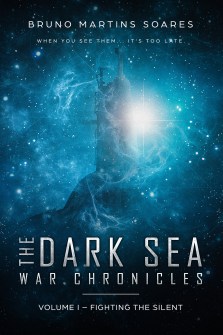
  1. Look who’s talking now – When you have several people in a conversation, make sure they are always identifiable or it will be a mess. You can use actions for that, as above, or you could just point out who’s talking. If you just do he said/she said, it will be almost invisible to the reader and be alright. But there are other ways. For me, again, the most important thing is the rhythm – use the techniques to follow the conversation without compromising the rhythm. Here’s a crew of a spaceship preparing for battle in THE DARK SEA WAR CHRONICLES. As the Captain is naming each crew member you can always spot who is talking. It’s a tense exchange – notice how the disciplined sentence construction keeps the rhythm at a steady regular pace.

Bruno_Martins_Soares_K (1)‘Contact, sir. Level 6, 12-and-1.’ Said Dalto.
           ‘Thank you.’ I said. ‘Here we go. Mr.Ojoe, you’re D&D.’

           ‘Yes, sir.’

           More dots came onto the screens.

           ‘Multiple contacts, sir.’ Said Dalto.

           ‘I see them. Just put them on the MID, please, Mr.Dalto.’

           But these were Silent Boats out there.

           ‘They’re gone now, sir.’

           ‘Never mind, Mr.Dalto, leave the signals on the screen. And please keep tracking them.’

           ‘Yes, sir.’

           ‘Mr.Alzira. Forward torpedoes?’

           ‘Forward torpedoes ready, sir.’

           ‘Give me a 30 count, if you please.’

           ‘Yes, sir. T-minus-30. 29… 28…’


  1. Exceptions to the rules – So, when you get really comfortable with the techniques, you can start bending and breaking the rules. I always do this to make an effect, to benefit the story and never for the sake of breaking the rules. That’s amateurish, in my view. But sometimes I do start whole chapters with dialogue you don’t know who’s saying – even though I make sure not to maintain that obscurity and clear it up as soon as possible. Here’s an example. In this case, also from LAURA AND THE SHADOW KING, I actually have several characters speaking in Talking Heads without proper introduction. See if you can spot how and why I was able to do that:


‘Paige, this is Shadow team. Everybody, this is Paige Drexler. Everyone knows her?’

‘Hey, Paige.’

‘In case you don’t know everybody, this is Sergeant Ross, former Ranger turned Delta, he’s the team’s second and CLS.’

‘Hi, Bat.’

‘Hey, Paige.’

‘This is our AR, Corporal Gordon, also Ranger and Delta.’

‘Hi, Gordo.’

‘Hey, Paige.’

‘This is Mike. He’s Italian and his real name’s Michelle.’

‘Hello.’

‘What was the name of your outfit, Mike?’

‘Col Moschin.’

‘Italian Special Forces, really good. This is Tony, Portuguese. Formerly known as António. He was a Portuguese Red Beret. What? Commandos?’

‘Yes. Comandos. Hi, Paige.’

‘Hi, Tony.’

‘And those over there are our snipers. We call them Luke and Vader, guess who’s who. Introduce yourselves, boys.’

‘We know each other, boss.’

‘Luke’s Carter, the blond guy, he’s the spotter with the Mark 11, and Vader’s White, the big black guy, he packs the .50.’

‘Hey, Paige.’

‘Hey.’

‘Paige is going to be my second in 1-1 while Morris is out.’

 It’s obvious, no? I was saying their names before they spoke. By the context of the book it was clear that the first guy talking was J.J. Berger, so I started the chapter just like that and I think it works.

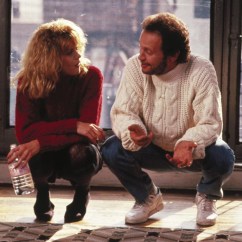
14-when-harry-met-sally-3.w700.h700These are a few of the techniques I use and the way I use them when I write dialogues. There are a lot more, of course. I’ll write another post soon, Part 2, with a few more. I hope it’s useful. See you then, fellow warriors.
Sexy Kinds of Love: Mothers, Fathers, Friends and Lovers

So this weekend, after years of work, my new novel LAURA AND THE SHADOW KING was finally released to the public. It’s still in its infancy, of course, and there’s a long way to go, but it’s always exciting and little scary to see our baby crawl into the wild. The novel is fast-paced and filled with action sequences, and because of the tension they bring and that feeling of danger we get when characters we like go through those sequences it’s easy to get the impression that these are the things that grab the readers and lock them into the story. But what I have found time and again (tell me if you feel differently), is that what really moves the story, what actually grabs the readers, are the feelings of love. Let me speak about that, as I believe this is a complex matter that deserves attention and study.

silhouette-of-happy-mother-playing-outside-with-baby

When I talk about love I’m not speaking necessarily of romance. We all know that romance sells. More even than sex, or violence. But other types of love also make you bleed. In LAURA AND THE SHADOW KING, I have romance, but what I have found is that the relationship between mother and daughter in the book is actually much stronger and sexier. It’s an indestructible bond – and all the sacrifice they endure for each other moves the story like little else.

This is not the first time I focus on the relationship between mother and child. In both THE ALEX 9 SAGA and THE DARK SEA WAR CHRONICLES, mothers play a crucial role in the plot (more in the first work than the latter). And fathers as well, of course. The seminal works of Sigmund Freud I like so much tell us, if nothing else, how important fathers and mothers really are to their children through their whole lives and a large percentage of flashbacks and B-stories in fiction look for the causal effect between a child’s struggle and the mistaken/enlightened choices in the characters’ paths.

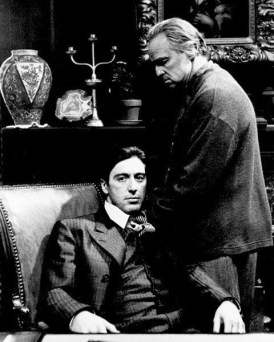
the-godfather-marlon-brando-al-pacino-i18574

Often, they are the whole core of the plot, as I’ve confirmed after watching the marvelous GODFATHER yet again this afternoon – it’s a Father-Son movie all the way, of course. Just as LORD OF THE RINGS is essentially a bromance.

Maybe (here comes my romantic streak) love is the whole point of everything. Maybe the love we share with our family, and friends and partners, is the point of all existence. And maybe all we look for in fiction is actually a reflection of that. Take my exaggerations as you will… The thing is, also, that love is not an easy or simple thing. It is an ocean of complexity.

For many years there was this behavioral theory of attachment that said (grosso modo) the main bond between a baby and his mother, or caretaker, was there because of a survival need: babies need food and water and security, and so they developed an attachment for people who provided them with those things. Psychologist John Bowlby brought the idea of attachment to another level: it seems we have a natural tendency to attach ourselves to people around us, much beyond our physiological and survival needs. It’s something much stronger and deeply rooted in all kinds of feelings. But love, it seems, is still more than that. We notice it, as we write, at least in romantic entanglements: people (or characters) have the possibility to choose who they attach themselves to – but who they come to love is a step further away.

Imagine, if you will, that we live with a big dark hole in our souls. It’s this feeling that we lack something, that we are only whole when we fill that gap. That something is wrong with how we relate to reality and with how reality relates to us. That we don’t belong to anywhere or anyone. So we go searching for something to fill in that hole. It could be all kinds of stuff, like work or dreams or things or feelings. But often we look for other people to fill that hole. And maybe, as we fall in love, we nourish the illusion that another human being is the one piece that is needed to make us whole. This, however, is not love. Because love is not about us. It’s about the relationship with another. It’s about what’s shared. When this illusion of completeness dies out we are ready to love – we are ready to see the other person as a different entity. And then we can choose to be with that person, to continue the journey to fill in the gap in our soul, but this time not alone – this time, together.

That’s why I am generally, as a writer, much more interested in the difficulties and complexities of love within a relationship and not the gameplay that happens before the establishment of the relationship – because love is something that develops and blossoms slowly.

112131568titanic-xlarge_trans_NvBQzQNjv4BqLW53-k6pAFzWQgBtbADRgM3dx78wskB5htr7NBUdSV4This said I am very interested in one manifestation of love that always blows my mind and which is extremely powerful in fiction: sacrifice. All studies tell us that loneliness is toxic. Loneliness brings despair (and many other foul things), as love brings hope. But in the rift between despair and hope lives sacrifice. The ability to forfeit what’s ours, even our own selves, so that others may profit. I think this is obvious in my stories: when the odds are overwhelming, it’s the sacrifice for the sake of love that will save the day. Maybe that’s my whole Message all along.

Either way, I truly believe that love is sexy. That if our stories are about love, and its complexities, they are much closer to the readers than when we just use violence or sex or gore, or any other device. And so my new book is out there and it’s about a mother and a child. Go take a look. It will be free to download for a couple of days. See you around, fellow knights.

LASK1


How to Deal with Rejection

How many times have you been rejected? Have you been rejected? I’m betting that it wasn’t fun at all. I hate rejection; it’s one of those things that strike at my inner core and make me tremble. Maybe that’s why I write: I wanted to put something out there people would love me for and not reject me. Not sure that was it, but it could very well be. How about you? Did you start writing to be loved? If so, how ironic is it that you find yourself in a field where rejection is pretty much… guaranteed? I’m serious. If you want to be a writer you must understand that you will be rejected most of the time. Let me tell you about it.

rejected red square  stamp

I decided to write this post after reading another of these messages from people depressed because they got a rejection letter. They actually don’t know how good they have it. Getting a rejection letter is already a big victory: most writers don’t get one – either because they never finished their books, or they didn’t submit them, or the publishers or agents they submitted to never even bothered to send them a letter at all.  So getting a rejection letter is something to celebrate. You must have gone through a lot of hurdles to get one!

And then there’s the numbers game. HARRY POTTER was rejected sixteen times, and ABSOLOM ABSOLOM was rejected over twenty times, the DIARY OF ANNE FRANCK over fifteen times. Melville once got a rejection letter asking him: ‘Does it have to be a whale?’ At least in some of the stories, there is some poetic justice: it’s said a big executive in a Hollywood studio once got fired for rejecting the script for FORREST GUMP.

mini124

Publishers and producers are not gods. Many of them are actually perfect imbeciles and the rest have to make very brave, expensive and critical decisions based on whims and instincts – not an easy thing at all. And they get too many manuscripts. They can’t really read them all. And many of the ones they read are just not fit for this or that company. So it’s a game of chance. It’s a gamble. You need to play and play and play before you get lucky and find the right publisher at the right time, going through the right agent looking for the right book or script.  It’s a lot more to do with luck than people think.

So, let’s face it. We’re in a ‘rejection business’. Just like sales, or modeling, or acting. Salespeople know this: they only get an ‘x’ amount of ‘yes’ for every amount of tries. Usually, the amount of ‘no’s’ is a lot higher. When I train salespeople or I sell myself, I always study the numbers. Often I’ll come up with: for every ten ‘no’s’ I’ll get one ‘yes’. This is a normal statistic. And it means that for many salespeople, they will be rejected more than 90% of the time. In my almost 30-year writing career my numbers have been close to that. Actually, even though I did a lot of things – been published in trad-publishing in Portugal, translated to Italian, won awards, wrote produced movies, pitched for Hollywood producers and Portuguese TV-stations, and advertising, and journalism and communication consulting and many other kinds of writing – I can tell you that my success rate is probably less than 5%. That means that at least 95% of the time I’m actually being rejected (and I’m including getting really nasty criticism).

But if that is the case, how do we deal with it? How do we deal with the fact we get rejected every single day? How do we deal with the pain and the sorrow? Well, there are a few things you really need to do – here are some of them.

  • Recognize you are in the ‘rejection business’ – don’t see rejection as an anomaly but as a norm, as something normal. It will happen, period. So be ready for it.
  • Don’t take it personally – sensitive as we are, when someone tells us that they don’t like our work we interpret it as: they don’t like us. And when they say our texts are shit, we interpret that we are shit. But that is not true. It is basically impossible to write something perfect and there will always be someone that doesn’t like what we have written. That doesn’t mean we are bad, it means our work isn’t perfect, period. Room to improve.
  • Develop a thick skin – most people are not trained to give feedback and they feel uncomfortable criticizing others, fearful they will hurt them; so they will be bad at it and become condescending and hypocritical or distant and cold to defend themselves – which will hurt us even more. And there are also those pricks who just want us to know they ‘are in the right’, ‘they know better’. Don’t make excuses, don’t discuss, don’t argue: just listen and digest – use what you find useful, ignore the rest. It’s our job to take criticism and rejection – it’s not other people’s job to do it right.
  • Learn – every criticism, every rejection, hides a learning gem somewhere, something that you will not learn any other way. Be sure you can pick those gems. You will be richer for it. If you get offended and resistant and coiled, you will miss the riches and you will be worse off for it.
  • Don’t get stuck on guilt – you will do better next time. Don’t get stuck on those feelings that you could have done better. Why didn’t you see how bad that line was, why couldn’t you have developed the characters better, why did you use all those clichés? Forget about that. Being a writer is not about writing one text, it’s about writing one and then another and then another, always better, always improving, always evaluating, always analyzing. So put away your guilty feelings and do your job.
  • Let yourself mourn and cry – You have been rejected, it’s painful, you’re not made of stone: so cry, if you must, eat ice-cream, binge watch your favorite series, stay in bed for a couple of days. And then get up and resume your writing. That’s your job. A couple of days sobbing is enough.
  • Get help from people around you – get support. All the great ones had some kind of affective support structure, people who would nurture them and made them feel better when things were bad. Friends, family, teachers, colleagues, other writers: find the people around you, reach out. They are crucial when it gets too much. If you want, just drop me a line… I’ll fly with you if no-one else will (TOP GUN reference for you old-timers out there.)
  • Remember one thing: eventually, there will be winners. After many ‘no’s’ there is always a ‘yes’. That’s a promise. Believe it. It’s just around the corner, so don’t give up.

lead_hdfc_winning

And that’s it, fellow knights, that’s today’s piece of wisdom. Hope it helps.  One last thing: you are not fragile, you are strong – so go get them! Cheers to you and see you around the next campfire.