After my somewhat controversial post on BLACK PANTHER last week I started, coincidentally or not, to watch ABC and Marvel’s CLOAK & DAGGER TV series. Now let me first say that some of Marvel’s TV series I’ve watched in recent years have been the best rendition of super-hero stories I’ve ever seen – reminding me of the joy I had as a teenager reading comic books and absolutely kicking the ass of most of the movies out there. So let me speak a little bit about that.

Over the last couple of decades, TV has come to the forefront of fiction writing everywhere. Many years ago there were TV stars and movie stars and TV stars were the actors who couldn’t cut it in the big leagues of the Hollywood film sets. Even stars like Paul Newman who showed up in the small screen a few times, would completely disappear into the mythical world of theaters as soon as they became big stars. If you wanted to see quality acting and quality writing and quality directing, you would be crazy to turn on the TV, unless to watch some twenty-year-old classic or sing along with Julie Andrews’ SOUND OF MUSIC at Christmas. This state of affairs however was completely turned upside down. Nowadays, good acting and good writing is on TV, period (well… with some exceptions).
The first super-hero show that blew my mind and actually made me feel a youngster again was Netflix’s DAREDEVIL, in particular the first season. I had watched J.J. Abrams’ HEROES and mostly liked it, but DAREDEVIL was in a whole different level. Full disclosure: Frank Miller’s DAREDEVIL was always one of my favorite comic heroes – I absolutely loved it. And they did change a couple of things in the series: Matt Murdock was more naïve and gentle on TV – I always liked the tougher darker Miller’s characters. Still, Vicent D’Onofrio’s portrayal of the Kingpin was brilliant, to say the least.

Then Netflix did it again with the wonderful JESSICA JONES and LUKE CAGE, and the powerful PUNISHER. Super-heroes quickly became adults and serious characters, less concerned with dressing up and more consumed by human dramas. I was very disappointed with IRON FIST, again one of my favorite characters that was portrayed as a spoiled brat, which was completely contradictory to a tough hard training life in a monastery. THE DEFENDERS was a little better but not much better. The powerful characters were there and I do like what Elodie Yung did to Elektra – but the human drama, the story and the writing wasn’t as good as the other series. Yet the trend had caught on and serious super-hero TV series became a thing. FX blew my mind again with LEGION – I didn’t know this comic series and I found it featured one of the most interesting and surprising villains around. If you haven’t watched, go watch it. There are other super-hero TV series, of course (please don’t speak to me about DC), and I’m sure I’m missing some, but these are the ones that for me, opened the comic book world again.

And now, CLOAK & DAGGER. Again, it’s been done right. It’s not about the battles, or the special effects, or the super-powers. It’s about the Human Drama. I go back to what I usually say about storytelling. Storytelling is one of the oldest ways of teaching and learning. The ancient races would gather around the fires and tell tales to their youngsters. Shamans and sorcerers would amaze the tribes with their stories. Greek and Roman theaters would fill with people eager to see the drama. We even developed inner genetic techniques to absorb these stories. Every writer knows about ‘The Suspension of Disbelief’ – that exercise happening inside the minds of readers and audiences. We all know that Harry Potter never existed nor could he fly on a broom. We all know that Daenerys has never ridden a dragon. But we fool ourselves into believing in it. We suspend our disbelief so that we can join the characters going through the stories. They tell me that the parts of our brain that ‘light up’ when we are ‘feeling’ a story are the same parts of the brain that turn on when we go through the same experiences in reality. That’s why we rejoice and laugh and cry with all that’s happening with the characters in the stories. This is a mechanism Humanity developed to learn. And to learn what, you ask me?
What are we learning with the stories we engage in? We learn things that would be very difficult to learn in other ways: we learn our values, about Good and Evil, about the obstacles life puts in our way, about how to make decisions. And the more difficult and thought-provoking these decisions will be, the more interesting and special the story is. In my view, fiction is the realm of complexity. It’s the realm of ambiguity. It’s the realm of discomfort. At the very core of the Human Drama, I believe, is the difficulty of making the right decisions in a world that is all but simple. I once heard it on the radio, going home, very eloquently, the host referring: «This thing of being a person is very complicated.» Also, that line from the Chico Buarque, the Brazilian singer: «Up close, no-one is normal». And that’s what stories are for: for us to learn what is complex and complicated. To learn the values and principles and solutions that will get us through our difficult journey in life.
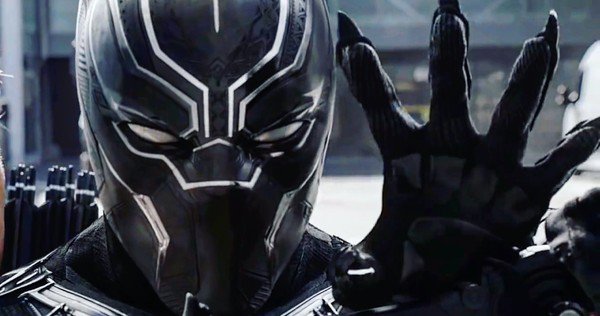
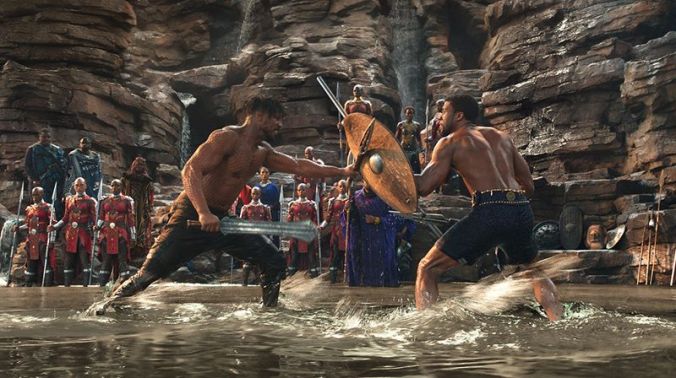
Well, maybe that’s what makes a show like CLOAK & DAGGER, in my view, far superior than movies like BLACK PANTHER: the former is more complex and grounded than the latter.
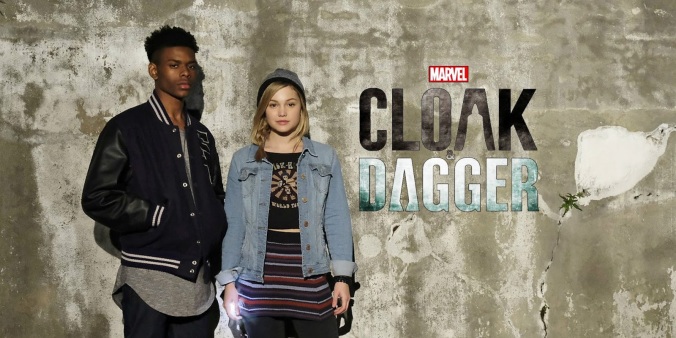
CLOAK & DAGGER is the story of two six-year-olds, a white girl and a black boy, who meet in an event that takes both her father and his brother’s lives. Eight years later they are still looking for justice for those deaths and when they meet again they find that they activate each other’s super-powers. I’m sure that Olivia Holt and Aubrey Joseph, who portray Tandy and Tyrone, will be household names in a few years, but it’s not just their performances that hold this underrated TV show together: it’s the intelligence and the seriousness with which the Human Drama is treated in this story. You don’t follow it because it’s about two teenagers with super-powers, you follow it because it’s about two complex characters dealing with both the deaths of their loved ones and the injustice in the world. And, of course, the love that can emerge from their struggles.
I’ve only watched 9 episodes of the series. In the ninth, ‘Back Breaker’, there’s a ‘pseudo-fourth-wall-breaking’, where a character is teaching creative writing and explaining how at this point in the story the characters will lose their ground and fall. Here is shown the formulae that writers use in their structures. Some people dislike these formulae and find them too crude. But it’s not the formulae that are crude, it’s the writer. It’s not the tool that is broken; it’s how you use it that makes a difference. If you analyze the structure of both BLACK PANTHER and CLOAK & DAGGER you would find that there is not a lot of difference between the two. Still, the result is radically different. Again, I liked BLACK PANTHER, it worked well enough. But it lacked sophistication, I believe.
One day we will discuss why then in BLACK PANTHER more successful and well reviewed than C&D – and why many of us prefer simpler stories. But this is not the day.



 Another formula that was particularly irritating for a while was the ‘Sacrificial Lamb’ formula. I was shocked yesterday at the workshop when I put up a photo of Maverick and Goose and no-one seemed to know who they were. Am I really that old?? Well, then I asked: who will be killed in the movie? And the audience quickly came to the conclusion that it wouldn’t be the character portrayed by Tom Cruise, it must be ‘the other one’. Goose is an example of a Sacrificial Lamb: a character you build up over the first two acts just to kill him/her for effect just before the end of the Second Act. Obi-wan Kenobi is another Sacrificial Lamb. And Boromir as well (even though he gets killed in the final act of the first LotR movie).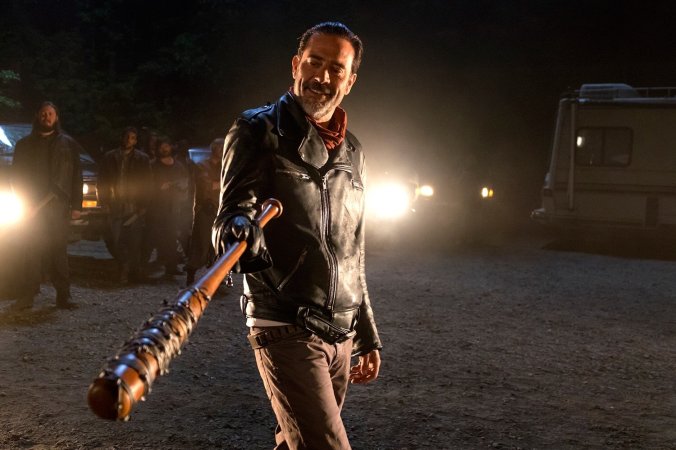
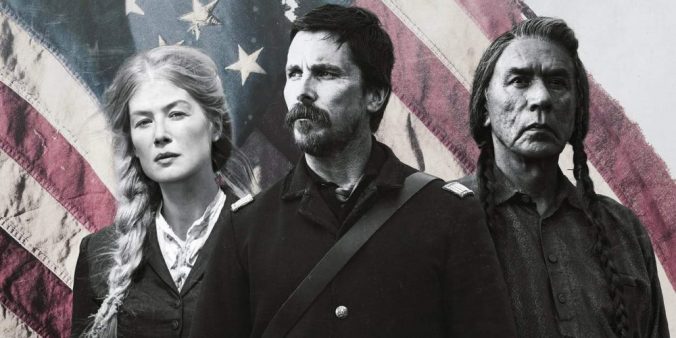
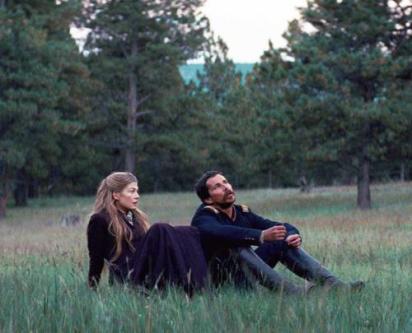
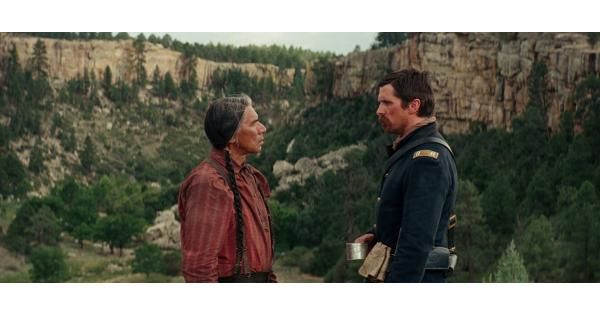
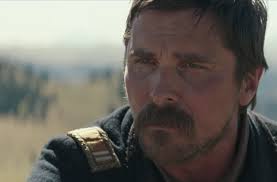
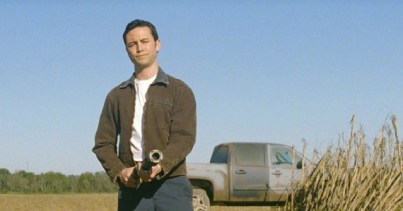
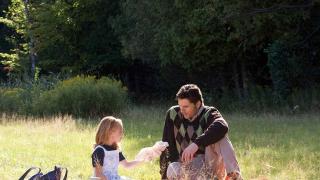 Both this movie and this book bring an original and ground-breaking take to time-traveling. THE TIME TRAVELER’S WIFE starts with a man meeting a stranger in a library and she recognizes him as the man who has been visiting her since she was a little girl and with which she is in love. Many times we believe that people from the future would know more than we would know ourselves, but in this story things are not that simple: the time-traveler has a gene that sends him almost randomly into the past, so sometimes he meets the woman he loves when she is an adolescent, and sometimes when she is a grown woman. They eventually marry and his condition makes for a very curious and interesting love affair. I love romantic movies and this one is a good example. Again, another movie that went by without much notice, but I definitely recommend it.
 I hesitated in considering GROUNDHOG DAY a time travel movie, but, in fact, Bill Murray’s character does travel to the past every day, always at the same moment. And GROUNDHOG DAY is a great movie and an absolute classic. However, I feel THE EDGE OF TOMORROW fits better in this list. The concept is very similar, but more violent: a US Army officer fighting an alien race wakes up always on the same day every time he gets killed. THE EDGE OF TOMORROW is a movie that grows on me every time I watch it (yes, I can see the irony). I think Emily Blunt is sexy as hell in this and Tom Cruise is indeed a good actor (despite the annoying smile). The movie is thought provoking and stimulating even though that ‘centralized intelligence’/’kill the queen’ thing is a bit old already. The movie is based on the manga series ALL YOU NEED IS KILL by Hiroshi Sakurazaka. One of these days I will tell you why I believe the Japanese (manga included) have some of the best character development around – for now take my word for it and watch this movie.
 Even though I thought of other movies to put in here (like 12 MONKEYS), no time-traveling movie list would be complete without BACK TO THE FUTURE. I like the first one the most. Robert Zemeckis is a very strong director, even though I feel sometimes he shies away from some deeper moments. In BACK TO THE FUTURE he’s flawless. The construction of the narrative is very good, even though we stumble into the grandfather’s paradox once more. You know the one? If you went back in time and killed your grandfather before you were born how could you have gone back in time to kill your grandfather? But as I said before, don’t let logic get in the way of a good story. It’s always a treat to watch Michael J. Fox as Marty running around putting his parents ‘back’ together. It touches our fundamental fear of our parents separating or not succeeding and that’s a solid ground for a story. It’s also a cultural shock that is at least very funny. And of course Christopher Lloyd is amazing as Emmett Brown. This is one of those that we’ll see once and again on Christmas time for decades.


 including some of the most prominent writers of the New Portuguese Literature, as José Luis Peixoto, João Tordo or José Mário Silva. It also includes one of my short-stories, from back in the day, and made me reminisce about my younger years. A lot has happened since then and maybe that’s why I am less tolerant nowadays with some questions young or amateurish writers pose in some Facebook groups I belong to. I shouldn’t. I should be more patient. But I’m not. I just remember not having anyone to ask stupid questions when I started and maybe I’m resentful (poor me).
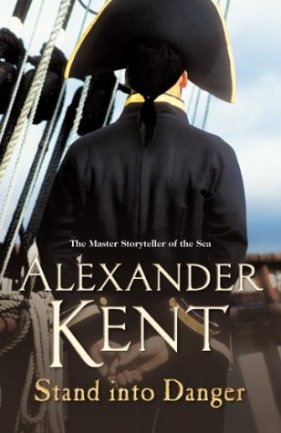 Here’re some reasons to use Third Person, in my view: 1) You want to follow several equally important characters, and it doesn’t make sense, or it becomes too confusing, to be jumping between several First Person narrators. 2) The story has such a scope that you need to follow the whole more often and give weight to the general ‘up-in-the-air’ POV, instead of being stuck to a particular ‘down-on-the ground’ POV. 3) You want to show important things that the character does not know about and maybe never will. In one of Alexander Kent’s novels (probably STAND INTO DANGER), the MC is in love with a woman who is tortured and killed. We know what happened to her and some of the characters around him also know what happened to her, but they let the MC think she just abandoned him and went on her way, safely. This kind of twist wouldn’t be possible, or it would be more difficult, if the novel had been written in the First Person.
 The thread this question generated was filled with polemic and surprising comments. Some people, maybe because they’re addicted to outlines or maybe because they don’t like to feel they lose control, would say it is impossible that something coming out of their wits would do something unexpected. To me, it happens frequently. Characters just ignore what I want and do what they want. What does that mean? It probably means the character is so consistently built it is not coherent anymore to act as I have planned before. Or it means I take the risk of actually empathizing with the character and understanding what he/she would feel in a certain situation, losing a bit of control myself. Or it means that a writer is indeed a bit schizophrenic as David Mamet suggests. But I do believe characters have minds of their own and that’s one of the most difficult things to manage when you write.
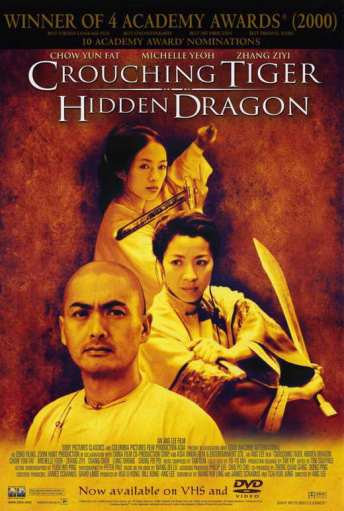 It’s been a few decades since Bruce Lee’s Kung-fu movies conquered the West. Since then, we’ve seen the rise of many talented artists as Jackie Chan or Jet Li. I particularly liked the low-budget Hong Kong phase of Jackie Chan, who was both funny and skillful. Kung-fu movies are a lot like musicals as if you are watching the performance of dancers in carefully choreographed moves, but there’s a kind of life and death tension that gets your attention. And Jackie Chan has a lot of Charlie Chaplin in him as well. But the best movie I’d seen on Kung-fu was ENTER THE DRAGON with Bruce Lee at his best. Until, of course, CROUCHING TIGER, HIDDEN DRAGON. In this movie, Ang Lee picked up most of the Kung-fu movie tropes and made a serious dramatic movie with them. After this one there were several others, like HERO or THE HOUSE OF THE FLYING DAGGERS, but CROUCHING TIGER was the first, I believe.
 But then we have a third act that throws the story into another path. Luo Xiao Hu, a thief from the desert, tries to stop Jiao Long’s marriage and take her with him. We also learn that they were both lovers in the past, at a time the young woman was kidnapped in the desert. This new storyline turns the story upside down and we start understanding why Jiao Long is so keen in getting her freedom.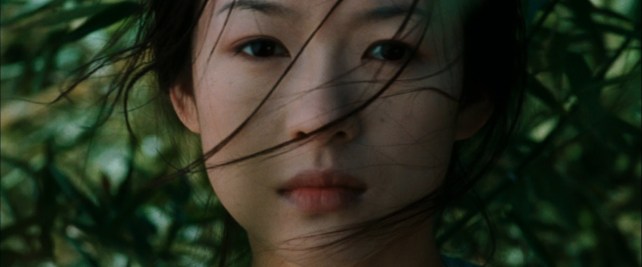
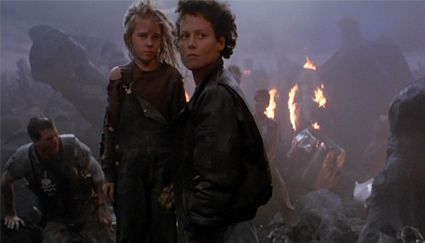
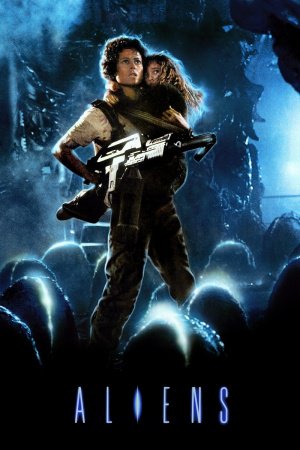 Of course at that point (1986) there was no way of knowing there would be at least 7 or 8 more movies on the infamous alien (if I’m counting the Prometheus and the AxP storylines correctly), so it wasn’t the final encounter by any measure. I actually watched the Cameron movie in the theatre, before I watched the Ridley Scott groundbreaking first installment, and even though I’ve watched both several times since then, I still like the Cameron movie better. But that’s just me: I love military action and I think ALIENS is one of the best Scifi military action movies ever made. And as I watched it last night one more time I concluded three things: 1)Cameron is a really talented director; 2) Cameron, Giler and Hill’s screenplay is really-really good, and; 3) the Midpoint in this movie is very powerful.
 Hyperjumping