 Let me tell you a story. Be advised: any similarity with reality is pure coincidence. Once upon a time, a long time ago, there was this fisherman. Every day this fisherman caught a few fish. Maybe two, maybe three, he always caught enough to feed his family. One day, though, he invented a new net and started catching a lot more fish. He felt he was rich, but most of the fish he caught would go to waste, so he decided to go to a farmer and ask him to give him some p’tatoes in exchange for some fish – he thought the farmer would be pleased. So he walked about half a day to get to the farm and proposed to the farmer the exchange. But the farmer declined. He said he didn’t like fish. But he would love some shoes. So the fisherman ran a few more hours until he found the shoemaker. He successfully exchanged his extra fish for a pair of shoes, he ran back to the farm and exchanged the shoes for some p’tatoes, and then ran a few more hours… that day he was able to get back in time for dinner with the heavy p’tatoes on his back but he wondered: could he do this every day? And when would he have time to fish? And how would he keep his extra fish before they got spoiled?
Thankfully there was someone who had a brilliant idea and invented what nowadays they call: money. This money-thing allowed the fisherman to keep the value of his fish in his pocket. He could sell his fish to the shoemaker when he wished and then buy p’tatoes and carrots from the farmer whenever he wished. But he still had to walk a few dozen miles anyway. Which was very tiresome. Then somebody else had another idea: ‘What if we all met and traded on holidays and parties and maybe on certain Sundays? We could call those gatherings ‘fairs’ or something.’ And so they did. They started trading in certain days when everybody was gathering. And that’s when advertising was born, I guess. Somebody would shout: ‘Here are the cheapest shoes!!’ And others would shout: ‘Here is the best ham!!’ or ‘The best ale!! It kicks like a horse!!’
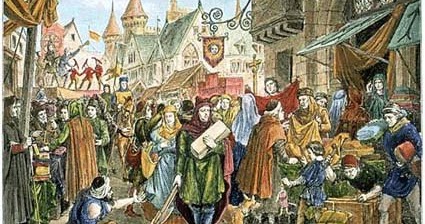
But soon people were not living in villages but in cities and it became bothersome to meet only on a few days. People needed to be served every day. But if you had to go to town looking for shoes and you did it on foot, it wasn’t too easy to look around the whole city. So cities started to become organized by trade. In old cities like Lisbon or London, you can find a street that would be called something like: the Shoemaker Street, or the Blacksmith Road, or the Silver Street, or Baker Street. Then if you wanted to find shoes you knew where you were supposed to find them: all the shoemakers would also be positioned to watch their competition and plot against it.
But then something happened. An event stranger than anyone would have imagined. They called it the Industrial Revolution. Suddenly, the shoemaker that could make a few dozen pairs of shoes a month (I guess), now was able to make (I’m guessing) 100 pairs a day? This is incredible, but it’s also a problem. This shoemaker simply does not know 100 people who will want his shoes. He will have to go look for other ways to sell them. Sears invented the catalogue for that reason, I would think. A cowboy in Tombstone would look at it and order some blue jeans or something and it would be made in Chicago or something and sent there. And adverts became the norm: you would print ads in magazines and newspapers and things like that and send them everywhere!! And that’s when salesmen got such a bad reputation: their job was to get some product no-one wanted or never knew existed and push it around until people bought it. That later became known as Product Based Marketing.
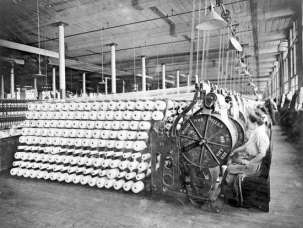 And then a clever guy called Henry Ford had a few more ideas. It was called Production Based Marketing (even though he didn’t know that at the time). His production methods were so efficient that he was able to drastically cut the price of his products. He would make cars is such a way anybody could buy them: ‘In any colour as long as it’s black.’ In this way, you could market a product based essentially on price.
But these guys selling products and underpricing the competition were so good that soon everybody was getting everything even before they knew it! Soon, it was clear that factories were producing a lot more than the people were able to buy them. So what did factories do? What every reasonable factory would do: they cut production rates and started producing less and less. How did they do that? They fired workers. But fired workers start having less money in their pockets and so they stop buying stuff. So soon enough the factories discovered they were overproducing again and they fired more people and this lead to less buying and so on. This had a huge impact on the Economy and was called the Great Depression.
Coming out of that Great Depression someone said: ‘Well, let’s not do that again, shall we? Let’s not just produce products not knowing if people want them.’ ‘How would we do that?’ Somebody else asked.’ ‘Well…’ Said the know-it-all, ‘Why don’t we ask people first what they want and then produce it for them?’ That actually seemed a great idea and ‘Market Research’ was born then and there – leading to what we call Consumer Based Marketing.
 Once people started to research why people bought things, they started stumbling on certain patterns. There were different needs and different wants, but in the end, the main drives were pretty much the same. With the help of some wackos with strange Austrian names, they found what was inside the thoughts of Humans. And in the last decades of the last century, they focused on improving stuff for people. Products became better and better and better. Until they became very similar. To some, marketing became a war where consumers were ammunition that helped slay the enemies/competitors. If the enemy/competitor got an advantage, it was best to imitate the bastard to become ever so similar and strong in the market.
With all this blood and guts going through the floors, the people-that-bought became less responsive to the products themselves and more and more attentive to the way these products were presented. Suddenly, what made the difference was Service: from the niceness and empathy of a waiter to the payment and delivery accommodations of a company. Products no longer made an impact: Service was all that mattered. Until Service was also the same. All companies delivered on time, all waiters said nice things. In the end, Service had to become something else: to be different, Service had to become a Relationship. A Relationship means something special: it means a connection between people. For a time, that was overlooked and Relationship Marketing seemed to be all about information and numbers in computers. But that didn’t last long. Soon it was all getting back to basics: Marketing was about People meeting People.

And that is how, today, when people ask me if I write to a specific audience I mostly reply (or I wish I had the presence of mind to reply): ‘I write from the deepest ends of my soul, I write about what I need to and want to write. I believe that there are people out there that need to read and want to read something like that. My purpose is to be able to connect with those people. So I write the best I can to satisfy myself and in turn satisfy others. Then I go and try to find these people to the best of my ability. Marketing, for all its complexity, is all about that: finding the people who want to connect with you. Sales are just a bi-product of that relationship.’
And that’s all I have to say today, my fellow knights. Hope this wasn’t too crazy a story and didn’t turn you away with a patronizing sigh. Maybe next time I will have a better story. It’s all about you, my friends. Or you and me… together. See you around the next campfire.
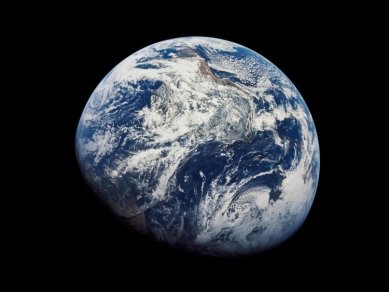 So what is a fact? We used to know that. It was a given. There were always conspiracy theories and wild paranoiac plots going on in untrusting minds all over the world, but now we’re in a different Era. It seems even the most basic facts are put into question: is the Earth flat? Do vaccines work? Did man really go to the Moon? Is climate change real? All of these questions should have evident answers, but no longer. We used to trust basic Science before, but no longer. How can we? Science is changing every day. What used to be true to science yesterday is no longer the norm, and studies seem to contradict themselves every day. More than that! Many pranksters have shown that «serious» science magazines will publish anything. How can we trust them?
 But let’s look at Science for what it really is. I argue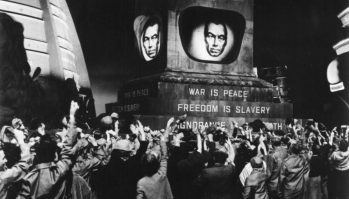
 Traditionalists, however, will fight for the opposite. Here are the words of Alexander Dugin himself: ‘The notions of tradition, religion, and pre-modernity already offer us an undoubtedly broader spectrum of alternatives. If we reject the laws of modernity such as progress, development, equality, justice, freedom, nationalism, and all of this legacy of the three centuries of philosophy and political history, then there is a choice.’




 Hyperjumping