The Amazing Underlying Journey of the Matrix – 4 – Backstory and Forward Thinking

This last post on THE MATRIX TRILOGY intends to summarize my conclusions. The Matrix has had a deep philosophical impact on me, corroborating many other references I’ve been collecting over the years. What we can see in this brilliant series is the knowledge that many philosophers, especially, in my view, French psychoanalyst Jacques Lacan, have been writing about Life here and there. So let me speak about it a little bit, at least from my perspective.
backstory_overview

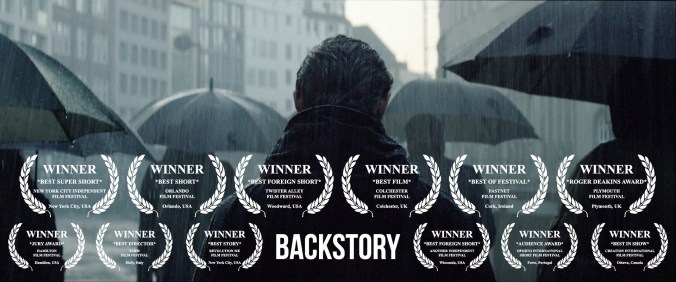
Let me start with another entirely different film: the short movie BACKSTORY by Swedish director Joschka Laukeninks. I’ve seen this movie for the first time at a film festival and it shook me to the core. You can watch it here.  It tells a story about a man going through his life until the moment of his death. All you see for most of the movie is the protagonist’s POV in a fast succession of cuts portraying important moments of his life, narrating his story. As we see this we are invaded (at least I was) by a rising feeling of oppression. Oppression by Time itself. We feel we already know that story, the story of a man like many others, even though we witness a few surprises as we go along. But it is familiar. We know that story. And it is relentless, almost cruel, to see Time passing so fast and so staggering. We feel (at least I felt) that there is nothing we control in our lives. Nothing that we can do to make anything different, anything matter. All that’s left, in the end, are those moments that branded the MC the most, mostly, in the end, moments of love – maybe what others have once called the Foam of the Days. What’s left after all the fuss, all the wrong decisions, and right decisions and going through this whole mess that’s Life. And we so much want to have control, to be able to enjoy life but also to make it matter, to make it about us, about our Freedom to Choose. What propels us forward is our Desire. Our ability to want something for ourselves. The Meaning of Life. And yet, sometimes, it almost seems like all we have is the Foam of the Days – what Yates would call: the Hopeless Emptiness. How can we reconcile our Desire to have Meaning with the elusiveness of the Foam of the Days, what remains in the end? That, in my view, is the theme of THE MATRIX.

There was this psychologist called Viktor Frankl who once had to suffer the disastrous internment in a Nazi concentration camp. I would argue it would be hard to find more oppression and hopelessness.  Trying to help the prisoners and going through all the suffering, he learned a few things that he would later share with the world. One very simple concept is this: whatever happens in your life, whatever hardship you go through, you can always choose. When everything else is taken from you there is always something that is yours: your reaction, your attitude. Your attitude is something you can choose. Find your own Meaning and you will find your own strength.

Now Sigmund Freud would tell you that many times the shackles are within us. It is difficult to choose for ourselves when we are overcome by the struggles within our own mind. The conflict between what we want and what we can do, or what we believe we can do, will necessarily obstruct our free choice. If we can resolve the conflicts within, even if in a small way, we can finally start to make our own choices. We can make sense of our choices. Psychoanalysis is all about becoming free to choose.

bethisguy

Lacan would take this further. I’ll simplify it a little bit, please bear with me. The journey of our lives starts by learning that we can’t have all that we want. Our Fathers, our Ancestors, Society, will teach us to conform. If we are to survive we have to obey the rules. To fit in. To become what they want us to become. The journey is one of frustration. Our choices are manipulated and limited. At one point it seems all the choice we have is one of killing our own Will within us and survive, or succumb to Death itself – and if this dynamic is dramatic enough, we may start to split Reality between what we can take and what we cannot. If we want to Live, to be Alive, we must rebel. We must refuse to succumb and fight the Forces of Oppression: the System, the Government, the Figures of Authority, the Evil Corporations, the Military Industrial Complex, whatever. What we do not understand at this point, at the point of rebellion, is that we are entering a different kind of prison. We are becoming ‘one of those who rebel’. Rebels have been here since the beginning, and they are just another type of inmates. A type the System has already integrated and learned to dominate and manipulate. Drugs, Easter Parties, draconian laws, oppressive schools, credit ratings, courts, madhouses, real prisons, they are all manifestations of the System coping with rebellion. And yet, the System works for us. We devised it to climb out of the jungle. If you want to see a country of anarchy, the rule of the rebels, see Somalia. No real System there…

I’ve spoken before about how the System can be cruel and sadistic. All of the Nazi’s crimes were arguably going on within a system of Law. But as I said before, the best ways to confront that Evil came from the people making choices. From the soldiers and the warriors to the bureaucrats all over Europe who saved millions of Jews by disobeying, by undermining the System, by choosing Humanity. And these people were not rebels, were not outliers. These soldiers throughout the world going against impossible odds, and the people laughing while being bombed and the heroes within European bureaucracies faking some signature were not rebels. They were thinking people. People able to choose by themselves. They were free. They were the center.

To be free we need both to reject the oppression of the System and also our Rebellion. We need to put both aside and become something else. Become Human.  Embrace both our limitations and our ability to choose. This, in my view, is the message of THE MATRIX TRILOGY.

us-constitutionOne of the most successful and masterful ideas of the whole History of Mankind is what can be called The Liberal Agenda.  The Liberal Agenda was born a few hundred years ago and is enshrined, in my view, in one of the most brilliant pieces of legislation ever written: The American Constitution. Freedom of Speech, Freedom of Religion, Freedom of Association, Equality, Democracy, Rule of Law, etc. That is the Liberal Agenda: what promotes and protects freedom. That Agenda led us to one of the most incredible periods of peace and prosperity in History: the last few decades. When you believe in freedom you must also believe in protecting other people’s choices, while also preventing those choices from destroying freedom (the old liberty paradox: the moment you say ‘no’ to freedom you lose the right to choose to change your mind).

In the end, the great struggle is this: are we commanded by Fear, or are we commanded by Choice? We have an inherent inability to stop Change and an inherent inability to stop Time. Change never stops and Time never stops. As Buddhists say: all our behaviors are actions to avoid suffering or seek out happiness while this is happening. In the end, we are left with only the Foam of the Days. But what really matters is the attitude with which we face this struggle. Is it really a Hopeless Emptiness?  Mankind has actually evolved. Millions are now safer than they ever were in the jungle, able to do things that seemed magical just a few decades ago. So whatever we may think, our lives are not really empty. Something is happening in the Universe. Something we are a part of.

Neo_spoon

What is the right choice, in the end? It’s to choose for ourselves. As Neo did at the end of the saga: we stop fighting and start living. And that, my friends, is what I call The Real Critical Decision of the Hero. The Decision to Make it Happen. To make it Matter.

Sermon finished. Have a good day’s journey, fellow knights. See you around the next campfire.

The Amazing Underlying Journey of the Matrix – 3- Revolutions Within

(Third post of a four-post series on the Matrix)

«Choice is only choice when we know the consequences of our choices.» The Oracle says something like that in MATRIX REVOLUTIONS. If the original MATRIX was about Birth and RELOADED was about Love, REVOLUTIONS is about Death. We only choose to live if we accept the prospect of our Death.

So let me go back to Lacan, or at least my take on Lacan. Our freedom comes from our ability to work towards our goals, our Desire. Against that is not only the prison of Reality but also the Name of Our Father. That elusive sense of Rule, of Law, that is imposed on us by not only the Society at large but mostly the sense of right and wrong that we inherit from our Father. But our character, our identity, depends on being different, on being something beyond the Name of The Father. On being something else. And so, we need to kill our Father twice inside of us. In the beginning, we are submissive, we accept the Rules, even if we feel oppressed by them, imprisoned by them, shackled to them. To become The One, to become ourselves, our own selves, we need to rebel against these rules. That happens in the first movie. Neo destroys Smith. But to be truly free we must relieve ourselves of rebellion. As we rebel, we are still obeying to the will of the Father, only in the opposite. The reference of right and wrong is still the Father, only it has turned from right to wrong. Now we exist only to fight Him. We exist in opposition. Until we start understanding the prison this fight also becomes. We are still imprisoned by our Father or by the fight against our Father, or the Monster of our Father that lives deep in our mind. At the end of RELOADED, Neo finally accepts that he is only The One among many others. He is just a person. A person with his own skills and personality, but he is not a Miracle, or the Savior or the Messiah. And now he is ready. He is ready to fight the last fight. To ‘kill’ the Father for the second time. Only then will he be released.

Matrix-Revolutions-min

We start REVOLUTIONS with Neo lost in a train station, locked in by the Merovingian. There he meets Sati and her parents, refugee programs trying to save her daughter from deletion. Neo is surprised by how Human or similar to Human they actually are. They talk to him about love, karma and belief. Or their interpretation of something of the kind. Logic gets a little lost in this un-purposeful behavior. But what is Neo doing there? He is trying to understand his own purpose, his own journey. Where is he going? Where is he coming from? Wherever he runs he comes back to the same question. This happened because he suddenly was able to use his talents, his achievements, his true self… in Real Life. Before the end of RELOADED, Neo could only act powerfully in the world of Fantasy called The Matrix. And he could only affect Reality if he acted on that Fantasy. On the other hand, through therapy, he could also use what he learned in Reality to act upon the Fantasy. That was the nature of his illness: Fantasy and Reality in a continuous loop (a schizophrenic mind). But now his sanity is creeping in. He now can act on Reality itself. He is becoming ready to leave therapy and the asylum itself. Before that, however, he will have to face his biggest challenge. The second killing.

matrixrevolutionsSmith also got out into Reality. He invaded the mind of Bane. Bane is, in my view, the figures of the Father we tend to face one way or another – in our bosses, in figures of authority, in figures of strength. In this case, Neo’s Father is a bully, violent and sadistic. And that’s Bane, the psychotic patient. He will take Neo’s eyes and Neo will have to face the world as Oedipus: blind except for his heart.

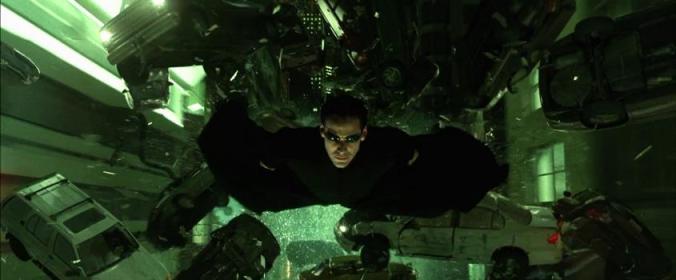
Before Neo gets out of the Matrix, though, once again saved from his purgatories by Trinity, he needs to talk to The Oracle. «Look at you now» she says to him. Neo is a different person. Solid, mature, sane, able to stand by himself, to choose by himself. He is ready. He now has to go to The Source, the real Source, the foundations of his mind, and face Reality: what he once thought to be the enemy – The System, The Program, The Prison, The Machine. Society at large is no-longer the enemy it is just… society at large. He will be able to face it with an integrated self. To himself (and to many in Zion) he is really The One – a man who is whole.

MV5BMzNmNzhhYWQtZDA5Yy00ZjJmLWIzODEtNjUzYzMyMTk1YTYxXkEyXkFqcGdeQXVyNjAwODA4Mw@@._V1_

But to be at Peace with himself, Society and the ones around him he must face his Nemesis: the Monster of his Father, once more. And he must do it alone. He must leave everyone behind him. Trinity takes him as far as she can, but she also dies and says goodbye to him.

In the last fight, the Monster of the Father has infected every corner of the Fantasy. Fantasy is dying and a grim Reality is settling in. By saving Fantasy, hope and faith, Neo will also save Reality and his Relationships with the others. He will save himself. But what can defeat the Monster of the Father? What can defeat Death itself? Certain, deterministic Death. What can stop being the legacy of his Father, the Past, the Immortality of the Ancestor, and become something new? Only choice. «Choice is only choice when we know the consequences of our choices.» And now he knows: he will have to leave safety behind. He will have to risk it all. He will have to choose. Choice is the foundation of our personality and our character. Of our identity. We are not in the world to obey the will of our Fathers. We are here to be different. To choose. To be free.

At the end of the MATRIX TRILOGY, Smith can’t understand why Neo persists in fighting, even though it seems pointless. Even though it is not logical and serves no purpose. Neo says: «Because I choose to.» Smith doesn’t understand that. Conformity, submission, obeying the Law, ending life, is all he knows about. And when finally, with the help of The Oracle (therapist), Neo chooses to stop fighting and accept Smith, he has already won. The Monster of the Father has lost all its power over him. Neo becomes free. And he is accepted by Society, by the Machines. He is finally working with them, not fighting them, and bringing Peace to his own world.

As Neo leaves therapy and passes into Reality, Fantasy is restored. It must. Fantasy must survive within us. With all its strength, it is the foundation of our sanity and must be preserved. But maturity lies in the Reality Principle. Lies in being a Man in a world of uncertainty. Freud said something of the sort: «Sanity is our ability to deal with ambiguity». Will Neo return to his Fantasy world? The Oracle expects as much. Sati draws a beautiful sun for him as he travels to another place.

main-qimg-1a2ab565571e50f610a7d81ead74c7af

This is my take on the MATRIX TRILOGY. I hope you enjoy it. In my next post, I will reflect a little bit about some of the philosophical, political and anthropological conclusions I draw from all this. Until then.

The Amazing Underlying Journey of the Matrix – 2- Reloading

(Second post of a four-post series on the Matrix)

2

So what is choice? What is freedom? If things around us don’t make sense, what could we/should we be doing about it? It seems our minds are sometimes caught in a relentless loop and our behavior comes in patterns that we are unable to control, it seems we are constantly reloading and reloading our actions, so are we really free? Are we controlled by a God or Nature or a System that enslaves us? The goal of psychoanalysis as Freud intended it is to ‘Lieben und Arbeiten’ – to be able to love freely and work freely. It’s to be able to create and to be productive and effective. Not towards the goals of others but towards our own goals. Life is a journey of frustration since we are born. When we are babies, the world revolves around us. If we cry for food, they give us food to our mouths. If we need to piss, we piss. If that makes us uncomfortable, we cry and they will clean us up and make us feel better. If we are sleepy, they will put us to sleep in the safety of their arms. Everything is at our command. We live by the Pleasure Principle – our pleasure is our command. The path to maturity is the path of frustration: it’s understanding that the world does not revolve around us and that reality carries limitations. If we are healthy we should be able to start living according to the Principle of Reality – that idea that we do not control a lot of things but we control some; that having our way with some things, being able to do what we want, also means having to deal with the consequences. We are driven by our purpose, we are driven by our Desire, as Lacan would put it, but for that we need to understand what we want and be able to deal with it intelligently and in an integrated way. Or we become ill. Lacan would say: «Our symptoms are our excuses not to do what we desire.» And so, the loops in our minds and in our behavior are symptoms of not being able to deal with the consequences of our desire. What do we desire? We desire to create and to be free. Or, in another way, we desire those fundamental actions that are still so misunderstood: to love our mother and kill our father, as Freud would put it. We desire to love our mother (to create) and we desire to kill our father (to be free). But still, «there is no spoon» – it’s all in our minds. So that’s why we need to understand what is happening inside our minds to be able to resolve the conflicts and escape the enslavement.

Then let’s go back to the MATRIX and to Neo. At the end of the first movie Neo had gone through that first phase of therapy, learning to accept that he had power over his life – and so be free even to fly.  For that, he had to trust his therapists and had to face some of his inner demons – in particular the figure of his Father, the Monster of his Father – the monster that was mean to him and restrained him and told him the rules and told him what he could or could not do – represented by Smith. He was able to kill Smith, infecting the idea of the Father and understanding that he was in control of that idea – that was the end of the first movie. The idea of the Father he was scared of and was unable to face is gone now. But that was only the first part of therapy. The worst is still to come. The Monster of the Father will return again and again until Neo understands a lot more. That is what happens in the second movie THE MATRIX RELOADED. Right in the beginning, we see Smith delivering his ear-plug to Neo: he’s now loose. The Monster is no longer confined to a single idea of the Father. It is free – or ‘seemingly free’ as Smith would say to Neo a bit later.

Agent-Smith

RELOADED is about loops. It’s about choice. What is freedom anyway? If all is prophesized, are we really choosing? For a schizophrenic nothing really is in his control because everything comes in patterns and loops that don’t make sense. The movie starts with the death of Trinity in Neo’s dream. Will he be able to prevent it? Everything seems already written… Zion, the asylum Neo is committed to, the safe place in his mind, is in danger from the monster of outside – the machines, the systems. Some believe that Neo will be able to save them, to free them, but some don’t. Either way, the danger is real and Neo turns once more to the Oracle. The scene where he meets the Oracle is, of course, the centerpiece of the movie.

The_Oracle_and_Neo_on_BenchHe meets her sitting on a park’s bench. She tells him to sit, but Neo says he will do as he pleases – when he finally sits, he says it was because he chose to sit (things in therapy often happen like this ). When the Oracle offers him some candy Neo asks that if she knows if he is going to accept the candy or not, is it really his choice? The Oracle replies that he already made the choice, he just doesn’t understand it yet. She is speaking of the choices he made so far: to join the asylum, to trust Trinity, to trust the therapists, to believe in therapy, to face the Monster. He doesn’t yet understand any of it. We are only free if we understand our choices, she says, for otherwise we are just randomly accepting loop behavior and the plans of others, I gather. So Neo has to dig much deeper: go to the Source of his conflict and understand why he is who he is, why he chooses as he does – only then will he be able to choose by himself.

Then Neo is back facing Agent Smith – the Monster of the Father. The Agent is now more powerful – he feels free, freer, but he is still bound by the Purpose, he is bound to face Neo, to kill him. That’s his choice. But it’s his choice inside Neo’s mind. In the Matrix. In Neo’s mind, the Monster of the Father is always coming back to kill him. Neo seems unable to get rid of him. He must understand why this is so. For that, he must follow the Oracle’s lead: he must find the Keymaster and go through the secret doors of his mind until he finds the Source.

To find the Keymaster, Neo and his friends will have to face the Merovingian, a man who again seems convinced that everything is the same, that everything is a loop and he has seen it all. Some mental patients have that feeling all the time: that nothing changes, that everything is the same, that there’s nothing you can do about it. Causality is relentless – suggests the Merovingian – relentless and predictable. Everything has already been decided by others, it is pre-determined; whatever idea of freedom one indulges, it’s a weak, ignorant idea. And he seems to be right because, in spite of all Neo’s efforts, he is faced with the events he has seen already happening. Trinity will die.

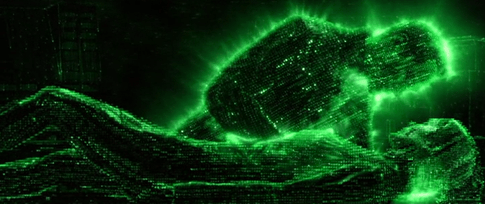
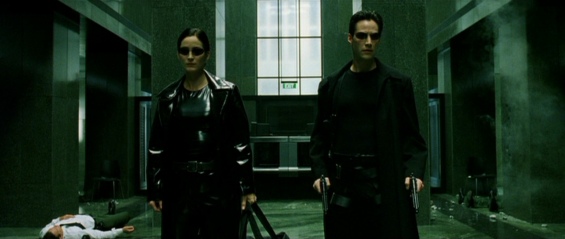
The_Matrix_Reloaded_-_The_Architect_clipWhen he finally gets to the Source, Neo meets the Architect (God? The System? The Military-Industrial Complex? The Evil Corporations? The Government?). He created the Matrix. And he has news for Neo. Neo is not the One, or better still he is Another One. There have been six already – anomalies of the system that are unintended consequences of the measures to secure normalcy – measures like the idea of freedom, hope, choice. For the Architect, everything is logical and predictable. He has the sociopathic mind of a machine. Emotion is but a tool or a defect to him. Everything must have a Purpose. Nothing can be illogical. So he gives Neo a choice: either he saves Zion and Humanity or he saves Trinity – he cannot save them both. Neo does not accept this. In spite of the Architect mocking both love and hope, Neo decides to save Trinity and runs to her.
etTEo

Afterward, Neo turns to Morpheus and tells him: the Prophecy is a sham – it is another control system to make them believe and invest in fairy tales while the System remains in charge. But while Morpheus is surprised and taken aback, Neo is ready to fight – he wants to do something to save Humanity. He is different. He is more grounded, more realistic. As the Nebuchadnezzar, Morpheus ship, is attacked and destroyed and the crewmembers flee for their lives, Neo turns back and faces the machines. With a gesture, he is able to stop them. But how can that be? How can he do that if he is not in the Matrix?  He was only able to change things, to be seemingly free, to be in charge, to choose, when he was in the Matrix, being The One. But something has changed. He now knows he can make his own choices. He can act in Reality. He is not powerless and bound by rules and regulations as a slave. He now can see the Machine, the whole System. And he knows he is a man. And a man is something else.

At the end of RELOADED, Neo is getting to that part of therapy where he can already see his loops, his paranoia, his patterns as what they are: his illness. He now knows he is more than that: he can choose. He has forfeited the idea of The One, of the Miracle, of being all-powerful. And now he will be ready to be free.

Next time will go over the third movie. I hope it blows your mind. Until then.

The Amazing Underlying Journey of the ‘Matrix’ – 1 – The One

The Wachowski’s MATRIX is a definite classic and one of my favorite movies. It was one of the best experiences I had in a movie theater, about 20 years ago: having been in seclusion for weeks before my Law School exams I hadn’t heard anything about the movie, nor seen any trailer or anything – when I went to watch it with a friend of mine the movie was a complete fascinating surprise. It also features one very interesting characteristic: it is a layered movie – a 12-year-old may watch it as a scifi-action-thriller, or you could view it as a profound deep-layered story. I love movies like that – like BLADE RUNNER, for instance.

JRtJ1

For years, when someone asked me what was my favorite movie I’d answer: The MATRIX TRILOGY. And then people would start to rant about how so much poorer the 2nd and 3rd installments actually were when compared to the 1st.  But I was analyzing it at a different level. That is what I want to talk about today – what I see in the MATRIX TRILOGY. Please don’t forget this is only my interpretation – and I will present some very complex concepts in a simplistic way. I’ll try to show you how I view the trilogy as a single unified story with deep philosophical, psychological and political implications. I hope you enjoy it.

‘Reality’ is a learned concept. I know – that blows your mind. But it is. In the first few months of our lives, we learn the basic concepts that will be the building blocks of our mental health. We learn Love and Hate, and Guilt and Frustration, and how to handle relationships. And before that, we start learning the rules – that things move in a certain way, that there are a lot of sounds and a lot of colors, that banana taste one way and tomatoes some other way. We learn ‘Reality’. The idea that everything out there is a ‘unified world’ is not particularly obvious – especially if the ‘rules’ of that world seem confusing. And sanity can be severely impaired if we cannot learn these rules or the unification of the world. There are a lot of theories about how schizophrenia forms and develops until the trigger events usually in the late teens when the ‘Reality’ referees of our childhood are no longer useful. But basically, I’d say that schizophrenics find it difficult to unify reality so they split it into different segments as if there were these isolated ‘boxes’ or ‘shelves’ where you can store your ideas of the world. The problems happen when these ‘shelves’ get mixed up and everything becomes confusing – you even start believing that what everybody tells you is a lie, because everything is contradictory.

Why am I speaking about this? Because when I look at the MATRIX TRILOGY I see the description of a Lacanian therapy process of a schizophrenic patient. Let me show you what I see. Indulge me.

Anderson, the protagonist, lives two different lives. Besides being a computer engineer in a large firm, he is also Neo, a skillful hacker who earns some money through illegal means.  This man lives two realities and, as Agent Smith tells him, only one of them has a future. This man is looking for the truth: the answer to that basic question he can easily identify – What is the Matrix? What is Reality? Inspired by someone dear to him, maybe the love of his life, embodied by Trinity, he seeks help and after some hesitation, he submits himself to a treatment facility. When he is taken in the car, he feels threatened (in the movie, a gun is pointed at him) – it has to be our way (an employee of the organization tells him), or the highway. He opens the door, hesitating, but it’s the one dear to him that tells him: ‘you know that road, Neo, you know where it will take you’. That is the moment that Neo decides he will go into the facility. They take him to a weary room where he meets his first therapist: the man known as Morpheus. Morpheus tells him: I’m only offering you the truth. The paranoia Neo feels is real. Reality is a sham.  The Big Brother, the Big Other, is controlling everything. He shows Neo two pills and gives him a choice – he either walks away or he goes through the rabbit hole and finds out the truth. Neo accepts the challenge and submits himself into the facility.

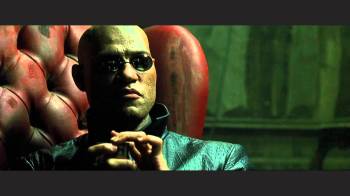
maxresdefaultIn his next session with therapist Morpheus, Neo is told they are looking for The One. The Wholeness. The One that really created the Lie and which is the key to unraveling the truth – Reality itself. They are looking for the Subject, for Neo himself, and when he’s ready he will be able to change/accept Reality and become One with himself. Morpheus introduces a place called The Construct, a ‘safe place’ where Neo can develop his abilities, even though he is not able to make great jumps on his first time. Morpheus also assumes, by therapeutic transference, the role of the Father. Even though the Father himself is represented by Agent Smith.
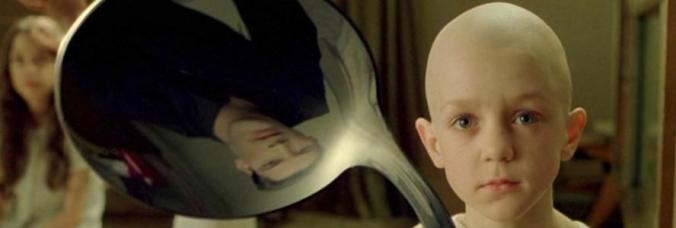
Neo meets the other patients, having a conversation at the cafeteria about what chicken tastes like. ‘What if the Evil System even decides and imposes on us what chicken tastes like?’ How paranoiac can they be?

the-matrix-spoon

Finally, Neo is taken to a different therapist. The one they call The Oracle. After the delicious ‘There is no spoon’ (it’s all in your mind) episode Neo meets the Oracle. She looks at him and tells him: ‘You know what I’m going to say.’ And he ventilates his doubt: ‘I am not the One.’ She never confirms or denies it. It doesn’t matter what she thinks: it’s all about what HE thinks. That’s therapy. She also tells him something very important: a crisis will come when he will have to decide – either he risks it all and he accepts therapy and the figure of the Father (both Morpheus and Agent Smith); or he will run away and turn his back on all the hope Morpheus is bringing to him and the fight is lost. Either he dies or Morpheus dies.

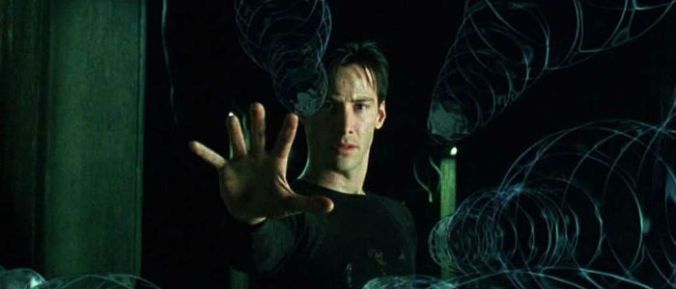
Next thing you know, the events in the prophecy are happening. Morpheus is taken and everything suggests he will not survive. Then Neo makes his most important decision: he accepts therapy. He will die so hope will live. He will go into the lion’s den and die so he can save Morpheus. Trinity decides to help him. She is always there when he needs it. She loves him. And that’s when that amazing Hall Scene happens.  And Neo saves Morpheus. His first words to his newfound therapist are: ‘But The Oracle told me…’ And Morpheus replies: ‘She told you what you needed to hear. There’s a difference between knowing the path and walking the path.’ Pure therapeutic stuff.

Matrix-700

As Morpheus and Trinity run to safety, Neo gets stuck confronting the Monster of his Father (Agent Smith). He decides not to run and Trinity, surprised, asks Morpheus: ‘What is he doing?’ And the therapist replies: ‘He is beginning to believe.’ The whole third act is the patient Neo starting to believe in the process. He actually dies. He gets shot in the chest by Agent Smith and dies. But he is no longer helpless. With the strength and love of the ones around him, he got strong enough to resist confrontation with the Monster of his Father and he comes back to life. He finally faces Smith completely in control. He now knows it’s possible.

In the final scene, we see Neo calling The Matrix i.e. his Family from a pay phone. He’s different now and he tells them: ‘I’m going to show these people (my inner beings, me) a world without you – a world where anything is possible.’ He now knows that therapy can empower him to live without the oppression of his Family’s history, of all that made him so ill. A world where he can fly. Neo finished the first part of therapy: he now believes in the process, he believes he’s The One, but the hard work is ahead of him – he will have to solidify his liberty, solidify Reality. Become Whole.

neo-matrix-keanu-reeves

I will continue the story of Neo, the schizo patient, in my next posts. That will show you, I believe, how the MATRIX RELOADED and MATRIX REVOLUTIONS fit in all this. I hope it makes sense to you but if it doesn’t I hope at least you have fun. Or a fraction of the fun I have been having analyzing this trilogy all these years.


Track B: On Publishing

(This is the third post of a three-part series On Becoming a Writer)

So, about publishing. Why do you want to publish? For me, there are several reasons I publish or I strive to publish. But first of all, a word of caution: publishing is not about writing. You don’t need to publish to write. Publishing and writing are different processes and it will spare you a lot of pain and suffering if you don’t confuse both rails of the track: write, always write, never stop writing, but publish only when it’s advantageous to you. Don’t ever wait to publish a text to start working on another text. That is a big mistake, in my view. Publishing or producing a play or a script often depend on others or on different circumstances – maybe you need some money for it, or some time, or someone to help you, or whatever. Writing, on the other hand, depends only on you. And it’s all about the process. The Path requires that you dedicate to writing and to be read. It’s not about publishing.

book-publishing-3

So why do I publish? First of all, I publish to connect. Writers need readers. Writing is about being read. Maybe some of you like to think you write only for yourself. That is reasonable – but you are also a reader. When you write, you are always connecting with someone – the reader. Publishing allows you to connect with more readers – hopefully, many readers. It gets you closer to the people you want to connect with.

Secondly, I publish to get my work out there. When you work hard on your text, when you invest time and effort, you want to share what you did – not only for people to appreciate what you do but also to be evaluated by the public and by peers. Being accepted by agents, publishers, critics and audiences is important – it means it’s been worth it. It means your story and your characters and your metaphors and your dialogues – are good. Or good enough. On the other hand, it is also a way to learn – all those agents, publishers, critics and audiences will certainly let you know what you could have done better, just as much as what you’ve done right. And that’s precious. If what you could have done better is more than what you did do right, it could be unpleasant. But it’s still very valuable. The worst thing of all is writing badly and continue to write badly forever.

Thirdly, I publish to earn a living. Now, there are huge misconceptions about this particular reason: if your main purpose in life is to earn a living as a writer, forget about it. It’s not a very good way. Warren Buffet always recommends investing in a line of work that has ‘Good Underlying Economics’. Meaning: how easy it is to earn money doing it. Banking has ‘Good UE’. Insurance has ‘Good UE’. Telecoms and high-tech have ‘Good UE’. Writing and publishing have ‘Lousy UE’. It’s just not a good way to earn a living. Don’t expect to earn a lot of money doing it. This said, I’ve earned money writing in several ways: journalism, advertising, commercial writing, ghostwriting, speech writing, playwriting, screenwriting, training writers and screenwriters, selling books. Did I make a living out of it? Barely. Most of the time I have to do other things to earn my keep. But my goal is, in fact, earn a living writing and publishing. I’m still years away from that, though. And I came to this goal after decades of investment and recognition. It’s not for everyone and you shouldn’t try it unless you are reasonably sure you will be able to make it. Otherwise, you’ll get in a hole where writing will be the last of your issues.

Of all the ways you can earn money writing, publishing is not the best way by a long shot. Most published writers don’t earn a lot of money. But for the love of all that’s sacred, don’t ‘pay’ to get published. That’s the worst bargain of all. And for the most part defeats most of what I said in the previous paragraphs: if you’re doing good work you can be successfully published or self-publish and gain an audience. Agents that ask you to pay in advance or vanity presses that ask you to pay to publish you are parasites, pure and simple. They are six-legged animals that jump onto your face, grab your neck with the tail and lay an egg in your throat: sooner or later they will also burst through your belly and kill or damage your chances as a writer.

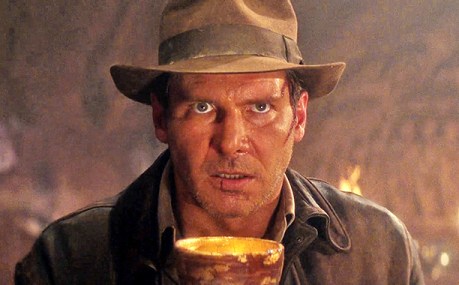
indiana-jones-and-the-last-crusade

Fourth: I publish because I am searching for the Holy Grail. I publish because my ideal goal is to write a bestseller or a classic. I want to write something so good that it would be considered to be extraordinary. I dedicate my way of life to that search, even though I know for a fact the odds are against me. I have embraced that goal with all my heart. That’s the way of life that I have chosen. What I call The Path.

In sum, I publish because I am a writer and, as a writer, I need a reader. That’s the Yin and the Yang, the feminine and the masculine elements of that creative phenomenon that is telling a story.

Publishing is not easy. It is a difficult, slow, frustrating process. Self-publishing might seem more achievable, but drawing an audience, selling enough books, is always a considerable challenge. I believe the industry will relinquish to self-publishing and that the new generations of Nobel Prize-winners will come from the self-publishing field. But it’s not an easy ride and don’t expect any quick return.

Also, don’t try to do it alone. Publishing is a collective game. You need people to help you all around: agents, editors, proofreaders, cover artists, beta readers, reviewers, etc. Networking is the bread and butter of publishing. But here are the good news – we are all connected. Remember the six degrees of Kevin Bacon? This is the thesis: everyone in the world is connected to you by a maximum of six degrees. I’ll prove it to you. This is how I’m connected to the last few American Presidents (forget the fact they are all connected to each other):

gettyimages-84206003_-_h_2017

1.Bill Clinton: my father once organized a conference here in Portugal and he invited Alan Greenspan to speak. Alan Greenspan was Clinton’s Federal Reserve Chairman, thus, three degrees (me to my father, my father to Greenspan, Greenspan to Clinton)

2. George W. Bush: I was once interviewed by a journalist named Catarina Portas, who was the sister of Paulo Portas, Portuguese Minister of Defence in 2002, who met George W. Bush in the Azores. Thus, three degrees.

3. Barack Obama: I met the cousin of a friend of mine. She’s an international actress who performed with actors like John Malkovich. Connect Malkovich with any number of people who met Obama, including Oprah or any number of actors who met Oprah. So: three or four degrees.

4. Donald Trump: a few decades ago I went to Law School. One of my professors was Marcelo Rebelo de Sousa, who is now President of Portugal. He was at the White House shaking hands with Trump just a few weeks ago. So, two degrees.

Well, if I’m connected like this to four different US Presidents, so are you, in one way or another. And you’re probably just a couple of degrees away from a good agent, a good publisher, a good publicist, a famous writer, etc. Networking works. It’s not easy to get published, but it’s not impossible. Just ask for help and work it out. In the immortal words of Rob Schneider: ‘You can do it!’

Don’t forget: publishing will help your writing which in turn will help your publishing. It’s all about the searching, not the finding. Believe in this, take it in your heart and persevere. Success will follow. One way or another.

I find I have a lot more to say about The Path than I was able to say in these last three posts. Of course, I will write a lot more about it in the future, maybe even next week or the other after it. I want to write about marketing, for instance, or about The Voice. But for now, I hope this small three-post series is useful to you in any way. I hope you can understand a little better the quest you have embraced or you are about to embrace. I welcome my fellow knights. Those who follow The Path. This is an honorable but unforgiving quest and we are all brothers/sisters in arms.

Track A: On Writing

(This is the second post of a three-part series On Becoming a Writer)

‘Writing’ is its own animal. Finishing writing a story has that same feel as a kiss with someone you’re in love with. It’s like fulfilment inside a moment. As watching the sunrise from the depths. It’s something else. So writing a story is, or should be, or it is to me, its own reward. I don’t write to ‘be famous’ or to ‘be rich’ or to ‘impress’ my family or my friends or to ‘be published’. I write to write. I write because I love it. And thinking like that is, in my view, the best way to keep writing. To keep at it. Because it takes a long time to become good at it.

writers-block.jpg

When I was young I loved to invent stories. I would plot ‘plays’ and ‘characters’ for me and my brother to enact in the garden. Until my brother got tired of it. So the stories just kept going in my head. Finally, I decided to write them down, scared I’d forget about them. But writing them down was much more difficult than I thought. They kept changing in my head and the words I put down didn’t really convey everything I was thinking. I started a couple of novels but by the third chapter I felt my style completely different from the beginning. It was changing fast and out of control. Maybe because I was young: I was about 13 at that point. So I made a conscious decision – one of the most successful decisions I ever made in my life: I should write short-stories until I was able to dominate my style. Short-stories were easier to control, and I would finish writing them before my style changed. I also decided that I would purposely write each story in a different style – try never to repeat the form of one story I’ve written already. I did this for years! I wrote stories without dialogue, I wrote stories only with dialogue; I wrote stories with several POV’s, I wrote stories with a single POV; third person POV, first person POV; stories with song lyrics popping up; stories with humor, stories with tragedies; satirical stories, surreal stories, real stories, with strong endings and open endings. For years, I learned and nowadays I can tell you that I am very flexible in my writing, I can change the style almost as I please and that happens because I wrote short stories for years in my teens.

What I didn’t do was very long stories. My short stories were usually well… short. Just a few pages long. And I missed the space, because I felt I wanted to develop characters and I was unable to do it properly. So I started writing novellas. I still thought I was unprepared to write novels, but novellas, 40 or 50 pages long, sounded about right. I did this for a couple of years. Must have written about six or seven of them – some of them now lost in the graveyard of obsolete computer operating systems. When someone challenged me to participate in one of the largest literary contests in the country I had a novella just written called THE ICE IS NEAR. I submitted it and won an Honorable Mention. I also got a few notes from one of the juries showing me, to my utter shame, how many spelling mistakes I had made. This was before Spelling Check Programs came along. I got in my head this wouldn’t happen again and in a matter of months I stopped making spelling mistakes altogether. Months after that I submitted a short-story, MINDSWEEPER, to the same contest and won it.

A novella is a lovely format. It can be perfect. It’s long enough to develop a character and short enough for the plot never to confuse you. You can control it. But for some reason, it’s also not much fun to write. It misses something. So I was in my mid-twenties when I decided to go back to novels. I wrote my first one, OUT OF MY HAND, and loved it. I loved writing it and was very happy with it, but as I gave it to some people to read I started finding problems with it. More and more problems. So I put it away and wrote another one. LISBON BYTES. And then another one, DARWIN, and then another one THE FALLEN MOTHER. They were all awful. People didn’t like them. I got a meeting with a publisher who was kind enough to read one of them and she was sad as she said: ‘there’s nothing there’.

So I left it for a while. I wrote screenplays and plays and other stuff – nothing that was produced, or anything. I could not ‘not-write’. That was impossible. So I wrote. With no plan. For years. Then finally I started working on a project I had downplayed for a long time. A story about a Special Forces operative from the future who ended up on a different planet that resembled Earth in the Middle Ages – THE ALEX 9 SAGA. It took me 20 years from the first idea to the finished product, but I finally wrote it and submitted it to one publisher I knew (because I wrote one short-story for an anthology of his) and he loved it. I was a published novelist a year later.

And that’s basically my story. Becoming good, or good enough, at writing was not easy. But after this entire struggle I believe I have some things I can share about writing. First thing is: it’s all about communication. I promise to write a lot more about that subject in the future but for now let me refer you to this post.

Second thing: I started putting a process together. Everyone has his/her own process and I will not cover the particulars of my personal process this time. Also, I have to say I only started writing systematically good stuff when I found my Voice. Your Voice is the understanding that you have ‘something to say’. Find out what it is, or you will suffer. I will also write about that in the future. Let me tell you now, instead, broadly, what are the main phases of my process. They are as following: gimmicks, concepts, stories, structures, first draft, final draft, edited draft. Here they go, one-by-one, see if they make sense to you:

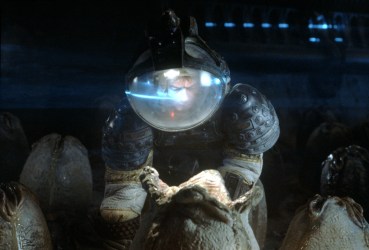
1.Gimmick: imagine I was having lunch with a friend or something and eating spaghetti and an idea came to me – ‘what if there was this race of aliens that grabbed on to your face and laid an egg inside you and then they grew and came out through your belly as you ate?’ I bet my friend would jump and say: ‘That’s brilliant!’ Understand: this is not a story. Not even a concept. But it’s a good gimmick: something that attracts an audience. Gimmicks, in my experience, are the genesis of a concept.

alien2.jpg

2.Concepts: then maybe I went home and sat in front of the computer and developed a concept – ‘What if there was this cargo ship that followed a distress signal to a planet where they found those eggs and brought an alien to the ship, and the alien was a terrifying predator who killed them all – except the hero.’ The concept is the first seamlessness of a story. If it’s a High-Concept, as they tell you in Hollywood, it will be able to convey the attractiveness of the story in a line or two. I try to collect as many concepts as I can, and I write them down on an XL spreadsheet. That way I’m never short of ideas to write about.

3.Story: a story already has a protagonist – ‘Ripley is this crewmember in the cargo-ship Nostromo and she has a cat. As the alien destroyed her crew, she is able to vanquish it through intelligence and daring actions until she throws it off the ship. The cat also survives.’ This is much closer to a story. Because you have characters. At least the protagonist is now clear in your head, and most likely also the antagonist. At this point it can be important to start to develop the characters more and more – even though I confess it’s rare for me to have the characters fully developed until I’m well into my writing. But do as it fits you.

4.Structure: some people call it an Outline. But I mostly start with an Aristotelian program: Act 1, Act 2 and Act 3 – Beginning, Middle and End. How’s it going to play out? When I have the whole structure in my head I many times check it against Snyder’s Beat-Sheet. Check out SAVE THE CAT for that. The Beat-Sheet basically decomposes Aristotle’s 3-Act structure in 15 beats. And it’s a hell of a tool. I love it and I use it. But mostly to check if I have everything in the right place.

5.First Draft: then I write. This is the slowest but usually the most interesting and pleasurable part. It can take years or weeks or days. I keep thinking as I write and I change things and nudge the story here and there. But I try not to get stuck, never really stop. I can stop actually putting down words for a few days, but my head must always be there, working the scenes, deciding what the characters are going to do, figuring out what comes next.

6.Final Draft: when I finished the first draft I go back and look at it and re-write and work at it some more. And then I give it to beta-readers, people I trust that will give me their first impressions. After that, I’ll go back to the draft and change it until it ‘feels’ finished. That’s when I start editing or give it to a professional editor.

7.Edited Draft: after going through the editing, the text is finally ready for publishing. But that’s another track altogether. My opinion is that you shouldn’t confuse the two. You write, you finish it and you put it in a drawer. At this point, I’m ready for another story. I will try to publish my finished stories of course, but the Writing Track is now mostly closed. And I didn’t write about Ripley and the cat, of course, or I’d be sued into oblivion, even though I would love to have come up with that idea.

z20293079V,-Obcy--Osmy-pasazer-Nostromo---rez--Ridley-Scott--

You don’t need to work the same way I do, of course. Nobody does it the same way. But you need to find out YOUR way. Make it about the story. Make it about the people who will read it. There’s a line that goes from your heart and mind to the characters’ hearts and minds to the reader’s heart and mind. If that line is one of the most important things in your life, then you are a Writer. Preserve it. That line is fragile. You can work in your process and your style and your writing for years, but your goal must always be the same: to create a strong enough, fine enough, lasting enough line. Can you captivate your characters so they captivate your audience? Can they captivate you?

You need training. We all need training. We all need a lot of hours putting down words. You can have writing courses, coaching, advice, literature degrees, whatever. Those are sometimes useful and sometimes not. But there’s no substitute for one thing: writing and writing and writing.

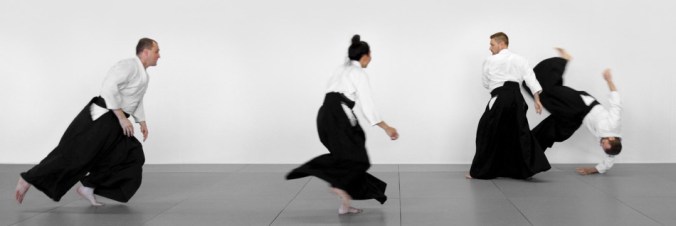
AikidoLA Website home cover picture

Back in my twenties, I trained Aikido for a while. Aikido moves are lovely and clever and fluid. Sometimes I would turn to my Master fascinated by a move and I would start saying something like: ‘Master, I was thinking about this move…’ And he would invariably stop me in my tracks and say: ‘Don’t think. Do. Black belts may think. White belts must do.’ I may not be a black belt in writing yet. Maybe a brown belt or a blue belt. I still have a lot to learn. But I can stop and think about writing for a little bit. My advice to you, whoever you are, is this: train and train and train. Write and write and write. Don’t argue with me. Do. That’s how you become a warrior. That’s how you become a knight. That’s how you become a writer.


The Path: On Becoming a Writer

Somebody asked me: how do I become a writer? That’s a question that is always looming somewhere in the shadow, isn’t it? Always waiting for us around the corner, as if there was a single answer. There is no ‘one’ answer to that question, but that doesn’t mean I don’t have anything to say on the matter. First of all, let me speak once more about something that is commonly said: a writer is someone who writes. That is true. But not everyone who writes is a writer. For years I would tell everybody I ‘wrote stuff’ and I looked incredulous at people who would write a poem or an essay and figured they were writers already. I really thought that was completely disrespectful to the ones that are dedicated to the Craft.

The-Script-Writer

It took me a long time to consider myself a writer. Some time ago, someone got me to believe that a ‘writer’ is someone who writes, but an ‘author’ is a more serious maybe published writer. That’s all rubbish in my view. This is what I think: a writer is someone for whom writing is at the center of his/her life. It’s someone who writes for a living. Not in the sense that he/she gets paid and survives off the writing, but in the sense that his/her life is about writing. A writer writes and is read. Maybe by a few people, maybe by a hundred, maybe by a million. But a writer writes and a writer is read all… the… time. That is his/her commitment. To a craft. To a way of life. That’s what makes a writer.

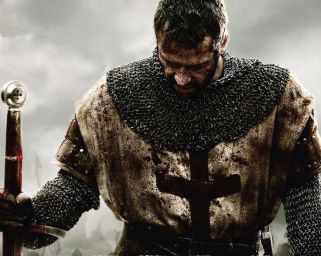
A writer is committed. Think of a writer as a knight looking for the Holy Grail. The Holy Grail is probably a bestseller. A bestseller that would provide fame and fortune. Or the Nobel Prize. Or the Pulitzer. This commitment to find the Grail is what I call: The Path of the Writer. Very few writers will ever actually find the Holy Grail. And of these even fewer will be able to find it with their first book. Finding the Grail usually demands endless search for years, a lot of suffering and learning, a lot of talent and skill, and a lot of luck. Most writers will never find the Grail, but those who do must commit themselves to the search completely. The odds are against them, but they accept those odds. Because that’s the way of the writer. It’s not about the finding, it’s about the searching. A writer is not successful only if he/she writes and publishes a bestseller or wins the Nobel Prize. A writer is successful when he/she accepts the odds and seriously takes on the mission of searching.

Sometimes I lack the grace to suffer with gentleness some kinds of questions from would-be writers. How should my character be? How should I write the first sentence? What story should I write? Should I have many characters or few characters? Can I have more than a protagonist? How many chapters should I have? How many pages should I have in a chapter? All these questions denounce a writer who is not serious, who is not seriously contemplating The Path of the Writer. Before I became a writer I read many books with many different characters; many different kinds of first sentences; many different kinds of stories; with many characters or a few characters; with several protagonists; with all kinds of formatting for their chapters. Can there be any notion in the mind of someone who is seriously considering The Path that there are these rules you ABSOLUTELY must follow? Read Faulkner, for Christ’s sake! Read Duras! Read George R.R. Martin! Read Melville! Read Hemingway! Read Shakespeare! Read Woolf! Read, and tell me what part of ‘No Rules’ don’t you understand!

I recently gained a habit: when someone asks me one of these questions like ‘Should I have more than one POV in a chapter?’ I usually reply this way: ‘Yes, it’s in the Manual’ and I add something like: ‘Page 96. If you don’t know it, you’ll get in trouble!’ To my complete surprise, it’s not uncommon to have to explain a bit further something that should be obvious: THERE IS NO MANUAL!!

the-last-samurai

In Edward Zwick’s movie THE LAST SAMURAI there is a scene when Tom Cruise’s Westerner character is learning combat skills from samurai. He is practicing and always gets bested by his opponent. Then one friend in the audience comes to him and says the following: ‘Too many mind. Mind the sword, mind the people watching, mind the enemy. Too many mind. No mind.’ Let me say to you, fellow warriors, who walk the Path of the Writer, the following: ‘Too many should. Should do this. Should do that. Should listen to publishers. Should listen to teachers. Should listen to family. Should do what books say. Too many should. No should.’ The whole world is before you… ‘The world is before you, and you need not take it or leave it as it was when you came in.’ So said James Baldwin.

Of course, a knight has tools. Has a horse. Has a sword. Has a shield. Has an armor. And a writer has tools. Tools of structure, of character development, of outlining, of style, of grammar, etc. But the tools are not rules. That actually sounds good. I’ll print it on a t-shirt: Tools are not Rules. They do not tell you how to write: they help you write better. They help you solve problems you will encounter in your quest. But it’s you who will have to create new solutions and new ideas and new approaches to the challenges you face.

cleanA writer, as a knight, also needs a strategy and a plan for the search. You must understand the difficulty of the quest and be ready for it, planning long-term what you have to do. If you believe you need to write in English to approach the global market and you do not know English: go learn English. If you believe the Chinese market is the future: go learn Mandarin. It will take years? It will be difficult? Yes: but if that’s your plan commit to it. If you think you need to travel: find a way to travel. If you think you need money: earn some money or find patronage. But have a plan and be persistent. The Path is all about persistence, sacrifice, resilience and determination.

I want to tell you more about The Path of the Writer. For now I will write two more posts on it. I will speak of the two different Tracks one must follow on the Path. They are connected but they seldom cross. They are like the tracks on a railway, side by side, not really touching each other, but leading to the same destination and dependent on one another. Track A is Writing. When walking The Path you need to write. Always write. Never give up. Face the blocks, and the doubts, and the deadlines, and the lack of time, and the distractions, and write. Track B is Publishing. And for that you need courage, and persistence, and resilience. I will write one post on Track A and another on Track B. They will be following over the next few days.

writer

Maybe right now you are already negotiating in your head: ‘But I have a job, and I have children, and I have a family, and I have friends, I have to go to the gym, and rest, and go buy groceries, and pay my taxes and sleep. How can I reconcile all that with writing, with walking The Path?’

Let me tell you a lesson in Time Management someone once taught me and which never escaped me. Time cannot be managed. You cannot add hours to your day nor move them around. 3 a.m. will always be 3 a.m. The same 24 hours exist in each day. The same number of days exists in each year. And you cannot really control the given years you have in your life. All you can do is decide what to do with your time. Time Management is all about one thing: deciding what’s important. Deciding what takes precedent. If you are committed to writing, you’ll write. And that’s all there is to it.

Attack on Titan, Naruto and Other Anime: Enter Ambivalence

This weekend I started watching SHINGEKI NO KYOJIN (ATTACK ON TITAN) Season 3. I love anime. I’m not a crazy nerd anime lover (i.e. otaku) who knows everything about any anime that comes along, but I know a few and love a few. I think Japanese writers and in particular Japanese manga and anime writers are excellent at plotting and character development. Character development in particular is something I want to talk about today. I’m not particularly interested at this point on a Truby Web, describing Weaknesses and Values and Desires and other things. Let me look at other related but simpler things. In particular, let us look at Ambivalence.

Shingeki no Kyojin

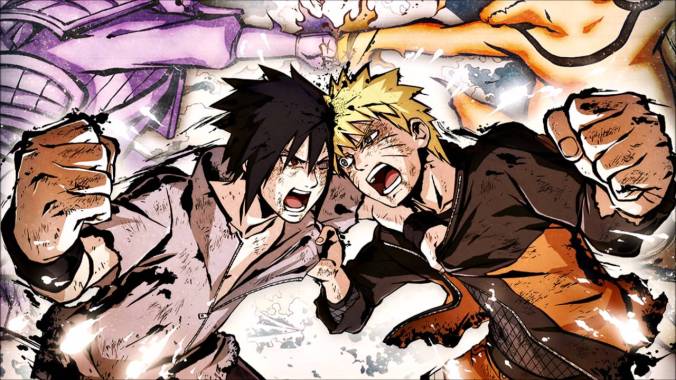
So, one of my favorite anime is NARUTO, a franchise that spawned over 700 television episodes and several movies. This is the story of a young boy living in a world of ninjas. Once, his village was attacked by a giant monster called the Nine-Tail Fox. To save his village, his parents gave their lives to seal the giant monster inside the belly of their small baby. So Naruto lives his life without his parents and grows up ostracized by the whole village that hates the monster sealed in him. He acts out and becomes a delinquent until he is accepted in young ninja’s school and meets his friends and teachers. Including the solitary dark mannered Sasuke who will become Naruto’s best friend. Now Sasuke also has a tragic story: his big brother murdered all his clan except for Sasuke himself. Sasuke vowed revenge so he is trying to become the best at ninjutsu. And this is what makes it so interesting. Let me spell it out for you:

In the 20th century, a woman named Melanie Klein elaborated upon the work of Sigmund Freud and created a school of psychoanalysis in Britain starting with children therapy. Her work became very important and her doctrine is still essential, propelling names like Donald Winnicott or Wilfred Bion. Winnicot, in fact, said a particular sentence that applies perfectly to NARUTO: «It is a joy to be hidden, and disaster not to be found.» But let’s go back to Klein. In her work with children she found some very interesting concepts. One is that we actually learn Love and Hate. In the first few months after we are born our experiences of Love and Hate will form our character. But something else happens. We also learn that it is possible, even absolutely common, to love and hate the same person. Things are very seldom black and white, most of the times they are grey.

So, in NARUTO the name character has an incredible ability to love and to share love. His whole life is one of optimism and looking for Love. On the other hand, Sasuke holds on to Hate – his whole life is one of consistent Hate. So in theory, this is a very straightforward story, but this is where the Japanese excel: they work with ambivalence. When Sasuke (SPOILER ALERT) turns to a criminal life to become stronger and go after his brother, Naruto’s self-appointed mission becomes one of being strong enough to bring his friend back to a good life. At the same time, he will have to contend with the monster inside him always alert to corrupt him. On the other hand, Sasuke will learn that his brother’s story is also complicated and that there was a good reason for his clan to have been murdered. More than that, the fate of the whole world seems to hang in the balance of the two friends/rivals: only if they work together will they be able to fight Evil itself. So… will Love (Naruto) be stronger than Hate(Sasuke)? Nothing is obvious or simple.

maxresdefault

The Japanese do this over and over again. Anime series often start with what looks to be a very simple Good vs. Evil story, but soon all that was thought to be goes out the window and becomes more complex. We soon start to find Evil in what appeared to be Good and Good in what appeared to be Evil. Unlike many Western stories, Japanese characters always have difficult not so straight-forward decisions to make. And we ourselves may become in love with characters that are corrupt and the other way around.

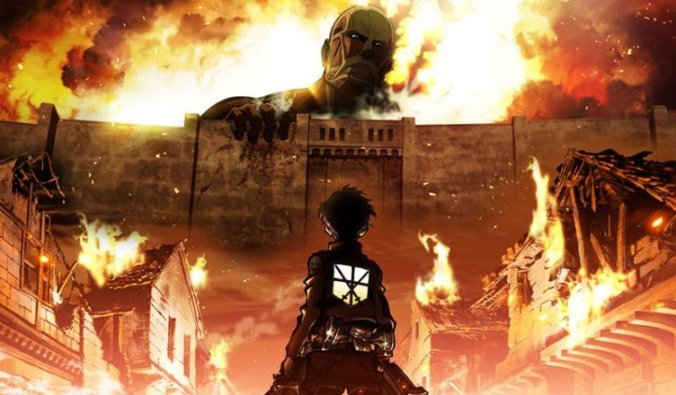
This happens in SHINGEKI NO KYOJIN (ATTACK ON TITAN): the story happens on a world where Humanity lives inside a fortress of extremely tall walls aimed to protect humans from the Titans: enormous dumb giants that roam the Earth and eat every human they can find. Yes, exactly: they pick up human beings and take them to their mouth and eat them. So here’s the interesting part (SPOILER ALERT): we follow a group of military elite recruits as they train to hunt these giants… only to find out that one or more of these recruits actually will turn into giants. And also that some of the giants are not so Evil themselves. And here we go again. We’re thrown into ambivalence again.

Ambivalence, the co-existence of opposite and apparently incompatible feelings are the building blocks of our inner struggles. And they might not be just Love and Hate. How about courage and cowardice? Strength and weakness? Happiness and sadness? If you can bring these ones against the others inside the same character, you can have a huge white canvas in front of you. You can paint whatever you want.  Remember Sun Tzu in THE ART OF WAR? He says this:  «Order or disorder depends on organization and direction; courage or cowardice on circumstances; strength or weakness on tactical dispositions.» So these distinct feelings, like chaos and peacefulness, can actually be manipulated by extreme events. And this is what the Japanese writers do: they propel their characters into extreme events and make them extremely ambivalent.

shingeki_no_kyojin_fan_art_by_1oshuart-d71bmjh

Or not: maybe what makes a hero, in the end, is his/her clearness of mind. Maybe everything is confused and the only one that can make a clear-cut decision is the protagonist. And that’s what makes him/her a hero. Think about that!

As for me, I’m still learning a lot from Japanese animation. It features some of the best writing around. Forget about tropes and clichés: focus on the dialogues and the character development. It’s superb most of the time! Let me go back to my TV.


On Books and Birthdays

So the 5th of August in the year of Our Lord 1971, I was born in the Western city of Lisbon, capital of the once Kingdom of Portugal, recently re-named as the Portuguese Republic. This is the excuse I have for having done the least possible today. I picked up a book, a chair and a cooler spot and I read as much as I could, finishing a book I bought not long ago. That was my present to myself. Looking back I spent a few of my favorite birthdays exactly like that: on a safe place, quietly surrounded by loved ones, discretely sitting with a book in my hands. There is a long and complex discussion out there about what books should we encourage kids to read in school and what to do about reading and writing and publishing books. Are people reading more or less? And what kind of books should you read? And write? And how to publish? Let me speak my mind about these things.

360

Reading should be fun. Not a duty, fun. Does that mean that you shouldn’t obligate students to read certain books? Well, books are knowledge as well, they are culture. I read a lot of important books in school that are much more important to me than all the math I learnt. However, I wasn’t discouraged by the mandatory reading as many others were – even though I did find that mandatory character bothersome from time to time. But make no mistake: I read books because I was taught to. I had parents and other parental-figures who read books and who encouraged me to read. My father bought me my first ‘no-picture’ book when I was almost 10 and in spite of my reluctance (it had no pictures!!) it was that first book which I enjoyed so much that propelled me to read more and more. Example is by far, in my view, the best way to encourage others to read and it’s upon us all to encourage the young.

But are people reading less? Many of the numbers say yes, even though there are several confusing statements about what is happening. According to The Washington Post, the NEA surveys in 2015 show that only 43% of Americans read a work of fiction the previous year. Of course, when you cross it with PEW research that says about 73% of Americans read at least one book the previous year you’d begin to think it’s only fiction reading that is on the decline.

However what we might actually be witnessing is a complete revolution in the way people ‘read’ and ‘write’. Audio-books, ebooks, and other formats have been systematically changing the scenario. Also, as many books are cheaper to buy, many may not be so pressed to read a complete book before tossing it away. But these are extrapolations of mine. What I would like to learn is what’s happening beyond America. More: what’s happening beyond the Western World? I would bet that people in Asia and Africa are reading more. Am I mistaken? I couldn’t find that out: somebody with data please help. The only thing I could find out is that literacy rates have been climbing in the whole World with particularly positive growth in areas as Southeast Asia – the most populous place on Earth. The rise of Amazon also means that books that once were only available to this or that region or country are now available to the entire World. The market is truly becoming global.

images

But how about writing? I think that until recently the fiction-writing market was a star-market. Just like football players, the very few writers that were on top of the game were able to make fortunes, but the lower level writers couldn’t even earn a living – and that was the largest percentage of writers. Self-publishing, however, changed all that. Ebooks and Print-on-demand created a whole different class of writers: the class in the middle, who could earn good money from their writing but would not get famous nor rich. This is taking  publishers into a slow but relentless crisis. I have no doubt in my mind that self-publishing will in the near future take all vanity-press publishers out of the market  (they really have nothing to offer), but it will also make tremble the large towers of the great publishers in the habit of dictating their will on us poor writin’ folk.

Self-publishing is already doing two important things: 1) it’s bringing to the market a mass of new writers who were previously kept from publishing for several reasons – or at least publish what they wanted – and so there are a lot more titles in the market and cheaper ones as well; and 2) they are changing the rules of the game. Big publishers will still have a place in the market, but they will become more and more elitist and they will have to learn how to market ALL their authors: if they are expecting writers to market themselves they will be out of the game completely – what are they offering really beyond marketing?

Maybe that’s why in the end the numbers don’t add up. Because there are plenty of contradictions: people (Americans and British) read less, and traditionally published book sales are on the decline, but there’s a whole market of new sources of publishing that is definitely booming. You can look at the Scifi/F numbers right here. Even though the traditional publishers are showing concern because of a decline in consumption of Scifi/F writings, when the numbers are properly considered it seems it is actually increasing.

tips-for-writing-a-novel

I always say that writing is as reading in the following way: both should be done in pleasure. Both should give you pleasure and catharsis. The revolution is here. We don’t know how we will be reading or how we will be writing and publishing in the future. I don’t mean next century, I mean in the next 10 years. Everything is changing: the audiences are changing, the clients are changing, and so are the distribution channels and the ‘factories’ themselves. We’re witnessing something incredible that will change books forever. But the basic nature of it is still the same, though: we like stories, we learn from them, we become better people when we read them, and so we should encourage our young to take pleasure in reading as well. Some of the best days of my life were spent reading. And/or writing. So today was good day.


Marvel’s ‘Cloak and Dagger’ and Doing It Right

After my somewhat controversial post on BLACK PANTHER last week I started, coincidentally or not, to watch ABC and Marvel’s CLOAK & DAGGER TV series. Now let me first say that some of Marvel’s TV series I’ve watched in recent years have been the best rendition of super-hero stories I’ve ever seen – reminding me of the joy I had as a teenager reading comic books and absolutely kicking the ass of most of the movies out there. So let me speak a little bit about that.

cloak-and-dagger-featured

Over the last couple of decades, TV has come to the forefront of fiction writing everywhere. Many years ago there were TV stars and movie stars and TV stars were the actors who couldn’t cut it in the big leagues of the Hollywood film sets. Even stars like Paul Newman who showed up in the small screen a few times, would completely disappear into the mythical world of theaters as soon as they became big stars. If you wanted to see quality acting and quality writing and quality directing, you would be crazy to turn on the TV, unless to watch some twenty-year-old classic or sing along with Julie Andrews’ SOUND OF MUSIC at Christmas. This state of affairs however was completely turned upside down. Nowadays, good acting and good writing is on TV, period (well… with some exceptions).

The first super-hero show that blew my mind and actually made me feel a youngster again was Netflix’s DAREDEVIL, in particular the first season. I had watched J.J. Abrams’ HEROES and mostly liked it, but DAREDEVIL was in a whole different level. Full disclosure: Frank Miller’s DAREDEVIL was always one of my favorite comic heroes – I absolutely loved it. And they did change a couple of things in the series: Matt Murdock was more naïve and gentle on TV – I always liked the tougher darker Miller’s characters. Still, Vicent D’Onofrio’s portrayal of the Kingpin was brilliant, to say the least.

Daredevil_Horizontal-5Characters_US-MAIN3

Then Netflix did it again with the wonderful JESSICA JONES and LUKE CAGE, and the powerful PUNISHER. Super-heroes quickly became adults and serious characters, less concerned with dressing up and more consumed by human dramas. I was very disappointed with IRON FIST, again one of my favorite characters that was portrayed as a spoiled brat, which was completely contradictory to a tough hard training life in a monastery. THE DEFENDERS was a little better but not much better. The powerful characters were there and I do like what Elodie Yung did to Elektra – but the human drama, the story and the writing wasn’t as good as the other series. Yet the trend had caught on and serious super-hero TV series became a thing. FX blew my mind again with LEGION – I didn’t know this comic series and I found it featured one of the most interesting and surprising villains around. If you haven’t watched, go watch it. There are other super-hero TV series, of course (please don’t speak to me about DC), and I’m sure I’m missing some, but these are the ones that for me, opened the comic book world again.

tmp_xQwpR0_04a024298ba6eba1_2e63c00e5b0718e4000c33.59975277_

And now, CLOAK & DAGGER. Again, it’s been done right. It’s not about the battles, or the special effects, or the super-powers. It’s about the Human Drama. I go back to what I usually say about storytelling. Storytelling is one of the oldest ways of teaching and learning. The ancient races would gather around the fires and tell tales to their youngsters. Shamans and sorcerers would amaze the tribes with their stories. Greek and Roman theaters would fill with people eager to see the drama.  We even developed inner genetic techniques to absorb these stories. Every writer knows about ‘The Suspension of Disbelief’ – that exercise happening inside the minds of readers and audiences. We all know that Harry Potter never existed nor could he fly on a broom. We all know that Daenerys has never ridden a dragon. But we fool ourselves into believing in it. We suspend our disbelief so that we can join the characters going through the stories.  They tell me that the parts of our brain that ‘light up’ when we are ‘feeling’ a story are the same parts of the brain that turn on when we go through the same experiences in reality. That’s why we rejoice and laugh and cry with all that’s happening with the characters in the stories. This is a mechanism Humanity developed to learn. And to learn what, you ask me?

What are we learning with the stories we engage in? We learn things that would be very difficult to learn in other ways: we learn our values, about Good and Evil, about the obstacles life puts in our way, about how to make decisions. And the more difficult and thought-provoking these decisions will be, the more interesting and special the story is. In my view, fiction is the realm of complexity. It’s the realm of ambiguity. It’s the realm of discomfort. At the very core of the Human Drama, I believe, is the difficulty of making the right decisions in a world that is all but simple. I once heard it on the radio, going home, very eloquently, the host referring: «This thing of being a person is very complicated.» Also, that line from the Chico Buarque, the Brazilian singer: «Up close, no-one is normal». And that’s what stories are for: for us to learn what is complex and complicated. To learn the values and principles and solutions that will get us through our difficult journey in life.

Well, maybe that’s what makes a show like CLOAK & DAGGER, in my view, far superior than movies like BLACK PANTHER: the former is more complex and grounded than the latter.

CLOAK & DAGGER is the story of two six-year-olds, a white girl and a black boy, who meet in an event that takes both her father and his brother’s lives. Eight years later they are still looking for justice for those deaths and when they meet again they find that they activate each other’s super-powers. I’m sure that Olivia Holt and Aubrey Joseph, who portray Tandy and Tyrone, will be household names in a few years, but it’s not just their performances that hold this underrated TV show together: it’s the intelligence and the seriousness with which the Human Drama is treated in this story. You don’t follow it because it’s about two teenagers with super-powers, you follow it because it’s about two complex characters dealing with both the deaths of their loved ones and the injustice in the world. And, of course, the love that can emerge from their struggles.

Marvels-Cloak-and-Dagger-TV-Series-Logo

I’ve only watched 9 episodes of the series. In the ninth, ‘Back Breaker’, there’s a ‘pseudo-fourth-wall-breaking’, where a character is teaching creative writing and explaining how at this point in the story the characters will lose their ground and fall. Here is shown the formulae that writers use in their structures. Some people dislike these formulae and find them too crude. But it’s not the formulae that are crude, it’s the writer. It’s not the tool that is broken; it’s how you use it that makes a difference. If you analyze the structure of both BLACK PANTHER and CLOAK & DAGGER you would find that there is not a lot of difference between the two. Still, the result is radically different.  Again, I liked BLACK PANTHER, it worked well enough. But it lacked sophistication, I believe.

One day we will discuss why then in BLACK PANTHER more successful and well reviewed than C&D – and why many of us prefer simpler stories. But this is not the day.