It seems, as everyone keeps telling me, that we live in an increasingly polarized world. The political spectrum seems to have turned right, extreme-right, and the only resistance remaining seems to be the once dying left, for some, the extreme-left. In the center, the spoils of the defeated are being distributed between the old, the corrupt, the scavengers, and the greyish lazy who believe in nothing. Because that’s what they convinced us of: that the center stands for nothing. That it has no ideology. But that’s a total lie. The center has an ideology – a highly successful and valuable ideology – and it’s time we recover it.
First of all, the center stands for the decentralization of power. Power is for the people. On the right and left, pundits claim the same. On the right, conmen and their billionaire friends have somehow convinced the many that they are working for them, benefiting them, while they feed the grift and become richer and blame the poor and defenseless. This structure was tried many times in Europe and South America and elsewhere in the past, and it led to the emergence of the Mussolinis, and the Hitlers, and the Salazars, and the Francos.
On the left, there continues to be a confusion that the State and the people are the same. And they are not the same. Much as leftist regimes start to be well-intentioned revolutions with progressive drives, the concentration of power in the State systematically gets hijacked again and again, spawning the likes of Stalin, and Mao, and Castro, and Tito.
These ideologies have been tried over and over again and failed tragically, but somehow show up once more as if they are shiny new, brilliant ideas. Concentration of power, be it in the Elites or the State, is a sure trap that leads to tragedy. The center believes in checks and balances, the Rule of Law, independent courts, public institutions, and liberal democracy.
The center’s economic model has arguably been the most successful model in History, creating well-being and wealth throughout the world, from Sweden to New Zealand, from Canada to Switzerland, from Germany, to Japan and South Korea. The center believes in or tolerates capitalism – but believes it must be reined in and moderated by a strong State. Too much regulation will stifle innovation and development, but too little will lead to abuse.
And abuse there is in droves. Entrenched in fat petty parties and obscure outdated bureaucracies, the politicians of the center have retreated to corrupt positions and allowed capitalists far too much power. We need to end limited liabilities, fiscal immunities, tax havens, public subsidies to large corporations, and hefty public sell-outs of our nations’ resources. Political intervention by large corporations and wealthy individuals has been clearly negative for the rest of us – there’s no other way to see it.
On the other hand, the center has been able to reach and realize many of the good ideas coming from the left, like healthcare for all, public education, social security, public transportation systems, and many other safety nets for citizens. It even championed pro-citizen ideas that the left louds as its own. But you won’t find LGBTQ+ rights or independent unions in communist countries. What you may find instead is rebellious unions like Poland’s Solidarity, facing and beating the communist regime and then dissolving into (mostly) centrist parties.
I am a Social-Democrat. I believe in private property and private initiative. I believe in capitalism and have seen it bring out of abject poverty billions of people over the last few decades. I also believe it has to be ruled in. That it does tremendous harm. That it is absurd and disgusting that 60 people hold the wealth equivalent to 50% of all the others. I also believe billion-dollar wealth should be banned. And anti-trust laws must be better enforced: only balanced economic competition makes the market healthy. And the market shouldn’t be everything – it shouldn’t be sacred and untouchable; sometimes the State has to take over. But I believe in free trade, and that it is the most direct path to peace in the world.
And I am a progressive, as I believe Humanity’s best days are in the future, not the past. And I am a social-liberal, as I believe only individual freedom can bring happiness. For all. And I believe concentration of power is dangerous and should be avoided.
This is my ideology, and that makes me a centrist, at the center of the political spectrum. I’m not of the left nor of the right.
I blame the politicians of the center. Not only in America, but in Portugal, and Europe, and throughout the world. They have abdicated their ideas. They sold out the center. All they stand for is obsolescence and corruption and cronyism. But the center is not them. The center is an identity. It’s an ideology. A valuable one. And we must claim it back before it’s too late.
After a decades long effort to undermine Western democracies, Vladimir Putin is now sitting back, crossing his legs, and remembering the old Napoleon’s adage: never interrupt an enemy when he’s making a mistake. And maybe even wondering: can Russia outlast Western democracy itself?
When I was young, there was some kind of certainty. The certainty that two major superpowers ruled the world. The United States of America on one side (the brilliant good guys) and the Soviet Union on the other (the cruel bad guys). This certainty wasn’t necessarily a good thing. There was a good chance, a frightening chance, that we would all die in a tragic smoldering nuclear war. In fact, in my lifetime, as it turned out, unknown to most at that point, we were very close to nuclear war at least a couple of times. And the fear was always there, way worse than the feeling some have today that we will parish from climate change catastrophes.
When Mikhail Gorbachov came to power in 1985, a refreshing new start seemed possible. Maybe a new peaceful détente, less dangerous. That the Berlin wall would collapse withing four years and the Soviet Union would collapse within six years was still completely unthinkable. And yet, it happened. The good guys won.
What was equally unthinkable at the time, and maybe even very recently, was that American democracy and American values could collapse in the same way. And yet, just before our eyes, we are seeing the collapse of a second superpower. Curiously enough, ironically enough, at the hands of its old foe. Putin often refers to the fall of the Soviet Union as the worst tragedy of the twentieth century, and he’s doing whatever he can to recover the global power he once knew as a KGB officer. To do so, hurting America and the West is high in his priorities. It’s very doubtful that Donald Trump would have won his first election, let alone the second, without the dutiful help of Putin’s Russia.
Obviously, many people, including myself, underestimated the decades long decay of American values within American society, which is now undoubtedly plagued by old ghosts: racism, religious fanaticism, nationalistic isolationism, blind cultural and social defaultism, economic hubris, ignorance and censorship, the degrading arrogance of empires. All terrible things that are contrary to the most democratic and liberal American core values, and which Americans had been able to fight off for some time – with mixed success in the past, and now utter failure.
Whatever helped Trump climb to power, though, the fact is that he is systematically and effectively undermining USA’s superpower status, which means we are now witnessing, to my utmost surprise, the collapse of a second superpower from within. Trump is doing brutal and pernicious violence to the system, and this will have lasting effects on America’s strength. He has inspired enemies and rivals to action and convinced allies to stay away and fend for themselves. He has alienated friendly partners, like Canada or Japan, and emboldened tyrants and dictators, like North Korea’s or Iran’s.
Electing Donald Trump not once, but twice, is the worst single mistake America ever made.
Sometime in the past, I believed in Trickledown Economics. I believed that an economy would strive if investment surged and companies hired more people. That belief died in 2008, as banks were bailed out, quantitative easing led to flowing liquidity to the banks (not the economy at large), and no one was charged with any wrongdoing. Instead of an increase in investment and hiring, what we saw was companies buying back stock and saving themselves – enjoying the spoils of a major wealth transfer scheme and leading to increased inequality through the whole system.
Now, we are seeing something similar in the US. Trump’s tariffs represent the largest tax hike since 1968 (according to JP Morgan), and Trump’s corporate tax cuts are the largest in American history. An incredible wealth transfer scheme from the poorest to the richest.
Of course, the markets are loving it, not only because the scheme will increase their profits, but because they’re enjoying buying back their stock. However, they’re not hiring – knowing this is poor economic policy and will eventually lead to a downturn. And inflation is growing – so the engine of American economy, the American consumer, is being squeezed. The dollar is going down the drain, dumped all over the world. And nobody is buying US debt, as everybody seems to guess where the country is heading. It will not be pretty. It’s not pretty already, and American agriculture will be the first to suffer. It’s already suffering, in truth, with some saying it is crumbling under a ‘financial calamity’ (Reuters). Until the end of the year, and beyond, we’ll see it get worse and worse.
As I’ve written before, I believe that the biggest threats in the world today are old enemies: Aristocratic Thinking, Elitism and Corruption. And they fuel all other kinds of monsters: inequality, dwindling ethics, cronyism and nepotism, racism and xenophobia, inaction in face of Climate Change, Famine, Disease and Genocide, slow down of innovation and development, war, populism and cultish fanaticism. And, of course, Donald Trump is the poster child of Aristocratic Thinking, Elitism and Corruption.
It’s a pity. I believe the world needs a strong and effective United States of America. One that champions the Liberal Agenda enshrined in its Constitution. One that doesn’t stand on realpolitik and convenience, but on principle and democratic values. And now, as it is collapsing faster than we would ever imagine, we still hope it wakes up and rises from the ashes. And we hope Europe and its allies stand out and hold up, protecting democratic thinking, equality and solidarity.
As Winston Churchill would say, Americans usually do the right thing in the end, after exhausting every other option. I hope Donald Trump is only the latest option to be discarded, and I hope it is discarded in time. A fleeting hope… Trust, that fragile, essential, valuable gem, will take a long time to restore.
I was raised on an island in the middle of the Atlantic, 500 miles from any other land. I don’t think I had an easy childhood, but you can believe it was much easier and smoother than many others. My parents always taught me that I could be whatever I wanted to be if I put my mind to it. I did have my problems, growing up, but at the same time I felt special, and I had great expectations about my future.
Nothing happened as I thought it would, for better and for worse. As I grew up, I found I couldn’t be all I wanted to be, and I had limitations as anybody else. But I still was able to do a lot of things most people only dream of doing. I worked in movies, I wrote books, I met celebrities, I did some radio, was on TV, won awards, and other things that seem at the same time a lot easier and much more difficult than they are.
Today, every morning, I go to a coffee shop and have my breakfast as I write a few words just as I am doing now. As I look around, I see a lot of people who find themselves clever and smart, they have big theories about things, ideas on how to solve big challenges, tactical expertise in how to score goals, and technical knowledge on everything from climate change to war strategy, geopolitics, and the labyrinths of diplomacy. And we should all have opinions on all this. That’s the way of democracy. It inspires us, or should inspire us, to push ourselves, learn, get informed, and formulate opinions on everyone and everything. But we should also take this power with a grain of salt. We should recognize that there’s a lot we don’t know, that problems are complex, that power dynamics are hard to negotiate, and every tactical determination meets its matching obstacle. Things are never simple, and it is an illusion and a mistake to think they are. I understand the basic principles behind a car’s engine, but it would take me many centuries or even millennia to develop every single solution that makes it work. Doubts are scary but important. Maturity and Mental Health depend on learning this. On learning that we don’t know everything – that isolated individuals cannot know everything. We depend on each other.
Now, here are three things I’ve watched recently that I’d like to talk about.
First of all, the unhinged propaganda of Russian state television. I’ve been watching a few clips and been stunned by the amount of paranoia and absurdity in Russian commentator’s arguments. They still believe the British are ruling the world! I’m not making this up! Go check it out! They think the Americans and the British are behind every single bad thing going on, from Israel and Gaza to the Ukraine, etc. Before the Democratic Convention in Chicago started, I heard a Russian commentator say that in his opinion three things united the Democrats (I’m not making this up): 1) they are the most Pro-British party; 2) they long for financial dominance (they created the Federal Reserve), and 3) they are expansionist and want to rule the world.
It’s clear the Russians themselves still have dreams of grandeur. They’ve been taught they are an empire and also the cure for the disease of democracy and the Liberal Agenda of freedom, justice for all, and equality. Even as Russia becomes smaller and smaller, less and less relevant in the world, they still want to wield power. More, they fear if they don’t dominate their neighbors, bully their peers, and steal from their citizens, their culture and their country will collapse. Some prefer nuclear war to this.
I’ve also been watching Donald Trump rhetoric becoming stranger and crazier. In the early 1900s, Freud devised some techniques to decipher neurotic language and the ways of the unconscious. When one rambles on and on like Trump, it’s inevitable to tell the truth, one way or the other. Trump uses a lot of projection but also elaborates on his own fantasies and paranoia.
For instance, when he speaks about sharks and batteries, how he prefers to be electrocuted by the power in his sinking boat instead of being eaten by a shark, the image speaks volumes. His life is sinking, but he prefers to die electrocuted by his own power, he prefers to fight to the end, than to be eaten by the shark, i.e. the jaws of law, prosecutors, prison, or his opponents. He also fantasizes about being Hannibal Lecter (the ‘late great’), a ruthless cannibalistic sadistic predator who, at the end of Silence of the Lambs, manages to get away to a foreign country and get revenge. Eventually, in Trump’s mind, the late great Hannibal Lecter dies a victor after eating his enemies like a shark.
Freud said or wrote something to the effect that ‘Mental Health is the ability to deal with ambiguity’. In other words, Mental Health is the ability to face doubts and change within a framework of good sense, reasonableness, and balance. Somehow, both the Russian commentators and Donald Trump seem devoid of this ability. Their certainties are the certainties of scared crazy men.
In contrast, I watched in almost disbelief the Democratic National Convention in Chicago. Contrary to what critics and Russian commentators might say, it was an amazing and inspiring event. It was an exhortation of Mental Health. It represented an aspiration of going back to normal. What’s good about normal, you’d say? Well, normalcy implies balance, reasoning, ponderation. Normal is a standard to understand each other and accept the doubts. And realizing the change that is possible instead of pining for the extremes that may sound interesting for this or that reason when we look at them superficially but will in fact bring exasperating damaging consequences. Many of these extremes, as experts will tell you, have been tried here and there and become examples of what not to do. Items like suspending the constitution, demonizing entire peoples, mass deportations, enormous tariff wars, tie state to religion, censor books, etc. All these absurdities have been tried before, they are not new. And they are dangerous.
At the other end of the spectrum, the American Democratic Party is fighting for things that may seem pipe dreams, impossibilities, dangerous radical wishes. However, many of these items are seen by most European citizens as everyday normal stuff. I’m talking about universal healthcare, cheap or free education, no school shootings, healthy affordable food, paid vacation and family leave, worker protection, functioning public transportation, etc. We have that in Europe, it’s not radical stuff to us.
Now, we could discuss if that makes European public finances worse off than American, or if Americans really prefer having more weapons than all their rivals combined, or if the European guard-rails allow for less painful economic crises but slower recoveries, etc. I would welcome those discussions. These are normal discussions. Instead, some political entities, from the Russian propaganda info-sphere to the American Republican bubble, prefer to dwell in crowd sizes, crime waves that don’t exist, crazy conspiracy theories, censure of kid’s books, newspapers and TV, and exaggerated threats that lead to catastrophic wars. This, my friends, is not normal to me.
Recently I’ve been engaged in translating and revising some work I wrote over a decade ago, as well as re-writing and revising some more recent work. As I did that, I’ve noticed my skills with dialogue have improved over the years, as well as my pleasure in writing and reading them. So, here are a few observations on dialogue that helped me develop the way I do it.
Let me start with an example I made up just now. Imagine two characters running a military ship that encounters a strange submarine in a coastal setting. Character X may say to Y:
X: ”Look, it’s a submarine.”
Y: “It is. What should we do?”
X: “Maybe it’s best if we go into that river mouth over there.”
Y: “Alright.”
X: “Turn to starboard.”
Y: “Turning to starboard. Look, the submarine is turning as well.”
This is not necessarily bad dialogue, but it’s blunt and flat, so it can be refined and improved. We can analyze it in Beats. A Beat means a turn in the dialogue, a set of lines. In my view the dialogue above has three beats: Beat 1 – Line 1; Beat 2 – Lines 2,3 and 4; Beat 3 – Lines 5 and 6. I think that sometimes, increasing the number of beats can sophisticate the dialogue and make it more believable and useful. Remember that dialogues are very good for ‘show, don’t tell’. Here are some ideas and observations. What if the dialogue is this instead:
Beat 1 – X: “My brother likes caramels, so I saw these incredible Irish caramels, just there in that store and I decided to buy them for him, but he just put new teeth braces so I’m not sure it’s wise. What do you think?”
Observation 1 – I find that, many times, when people interact and are surprised by a situation, they are already engaged in something else, often other dialogue, so starting with unrelated matters makes the situation both more human and more credible.
Beat 2 – Y: “What’s that? Is that a submarine?”
Observation 2 – I also think that many times we tend in common situations not to respond directly to one another’s questions, we even ignore them casually, and beats flow from one to the other seeming not to close. We don’t need to know about X’s brother. The submarine just appeared.
Beat 3 – X: “Better go into the river. Turn starboard.”
Observation 3 – Orally, we often don’t say the whole sentence or the whole idea. We expect other people to fill in the blanks, to know what we are talking about. Readers will do that as well. So I try not to underestimate the reader. I go into the next action without explaining it.
Beat 4 – Y: “Turning starboard. It’s following.”
Observation 4 – The action is shown in the reaction. I don’t need to explain what’s going on, the simple reaction will show it. This way, I’ve shortened the beats and made the dialogue simple, but at the same time more complex, and more sophisticated. Here’s the finished product:
X: “My brother likes caramels, so I saw these incredible Irish caramels, just there in that store and I decided to buy them for him, but he just put on new teeth braces so I’m not sure it’s wise. What do you think?”
Y: “What’s that? Is that a submarine?”
X: “Better go into the river. Turn starboard.”
Y: “Turning starboard. It’s following.”
I like this dialogue better than the original, how about you? And with four lines instead of six. I may write some descriptions between the dialogue lines to make it tighter, but still, this dynamic seems to work much better in my view.
Here’s a recent scene I wrote for my WIP. It’s an introductory scene – it’s the first time we meet these characters and this setting, and we don’t know anything about them or who they are. See if you like it as well as I do, and if you like the dialogue.
Forrest Monroe fixed his tie as he looked around the dark empty bar until he found what he was looking for. The girl was sitting in a corner, leaning against the wall, probably sleeping. She was impeccably dressed, as they always were. She wore a pilot’s leather jacket, expensive jeans, a long white shirt that went all the way to her knees, and excellent colorful sneakers that rested on a chair. Her hair was blue, and she had Ray Ban dark glasses hiding her closed eyes. Because that was Eddie.
“Hey,” he said, approaching her. “Edwina.”
She slowly woke up, sat up, put her feet on the ground. “Don’t call me that.”
Forrest sat and smiled. “You know I’m deeply in love with you, don’t you?”
Eddie sniffed and looked at her empty almost empty glass. She took off her shades and drank the last of her whisky. “I don’t like men and I despise you.”
“We all have our faults,” Forrest smiled. He pointed at her glass. “Isn’t it early, even for you?”
“Early where?”
Forrest smiled even more. “How’s Jen?”
Eddie sighed. “She never wants to see you again, if that’s what you’re asking. New year, same answer.”
Forrest raised his shoulders and took a vape machine out of his pocket, puffing on it. “So. What do you want?”
Eddie leaned back, with her hands on her jacket’s pockets. “I want the positions of the American carrier groups in the Pacific.”
Forrest coughed, choking. He took a bit to recover. He looked at Eddie’s relentless eyes. “Are you serious? That is seriously classified.”
Eddie nodded. “And as you’re at it, how about the positions of the Japanese military ships and the Chinese as well?”
Forrest sat back and blinked. Finally, he said, “Those are harder. I’m not sure we can get those. Are you sure you need those too?”
Eddie raised her shoulders. “My father doesn’t usually ask these things on a whim, Monroe. I’m guessing… yes?”
Forrest sighed. “What is the timeframe? Past? Present? And how long do we have?”
“Future. We have a few weeks, but after that, we’ll need it at a moment’s notice. Let’s say, access for a couple of years.”
Forrest blinked more, even faster. “You must be crazy. How the hell can I give you that?”
Eddie opened her hands. “Well… Figure it out.”
Forrest sighed again. “I’ll need authorizations. I need clearance. I…”
Eddie nodded as she got up. “Ask and you shall receive. I think this is important stuff, Monroe. So, put your little grey cells to work and find a tiny weeny idea somewhere in there. You can do it!” She put a 20-dollar bill on the table. “You’ll get all the clearance you want, but this must be good. One phone call, or one keystroke, and we get it.”
“I’ll try, but…”
“And if you don’t succeed, try and try again.”
Forrest smiled, looking at her from top to bottom. “You’re so sexy, Eddie. Almost as sexy as your sister. How about that night we had together? It was good, hein?”
Eddie sighed and put her dark glasses on her head. “Both good and gross. Probably because I was intoxicated.”
“Care to repeat it?”
“I rather wipe the floor of this bar with my tongue.”
“Tell Jen I say hi, will you?”
She turned around and walked away. “Absolutely not.”
I really had fun with this scene. Here are a few observations about it.
[Beat 1] “Hey,” he said, approaching her. “Edwina.”
She slowly woke up, sat up, put her feet on the ground. “Don’t call me that.”
Observation – I wanted readers to immediately see the characters knew each other well and that their relationship was informal. I also wanted to show that Eddie is not a pushover. Two sentences are enough.
[Beat 2] Forrest sat and smiled. “You know I’m deeply in love with you, don’t you?”
Eddie sniffed and looked at her empty almost empty glass. She took off her shades and drank the last of her whisky. “I don’t like men and I despise you.”
“We all have our faults,” Forrest smiled.
Observation – See that Forrest ignores her early remark. He is immediately flirtatious. And that gives me the opportunity to show Eddie is a lesbian.
[Beat 3] He pointed at her glass. “Isn’t it early, even for you?”
“Early where?”
Observation – So Eddie is a party girl. She probably has a hangover.
[Beat 4] Forrest smiled even more. “How’s Jen?”
Eddie sighed. “She never wants to see you again, if that’s what you’re asking. New year, same answer.”
Observation – We don’t know who Jen is. She’ll be an important character later on and this seemed a good moment to foreshadow it. And if Eddie is a sexy interesting character, Jen will be even more so, as Forrest is in love with her, maybe even dated her, but been rejected. Jen already became someone with a will of her one. With one two-line beat.
[Beat 5] Forrest raised his shoulders and took a vape machine out of his pocket, puffing on it. “So. What do you want?”
Eddie leaned back, with her hands on her jacket’s pockets. “I want the positions of the American carrier groups in the Pacific.”
Forrest coughed, choking. He took a bit to recover. He looked at Eddie’s relentless eyes. “Are you serious? That is seriously classified.”
Eddie nodded. “And as you’re at it, how about the positions of the Japanese military ships and the Chinese as well?”
Forrest sat back and blinked. Finally, he said, “Those are harder. I’m not sure we can get those. Are you sure you need those too?”
Eddie raised her shoulders. “My father doesn’t usually ask these things on a whim, Monroe. I’m guessing… yes?”
Observation – So here is the core of the scene. The whole scene is here so we get this information. That this organization led by Eddie’s father is looking for the very sensitive information of the location of America, Japanese, and Chinese fleets in the Pacific. Forrest exists just to get this.
[Beat 6] Forrest sighed. “What is the timeframe? Past? Present? And how long do we have?”
“Future. We have a few weeks, but after that we’ll need it at a moment’s notice. Let’s say, access for a couple of years.”
Forrest blinked more, even faster. “You must be crazy. How the hell can I give you that?”
Eddie opened her hands. “Well… Figure it out.”
Observation – More info on the request, about timeframe.
[Beat 7] Forrest sighed again. “I’ll need authorizations. I need clearance. I…”
Eddie nodded as she got up. “Ask and you shall receive. I think this is important stuff, Monroe. So, put your little grey cells to work and find a tiny whiney idea somewhere in there. You can do it!” She put a 20-dollar bill on the table. “You’ll get all the clearance you want, but this must be good. One phone call, or one keystroke, and we get it.”
“I’ll try, but…”
“And if you don’t succeed, try and try again.”
Observation – This shows how powerful Eddie’s organization must be. Forrest is probably some Government official (we will later find out he is exactly that), but it’s Eddie’s organization that can get him clearance for the very confidential information that is asked. So, they are powerful.
[Beat 8] Forrest smiled, looking at her from top to bottom. “You’re so sexy, Eddie. Almost as sexy as your sister. How about that night we had together? It was good, hein?”
Eddie sighed and put her dark glasses on her head. “Both good and gross. Probably because I was intoxicated.”
“Care to repeat it?”
“I rather wipe the floor of this bar with my tongue.”
Observation – This establishes a few more things, or confirms them. Eddie is a party girl, probably a bohemian, not proud of everything she does. She is sexy, but Jen is even sexier – now we really want to meet her. And Jen is Eddie’s sister, also the daughter of a very powerful man. Good to know. Forrest’s first line here is incredibly useful. It says a lot of things.
[Beat 9]“Tell Jen I say hi, will you?”
She turned around and walked away. “Absolutely not.”
Observation – I love this beat. First, I think it works perfectly as the end of the scene. It also shows how low Forrest is and how unlikely he is to ever touch the sisters again. They may have enjoyed his company once, but he’s not welcome anymore. Also, see how I put the action before Eddie’s line? That punctuates her last sentence, which closes the scene.
Hope you enjoyed the scene and the observations, and that this is useful to you. I had a lot of fun with this. See you around the campfire, fellow writers.
Here we are in 2024. As many have said, it will be historical by many reasons, if not for the fact that it’s the year in Human History that more people will have ever voted in democratic elections. The Will of the People, as it were, has never been more important. It is also a pivotal moment, when we see the rising of extremist forces, to the left but mostly to the right, asserting their power and questioning democracy itself. Many philosophers, from Aristotle to Marx, from Nietzsche to Foucault, focused on the dynamics of power and power relations. But not getting into their discussions, let me make a point here.
Let me start by saying, paraphrasing Bion, that “Mind is an experience phenomenon”, meaning, grosso modo, that it is the way we experience reality. Imagine this simple scenario. A man and a woman, involved in a recent romantic relationship, go to dinner at a fine restaurant. In the end, the waiter brings the bill. Who will pay the bill? Whatever happens, it has a deep symbolic meaning in the relationship. Should the man pay the bill? Should the woman pay the bill? Should they go Dutch? Some years ago, who paid the bill seemed to assert dominance. It was a patriarchal move. Even if the woman paid the bill, it was a move to assert dominance over the man, but usually, it was the man who paid the bill showing his dominance. Today, the roles are mostly reversed. We can imagine a woman expecting a man to pay the bill – and so it’s a move of submission to do it, a move of service. We can also imagine a man expecting it. Or we can imagine a situation when they naturally, or even not so naturally, decide to go Dutch. Whatever happens, it designs a power dynamic in the relationship. But still, a fundamental problem needs to be solved – the bill must be paid. I suggest that the fact that even a slight power game is happening over it is a weakness in the system, shows a vulnerable point in the relationship. In an impossibly perfect relationship, the bill would be paid without any inference whatsoever over the power relations of the couple.
Now, we’re in an increasingly narcissistic society. We give an incredible amount of importance to our individual needs and wants. We want it good, and we want it now. We are plagued by an almost unbearable feeling of unsatisfaction, and we eagerly search to fill that void as if it could destroy us at any moment. I agree with Han that we live in a process of pornographic anxiety, always needing to consume and achieve and feel orgasm after orgasm. We constantly produce ourselves and we believe freedom is the assertion of our will. We need to show how happy and successful we are. We need to be happy and successful. Our whole lives are an assertion of our self. A positive movement of great importance. If we are not important, if we do not perform and impact the world, we seem to lose all meaning and our overall fulfillment.
On the other hand, Byung-Chul Han would tell us, this positioning means we do not have a place for the Other. We need to negate ourselves, to self-evacuate, to give way to the Other, or all we will have is a depressing narcissistic hole, where nothing is satisfied – as much as we look for completeness it will never be there, we’ll only find our imperfect selves, devoid of anything else.
What seems to me is that if we all abnegate our Self wholeheartedly and completely dedicate ourselves to the gift of the Other, we will be trapped in a situation where the Other herself will not be there – she’ll be abnegating herself to find us and not finding anything but abnegation. Love and Eros, it seems to me, is present in the dialectics. In the dialogue of positive and negative forces. In containing ourselves and asserting ourselves in harmonic successive moves. The coitus is only complete in the conjunction of both positive and negative poles, beyond the power struggle. Love happens only in the win-win or lose-lose positions, not in the win-lose, lose-win ones.
Even in a Domination-Submission relationship, the power-sharing is paramount. The submissive has the ultimate power of the Safe Word, being able to stop the situation at any moment. And thus, the power of the agreement – the power relinquished is voluntarily relinquished. The moment this agreement, this trust, is violated, the situation becomes one of torture and violence. It’s only when power is balanced, or void, that love makes sense.
That also seems to be the political dilemma we find ourselves in. Should we assert our needs and wants, strive for power, strive to satisfy our needs; or should we abnegate to the collective, fulfill our duties to the others, and complete our obligations to the system? Should we abnegate our power to a powerful man, a dear leader, a dictator; or to a Soviet-style State?
I would argue that we should not focus on the power struggle whatsoever. It’s inevitable, of course, but it shows a weakness in the system. It means we are not an impossibly perfect democracy.
In reality, democracy lives on dialectics. It lives on dialogue. It’s negotiating and improving step by step. Maturity is the ability to deal with frustration and manage uncertainty. Immaturity is the propensity to have it good and have it now. And this is where the center has an advantage in democracy. The center is boring, and imperfect, and heavy. But whereas the extremes are struggling for power, the center is focused on solving problems. Don’t get me wrong, both the extremes and the center are prone to corruption, mendacity, and promiscuity. But the extremes only win if they get power, and the center only wins if it solves problems. And the bill must be paid.
We live in a society dangerously playing with narcissistic feuds and individual needs. We were convinced we could only be happy if we were free from any chain, any imposition, any need of the Other. Be it the Big Other – society at large – or the small other – another person. Some would say that our freedom needs to stop where the freedom of the Other starts – and thus the Other is a limit, not an asset, not a source of wealth and value, not a partner in love, not a helping hand, but a liability, a supplier, a rival, and a problem. This is blind and petty. And sends us into a spiral of deeply crushing, depressing, and overwhelming dissatisfaction. We need to see the Other in a different way. In a balanced, both positive and negative, way. Otherwise, the power struggle might paralyze us and leave us morally bankrupt and war-torn. And in the end… the bill still must be paid.
There is much to react to what is happening in the world, but I was struck yesterday by the Washington Post’s account of some of the extravagances of the wealthy, asking that hotel staff would bring their kids a rare $50,000 frog, or for San Pellegrino sparkling water to be flown in from Italy so they could wash their hair (Perrier wouldn’t do). Not to mention those who would not directly address the common folk – delegating that sullied task to their bodyguards. I am also reminded of the extravaganza of another absurdly wealthy man, arguably one of the richest in the world – who invaded a neighboring country with his armies and now weaponizes the food destined for Africa. Or another, from the top of his golden throne in Arabia, that decides to make oil more expensive for the whole world. And in Britain, they substituted a wealthy man who would throw parties after forbidding everyone else from having them, for a woman who wanted to lower taxes for the rich, and now for one of the wealthiest men in England, said to be richer than the Crown itself – without elections.
It’s undeniable that inequality is rising over the globe. In the last few years, as I argued here, the wealthiest have become wealthier at a rate impossible to follow by anyone else. At the same time, as shown above, the middle class even in the richest countries is finding it difficult to make ends meet. Private debt is now an inescapable reality for most. And even though millions have been raised from abject poverty in recent years, many will be thrown back into it by climate change, drought, and famine.
Now, unlike what many have been saying, this is not, in my view, caused by capitalism itself. The kind of wealth and extravagances we are talking about have been here for a long time. We can recall the wild nature of Rome or the court of Louis XIV; the ridiculous pharaohs of Egypt or the capricious Emperors of China. In fact, I have argued and will argue again that the greatest problem we have to face today is again aristocracy. Or what I call Aristocratic Thinking – that disregard for the balance of society, or for the rules of the rest of us that are the basis of equality and true liberal thinking; that sense of elitism and of a superior role and value to the world, that comes from position, blood relations, power and wealth. Aristocratic Thinking leads to the idea that it is the Elites that should rule and save the world. Aristocratic Thinking is the sense that because of birth and favor of the gods, some are better and entitled to more than others. Aristocratic Thinking is the perception that the inferior should bow and the superior, command. Those who indulge in Aristocratic Thinking do not believe in their core that ‘all men are created equal’, and that ‘no man is above the law’ – they are unequal because they are better-born or raised by their superior abilities. Many actually think they apply themselves harder than single parents who work three jobs to make ends meet, or are cleverer than farmers and scientists.
We might say that the Liberal Agenda itself, and the Liberal revolutions around it, bloody as they were, emerged to fight that thinking from the start. As inequality and its effects are entrenching in the world today, we may fear that the powers of dissatisfaction and the feelings of injustice, will bring more and more extremist and violent views – be it to the Right or the Left, with Religious fervor or without it. Because we believed to have slain this particular dragon in the past and yet here we are, seeing it emerge from its cave, again and again, to burn us with its horrible breath.
Of course, I’m not against wealth. That doesn’t make any sense – if we are for private property and private initiative, as I believe we must, then some will be wealthier than others. However, some levels of wealth rise to absurdity. If we look around us, we can see that a man who has $1000 will have far worse living conditions than a man with $10,000. A man with $10,000 will have considerably worse well-being than one with $100,000. There is still a fair distance between a man with $100,000 and a man with $1,000,000. There are not many human beings worth $1,000,000. Only about 2% of Mankind is this wealthy. Less than 2 in 100 people. 98% of the population doesn’t get there.
A person worth $1,000,000 is already rich and obviously secure and comfortable. Now, we could argue that someone worth $10,000,000 might have a slightly better life, but can one argue that somebody worth $100,000,000 will live 10 times better? Maybe a little bit, but 10 times? Why? Would you eat better? Have a much better house? A better car? Health care? Justice? Better lawyers? Is there something that you cannot buy with $10,000,000 that would considerably change your life for the better? Maybe a 7-star hotel instead of a 5-star one? Maybe a 1000-horsepower car instead of a 300-horsepower one? There aren’t many roads in the world that can handle 300km/h let alone 400km/h, though. Nor caviar which is 10 times better than an excellent one. Do you really need a bigger boat? Or a bigger airplane?
So, maybe you can argue that $100,000,000 is much better than $10,000,000 and it is finally indeed being wealthy. But how can you argue that about $1,000,000,000? How is 1 billion dollars a socially reasonable and acceptable amount of wealth? Do you realize that this amount is enough to bring 1 million people from $1000 to $10,000 worth of well-being? And how can you justify $100 billion in wealth? About 1 billion people in the world live with less than $1 a day. $365 a year! I should probably have started my thought experiment with even lower living standards. Yet, there are fortunes worth $40 billion, $60 billion, $100 billion… it’s obscene.
Aristocratic Thinking is pervasive and common throughout the land. In 2010, for example, the Supreme Court of the United States ill-served America and the world by ruling in the infamous Citizens United case that investing in politicians is not an exercise in power but an exercise in opinion. The strength of our opinion apparently depends on the size of our purse, not the consistency of our reasoning. The opinion of the rich, it seems, is more valuable than the opinion of the poor. Something that seems the exact opposite of what the Constitution of the United States actually says. But what do I know – I’m not a legal scholar.
As you might know, I’m not against capitalism, quite the opposite, I believe it brought us much good, supporting the incredible evolution of Humanity in the last two centuries and maybe the whole of History. But I believe capitalism is like Nature, it’s like an ocean – it must be reined in to be useful; otherwise, it can destroy us. Wealth should be capped, somehow. Cap it at $500 million, if you need some leeway. It’s not an easy task, yet it’s morally correct.
But even if we don’t cap wealth, what kind of Human Being are you if, having the opportunity to raise 1 million people from abject poverty, or give insulin to every single diabetic in America, or a $2000 bonus to every one of your ill-paid employees, you decide to buy a $500 million yacht instead? And what kind of a society are we if we find this acceptable?
My 11-year-old stepdaughter turned to me yesterday and asked me: ‘Did you know that there is only one country between North Korea and Norway?’ I had to think for a couple of seconds before answering: ‘Shit, you’re right. It’s Russia.’ She went on: ‘It helps when you have a surface larger than Pluto’s.’ ‘You’re kidding.’ I said. ‘Nope.’ She said.
It’s not only my stepdaughter that impresses me, these days. I learned that a sixth high-ranking officer in the Russian military was killed in Ukraine yesterday, and I also heard an old man fleeing from the battered city of Mariupol saying that he remembered when the Germans had invaded back in the day, and they hadn’t been as ruthless as the Russians were today.
It seems Putin has a Ukrainian Problem to solve, just as Hitler had a Jewish Problem. They both helped inflate their egos and excuse incomprehensible atrocities. Both ‘problems’ are pure lies.
Putin’s justifications for the invasion of Ukraine are completely bogus. First, Russia has already more than 1000-miles of borders with NATO. That hasn’t seemed to have hurt Russia in any way so far. Besides, Russia has borders with 14 countries – only 5 of which belong to NATO. It has also thousands of miles of border with the EU. Why would the integration of Ukraine be a red line?
Second, NATO never promised not to accept Ukraine’s application. Actually, NATO’s Founding Treaty, in its article 10, makes it an open organization for any country to apply. Records show that no promise whatsoever was made to Russia that Ukraine would never be a part of NATO – this false claim was denied repeatedly over the years.
Third, Russia did agree in 1994’s Budapest Agreement not to invade Ukraine, promising to respect its borders and sovereignty. In return, Ukraine gave Russia its nuclear weapons. If Ukraine would have kept them, Putin would certainly not be invading right now.
Fourth, NATO is a defensive alliance and has not intervened to change other countries’ borders, attacked Russia in any way, nor even intervened with military force in other countries except with the backing of the UN, of which Russia is a part.
There is one reason why Putin is waging war on Ukraine right now: Putin has been attacking the West and he’s been losing. Incited by the likes of Aleksander Dugin and their mad theories about national-traditionalism and the condemnation of liberalism, modernity, and progress, Putin has been supporting far-right and neo-Nazi groups in Europe and in the US. He helped Nigel Farage procure the Brexit debacle and befriended rebel governments inside the EU. He also infiltrated the American National Rifle Association to manipulate the Republican party and elect his asset to the White House – as shown in many Federal indictments, Intelligence Agencies reports, the US Congress proceedings, and the Mueller Report.
But Putin has been losing his fight. No doubt Donald Trump indulged him as much as he could – he tried to get Russia back to the G7 and end sanctions, he defended Putin’s views over the CIA’s, he got out of Syria and negotiated with the Taliban the surrender of Afghanistan. But Putin’s American Operation stumbled on an obstacle that only surprised a few: the Will of the People. Trump was defeated in the polls and Putin’s wet dream was over.
On the other hand, Brexit did not destabilize the European Union, and the Liberal Agenda remains strong in the West and the world. It seems people still value Freedom of Speech, Freedom of Religion, Freedom of Association, Democracy, the Right to Life, Liberty, and the pursuit of Happiness.
Years ago, I listened to an inspired speech of Vice-President Joe Biden debunking Russia’s idea of ‘sphere of influence’ – this idea that a country does not rule solely over its borders but also over other countries that it can ‘influence’ either by an alliance, fear or economic dependence. It is also the idea that Putin and others argue as central to their Foreign Policy. Biden put it very simply: this idea is not only obsolete but also contrary to another important idea – the one of the self-determination of peoples. If a country with a democratically elected government, like Ukraine, wishes to embrace freedom and join organizations such as the EU or NATO, it should be able to do so without being intimidated by others.
And so, Putin’s problem is a problem of the Will of the People. Not only the Will of the European People, not only the Will of the American People but the Will of the Georgian People and the Moldovan People, which he tried to stifle but which chose to apply to the European Union anyway. And the Finnish and Swedish and Irish Peoples who are considering joining NATO. And of course, of the Ukrainian People, who chose to expel Putin’s puppet from government and inscribe their aspiration to join NATO in their Constitution as well.
But most of all, Putin’s problem is one of the Will of the Russian People, who seem more and more disenchanted with him. It seems only Vladimir Putin himself and a handful of cronies he’s been bribing for years actually believe in his lies.
I warned years ago that the political plight of our lives was one of the Liberal Agenda of progress against the National-Traditionalist Agenda of destruction and regression. Dugin wrote: «If we reject the laws of modernity such as progress, development, equality, justice, freedom, nationalism, and all of this legacy of the three centuries of philosophy and political history, then there is a choice.» This confrontation is culminating in the Ukrainian War.
Ukrainians happened to be harder to chew than Putin thought, but Ukraine is also our problem. It’s also our responsibility. Ukrainians have been dying for our values and our security as well. To the untrained eye, Democracies seem weak and slow, and vulnerable. Let’s prove we’re not.
A few years ago, I thought I was lazy. I just didn’t feel like doing things. I procrastinated and wallowed and immersed myself in swamps of sighs. That affected pretty much all aspects of my life, including my work and my writing. Then my therapist just said to me: ‘Laziness? I don’t know what that is.’ And that was so enlightening. What is laziness? Not wanting to work? Not wanting to be bothered? Lack of energy? Well, work, as McGregor told us long ago, is as natural to adults as playing is to children. When we’re out of work we are frequently depressed, we feel low self-esteem, we feel useless and worthless. So what is laziness if not demotivation?
Some time back I worked as a business consultant and worked with a myriad of organizations. I stumbled naturally upon what I call the School of Motivation in these companies. What is the ‘School of Motivation’? It’s that way of thought that argues leaders should ‘motivate’ their employees. They should do it by being positive and encouraging, and promoting all kinds of ‘motivating’ events – ‘team building’ events, as many call them. The expectation is that people will feel happy and engaged and part of something great. I’ve seen companies paying millions of euros creating all kinds of these events, from parties for thousands of people to tree-climbing and paintball weekends. Supposedly, people will come to work on Monday feeling appreciated and… wait for it… motivated. I wouldn’t say all this is complete bullshit but it is way overrated. As far as I’m concerned, if a leader or an organization must ‘motivate’ their employees to work, or work better, then something is already very wrong.
As we worked with dozens of companies and groups, my colleague Carlos Pina and I slowly developed a theory on the subject. For us, Motivation to invest work and effort in any task depends on three basic things. We call it the Motivation Triangle.
First of all, Motivation depends on a sense of Meaning. If the task or goal has Meaning to us, if it feels important to us, if it fulfills us, if it makes us happy and proud, then we will feel motivated to work for it. This meaning can be something as pragmatic as having a paycheck or feeding our children, or something material. I worked with a restaurant chain who said some employees came to work to pay for the tires of their motorcycle and as soon as they’d done that, they’d simply disappear. But this may not be enough. The consultants I hired for my team always had a talk with me at the beginning of their contracts about what were their goals as they came to work for me. Some would say they wanted to learn, some wanted a step up in their careers, some wanted stability. Whatever it was I made sure I and the organization would help them in their goals before I asked them to help us in our goals. But there are also people who are looking for fulfillment – a sense of pride and joy in their work. Or to belong to a company that stands for something. Or work for the community.
You would be surprised by the number of people who work in organizations who will get depressed if you ask them where they see themselves in five years. They get depressed because they don’t like their lives and they suddenly understand these will not change for the better. They just go through the motions every day not knowing how to do something else. How would these people be motivated?
As far as writing is concerned, you can always ask yourself why are you writing this or that book, why are you writing this or that story – what does it mean to you? Or why are you writing at all?
A second pillar of the Motivation Triangle is Participation. This means you must feel your actions, your effort, your work will influence the outcome. You would be surprised how many people in organizations feel their work and their opinions and their investment counts for nothing. It could be nobody pays attention to them, or that the task they execute seems worthless, but it could also be a persistent sense of failure – as if whatever they do they will never succeed, they will never achieve their personal goal, that thing that gives Meaning to their effort. Maybe they even tried once, but people demeaned them, or they failed to have an impact. Or something needed much more effort than firstly estimated. So, they give up and become thoughtless machines, doing the bare minimum every day.
This also happens in writing. People in general underestimate the time and effort needed to put in writing the wonderful things they imagined in their heads. They underestimate the difficulties of communication and how to render to the readers the feeling they have. So they give up. Or they wallow and procrastinate endlessly.
Connected to these two concepts in the Motivation Triangle comes the third pillar: Confidence/Trust. In Portuguese, the word ‘Confiança’ entails both these concepts – we have the same word for Confidence and for Trust. Confidence is part of what allows for Participation: the feeling that you matter, that you can do what must be done, that you will be able to succeed. But many times, that only happens when you trust the ones around you, and/or your organization. For you to be motivated you must feel that the system around you is not boycotting you. That the people you need are trustworthy and will in fact help you. That you are not constantly fighting obstacles that don’t need to be there. That others will do what they have to do for everything to work for everyone.
Years ago, I read a book by Howard Gardner on the development of genius. He analyzed the lives of the likes of Einstein, Freud, Picasso, et.al. He concluded these geniuses wouldn’t have been able to change the world if not for the people around them. Through the difficult years when they developed their wonderful skills, they wouldn’t have succeeded if not for the emotional support they got. And we all need this emotional support, but also, many times, logistical support to handle our children or our elderly parents, financial support to handle our obligations, political support to promote our ideas in an organization – whatever. We are not islands, and we definitely need others if we are to achieve all our potential. And for that we need to trust as well as to have confidence.
These are the three pillars of the Motivation Triangle: Meaning, Participation and Confidence/Trust. They work in organizations and in other areas of our lives, as in writing. There’s no point in artificially ‘motivating’ others. Each of us must motivate ourselves as we discover what moves us and what makes us tic. We can help each other, we can understand one another, and support one another, but we cannot ‘motivate’ others. The kind of motivation that comes with grand speeches and ‘let’s go get them’ rants is very short-lived and shallow.
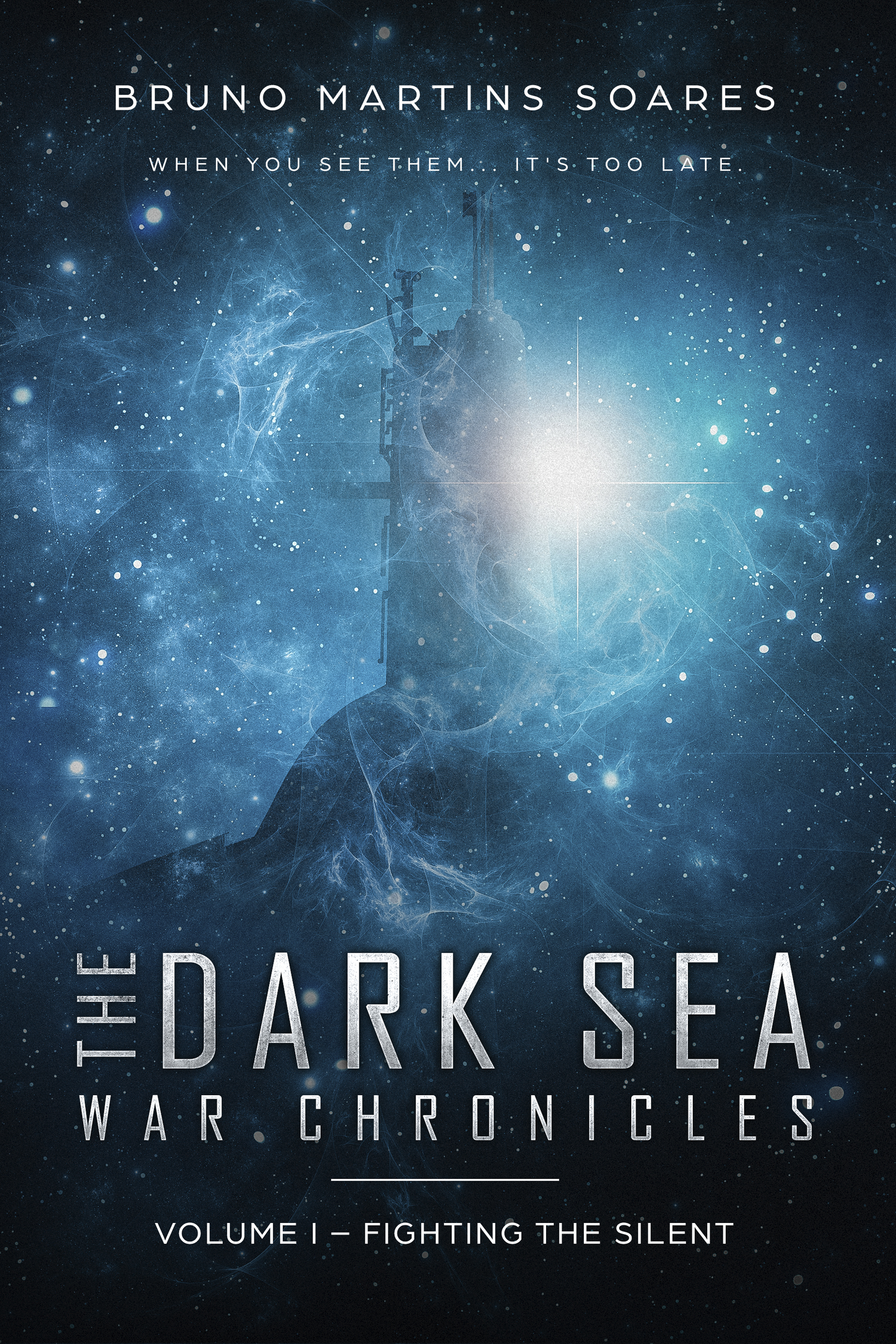
Each of the novels I wrote became more consistent and easier to write once I found their Meaning. THE ALEX 9 SAGA, for instance, is about finding a family when it seems impossible. So it’s about Family. And THE DARK SEA WAR CHRONICLES is about Sacrifice and Endurance – about how ‘getting going’ is sometimes the only thing you can do. Understanding your theme and your message is central to good writing, in my view.
And I also always tried to get better and improve my writing. Sometimes I read what I write, and I have to remind myself that what I don’t like I can actually change. I am the damn writer, after all. It’s what I do that makes a difference. And I can always do better.
Finally, I need to feel I’m any good. And for that, I engage with others. I listen to others’ opinions. I ask for help and depend on people I trust. That allows me to go on and build my resilience.
And that’s my two cents for now. See you around the next campfire, my friends.
Recently, I’ve been reading a little bit about QAnon and the impact it is having in people, elections and communities all around the world. It’s a little bit scary that a conspiracy theory that is so wild can resonate with so many people in so many places. QAnon, if you don’t know, is a massive cult-like community that believes the US and the world are dominated by a cabal of pedophiles run by American Democrats and liberals, supported by ‘deep state’ corrupt officials, and from which only the cryptic ‘Q’ and Donald Trump himself can save our children from. This conspiracy theory is completely bonkers and has been disavowed by most reasonable and/or responsible people (except the President of the United States). I’ve noticed that many other strange, crazy and absurd conspiracy theories have proliferated out of late. It used to be just those outliers defending that the Lunar Landing had never happened. Now we have people that defend the Earth is flat (more pathetic and less successful than the 15th Century Inquisition that argued the same), or others that say Covid-19 is an artificial pandemic (which again, waves-off the facts), or that Climate Change is a hoax.
On another level entirely but still on the same spectrum, we have a lot of people who are offended by the smallest political incorrect slight – judging everything as racist, sexist, unscientific or abusive, immediately taking action on any offence, many times missing much of the facts or the concrete situational context, and making it very difficult to go on and run our lives without feeling we are actually being abusive or negligent towards our fellow Human Beings. Snowflaking, for lack of a better word, is basic intolerance. Curiously enough, I think both these phenomena are two faces of the same coin.
Anxiety is a quite common dysfunction affecting millions of people around the world. The WHO estimates that almost 5% of the world’s population has severe anxiety disorders. Anxiety is a feeling of inadequacy or fear as we face the challenges in our future. It is actually a normal response and stems from the same mechanisms animals use to go into fight-flight mode as they face a threat. The thing is, we Humans have a complex symbolic system and we can generate all kinds of links and ideas that connect basic threats to what may seem innocent ideas. Birds or horses or tight places or bridges may spring anxiety or panic attacks, just because in some deep place in our minds they mean something else entirely.
There’s a particular response to anxiety which the French call ‘fuite en avant’ or, in Portuguese, ‘fuga para a frente’. It means that you make a rushed decision not because it’s the best decision you can make but because it helps you escape from anxiety. For instance, a bride who is marrying someone she doesn’t love just because it allows her to exit her parent’s house. Or when we preventively break-up an engagement just because we suspect our partner is about to end it. In many cases it’s really like jumping from the frying pan into the fire. It will relieve us for a moment, but lead us to a worse-off situation. And anxiety problems seem to be increasing all over the world. It seems our resistance to its effects is diminishing all around. In many cases, we prefer to jump into conclusions or flee-forward, ‘fuir en avant’, instead of waiting until we have the right information to make the best decision.
That translates, in many cases, into a sudden need to never doubt or never to be without an opinion. Just saying ‘I don’t know’ or ‘I’m not sure’ is interpreted as an offence or a sign of ignorance. It can actually be a sign of intelligence and maturity. Especially in a world where we are constantly bombarded with information, and even more uncorrelated data, I would argue it is prudent and clever to wait until we have enough information and enough time to process it before we jump into a conclusion. We should also be wary of unsubstantiated or vague information. What we sometimes mistake as ‘following our principles’ is actually in many cases a sign of rigidity of mind and fleeing-forward into a ‘safe’ social position of being ‘for’ or ‘against’. Doing this we not only narrow our options, but we also foreclose our sense of tolerance and compassion. We need to be open to others – others’ feelings and positions – if we want to be tolerant. Karl Popper’s principle of ‘intolerance towards the intolerant’ can sometimes be self-defeating if we become overall intolerant to all – not allowing for mistakes, misinterpretations or even humour. Please don’t be mistaken: I’m not saying that people who suffer of anxiety are intolerant; but I do believe all intolerance comes from fear and anxiety.
Thousands of years ago, Buddah went into the world and discovered a few things. He formulated the ‘Four Noble Truths’ after finding out that suffering was everywhere and that our primary goal should be overcoming this suffering in the world. Whatever religion you follow, it should be interesting to think about these concepts. Compassion, as Tibetan monks would argue, is our understanding that everything we do originates from one of two reasons: to reach for happiness or avoid pain – in other words, to overcome suffering. I would argue that Freud’s Eros and Tanatos follow the same reasoning. If we understand that everything people do is an attempt to achieve happiness or avoid pain we might feel more tolerant and compassionate, however mistaken we might think those people are. What we should not do is rush into judgement, force our opinions or jump into conclusions. Because we can be the ones who are mistaken. And we should also be compassionate and tolerant to ourselves – allow ourselves to doubt, to not have an opinion, to delay our decisions as much as we feel necessary.
If you follow this blog or read any of my previous posts, you probably have this idea that I have a very cohesive set of principles and assurances. I think I do. I still have a lot of doubts about a lot of things and there are many things I don’t have an opinion on – of course, I probably won’t be writing about those soon. But I believe people should be free, that we should be able to worship freely and express ourselves and love one another and be honest with our feelings as much as we can. When we embark in wild conspiracy theories we are looking for assurances – whatever they may be. We are ‘fleeing-forward’, leaving the facts and reality behind. But in this crazy world there aren’t many ‘safe havens’. Things are changing fast and faster still. And we should have better ways to deal with this discomfort we feel.
In a way, conspiracy theories are the opposite of snowflaking: people embark in conspiracy theories to avoid admitting the confusion and discomfort they experience when other people assure them their feelings and beliefs are wrong. A conspiracy will legitimize the fears behind this anxiety and dissolve the previous confusion by creating an overwhelming feeling of certainty. If we fail to address these fears and this confusion we are doomed to fail in our path to righteousness.
On the other hand, continuously criticizing and correcting other people is another way to flee-forward, to make sure that we are guaranteeing what is right, what is proper and what is just, but ignoring the inevitability of all the grey areas, the mists, the imprecisions, indecisions and flaws that make us Human. Even the humour that turns the spotlight on these flaws will feel intolerable to those who absolutely need to be right.
We should be tolerant of our doubts. We should be compassionate to others. We should reserve our judgments a little bit more. Maybe then we can see what unites us instead of being fixed on what divides us. And that, in the long run, seems to be a better path and lead to a better place.
At least that’s what I think. Hope it makes sense. See you around the next campfire, my friends.
Here we are I don’t know how many months later and we are still trapped in a worldwide pandemic (actually, ‘pandemic’ means it’s worldwide). I wasn’t here for the last sizable pandemic, which happened in 1918, but several things are impressing me in the course of this one. It has really changed the way people think, act, and go about their business. We are more careful, overall, with the way we socialize and work. Many of us have to wear masks and disinfect our hands constantly, for instance, to be able to do what once was a free and safe job. Children are kept at home and things as simple as eating out are now an adventure in themselves.
Another thing that impresses me, though, is the amount of disinformation and myths that have proliferated all over the world. I wrote in my last post about the difficulty of keeping track of the numbers and how statistics do not show us as much as we think. Still, numbers are important and there are things we can learn. I wrote sometime back, here, about the value of scientific data and knowledge. Science is not set in stone and scientific knowledge is not ‘the truth’, but it follows an ethical standard, it is basically the best and most scrutinized data and information that we have available and it most likely is the closest to the truth we can manage at any single time. It released us from a time when warts could lead a woman to be burned to death or you’d judge somebody’s guilt or innocence by their ability to float in water. So, it baffles me when I look around and find how much disinformation and crazy talk and fantasy dreaming has been going on, including by many elected officials. It’s simply absurd what many, sometimes well educated, people have been systematically saying. In particular, there’s a lot of controversy about one simple thing that should be very clear: should we or should we not wear a mask? Let me write a little bit about that.
First of all, let me dismiss negativists. There are many who are saying that perhaps Covid-19 is not such a dangerous disease nor that contagious. As far as we know, Covid-19 is more contagious than Ebola and less contagious than AIDS. Still, Ebola is more dangerous because it leads to a higher rate of death very quickly and AIDS less dangerous because of a reduced rate of death and killing only after a long time. There’s another danger to Covid-19: you could be asymptomatic or have mild symptoms and still infect other people. But there are more impressive signs it is a dangerous disease: more than 700,000 deaths worldwide so far. I had never seen mass graves in Europe or the USA ever outside of war zones, had you? I had never seen doctors and nurses systematically describing chaos and apocalyptic environments in hospitals outside of war zones, had you? And the devastation is not just measured in deaths. Of the hundreds of thousands who were hospitalized, many will have heart and lung problems for the rest of their lives. Many others suffered weeks and months of depletion, weakness, and sick leave. Covid-19 is dangerous. There is no doubt about it and it baffles me that people doubt it.
More than this, the World Health Organisation had to put out a ‘Mythbusters’ web page assuring the public of the most amazing things. For instance: pepper in your food does not prevent you from getting the virus; you should not ingest or inject bleach, ethanol, alcohol and taking a bath does not prevent you from getting the virus; cleaning your shoes is unlikely to help either, and Hydroxychloroquine is definitely not a legitimate treatment.
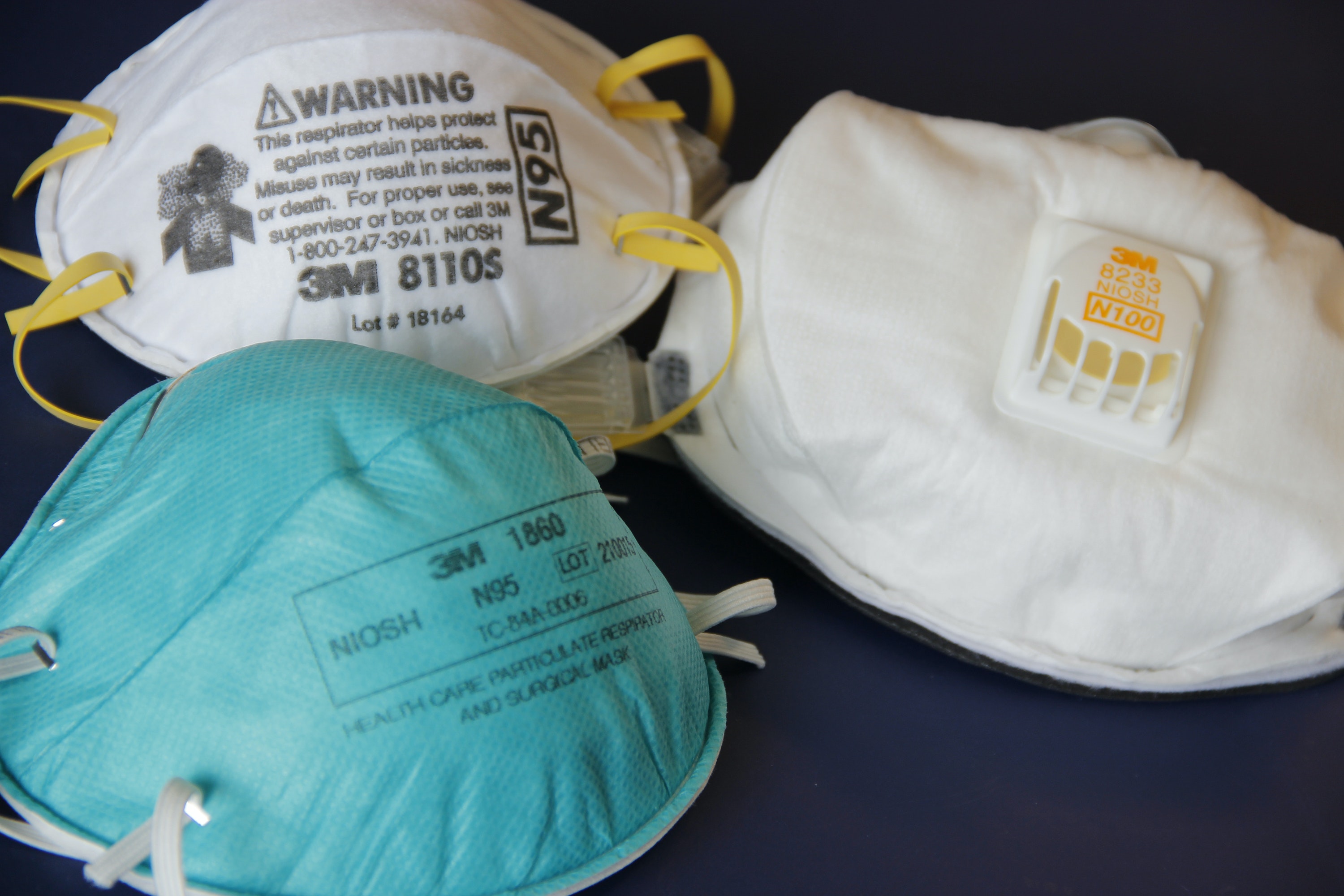
The disease spread so rapidly and had such an impact that most or all Governments made mistakes in addressing the pandemic. Some were better: like South Korea and Singapore. Some were disastrous: as the US or Brazil. But almost all came to a very simple conclusion: wearing a mask helps fight the spread. Not all the masks are the same. As far as I know, surgical masks are the best, but not necessarly widely available and should be given to health professionals like doctors and nurses. Then there are N95’s.
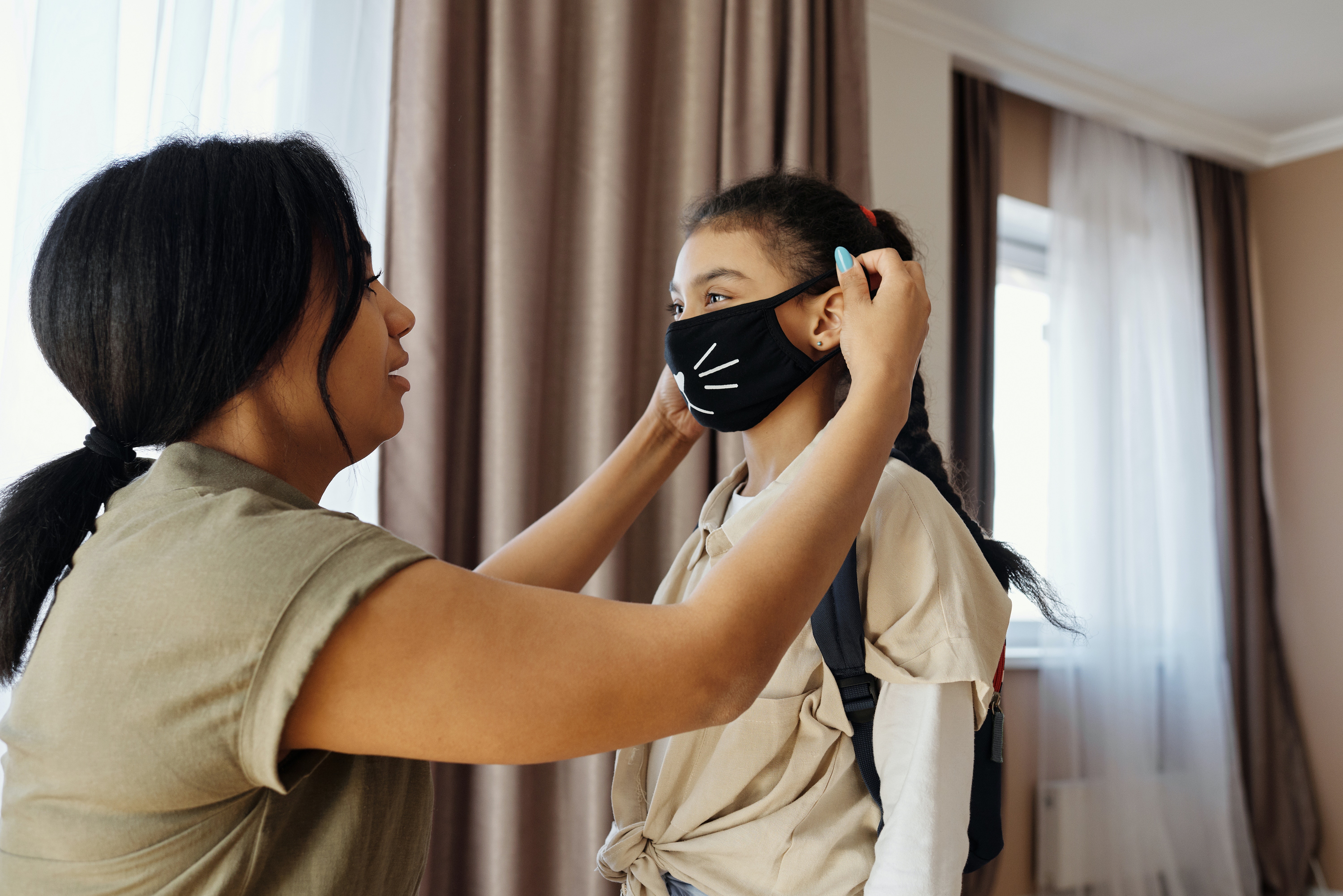
As far as I know, they will protect you from 95% of particles, but they need some knowledge on how to use them and, if they have respirators to help you breathe better, they will protect you but not others from you. It seems the single best use of masks is by the widespread use of those made of cloth. These will not really protect you, but they will trap your droplets from when you speak, cough, sneeze, or shout, protecting others from you. As most people who are infected actually do not realize they are infected, wearing a mask will protect the people around them. So, wearing a mask is actually a sign of respect and care for the ones around you. It’s a way of saying: ‘You are safe from me.’
Are the masks uncomfortable? Yes, they are. But here is what they are not: They are not harmful to you. You should be careful when you are exercising or making huge efforts because it can make your breathing more difficult, but it will not harm you even when used for a long time, as doctors and nurses can tell you. Also, they are not unconstitutional or an unacceptable infringement of your freedom – even when mandated by the authorities. In reality, there are a lot of limits to our freedom as a price to live in a civilized society. Like these: murder is not allowed; some roads have speed limits; you cannot close someone in a room against their will; you cannot urinate in the middle of the street. These limits are imposed to help us live better with each other and overall, in a safer way. There are perhaps no limits to freedom in the middle of the jungle, but you wouldn’t want to live there, would you?
Some countries, like Portugal, Germany, Israel, Luxembourg, France, Spain, South Korea, and others, have in place a State-mandated obligation to wear masks in public. It’s a simple enough measure – no mass inoculation, no drawing blood, no mass confinement. And it works. Some people even say it works almost as well as compulsory confinement. I have to wear a mask for work, for meetings with colleagues and clients. I don’t particularly like it, especially when there’s hot weather. But it’s my duty as a citizen and as a Human Being. So, I do it. And so should you. Keep up the fight, fellow warriors.













 Each of the novels I wrote became more consistent and easier to write once I found their Meaning. THE ALEX 9 SAGA, for instance, is about finding a family when it seems impossible. So it’s about Family. And



 Hyperjumping