The Amazing Underlying Journey of the Matrix – 4 – Backstory and Forward Thinking

This last post on THE MATRIX TRILOGY intends to summarize my conclusions. The Matrix has had a deep philosophical impact on me, corroborating many other references I’ve been collecting over the years. What we can see in this brilliant series is the knowledge that many philosophers, especially, in my view, French psychoanalyst Jacques Lacan, have been writing about Life here and there. So let me speak about it a little bit, at least from my perspective.
backstory_overview

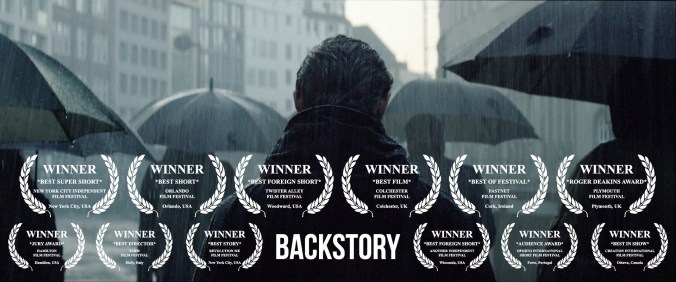
Let me start with another entirely different film: the short movie BACKSTORY by Swedish director Joschka Laukeninks. I’ve seen this movie for the first time at a film festival and it shook me to the core. You can watch it here.  It tells a story about a man going through his life until the moment of his death. All you see for most of the movie is the protagonist’s POV in a fast succession of cuts portraying important moments of his life, narrating his story. As we see this we are invaded (at least I was) by a rising feeling of oppression. Oppression by Time itself. We feel we already know that story, the story of a man like many others, even though we witness a few surprises as we go along. But it is familiar. We know that story. And it is relentless, almost cruel, to see Time passing so fast and so staggering. We feel (at least I felt) that there is nothing we control in our lives. Nothing that we can do to make anything different, anything matter. All that’s left, in the end, are those moments that branded the MC the most, mostly, in the end, moments of love – maybe what others have once called the Foam of the Days. What’s left after all the fuss, all the wrong decisions, and right decisions and going through this whole mess that’s Life. And we so much want to have control, to be able to enjoy life but also to make it matter, to make it about us, about our Freedom to Choose. What propels us forward is our Desire. Our ability to want something for ourselves. The Meaning of Life. And yet, sometimes, it almost seems like all we have is the Foam of the Days – what Yates would call: the Hopeless Emptiness. How can we reconcile our Desire to have Meaning with the elusiveness of the Foam of the Days, what remains in the end? That, in my view, is the theme of THE MATRIX.

There was this psychologist called Viktor Frankl who once had to suffer the disastrous internment in a Nazi concentration camp. I would argue it would be hard to find more oppression and hopelessness.  Trying to help the prisoners and going through all the suffering, he learned a few things that he would later share with the world. One very simple concept is this: whatever happens in your life, whatever hardship you go through, you can always choose. When everything else is taken from you there is always something that is yours: your reaction, your attitude. Your attitude is something you can choose. Find your own Meaning and you will find your own strength.

Now Sigmund Freud would tell you that many times the shackles are within us. It is difficult to choose for ourselves when we are overcome by the struggles within our own mind. The conflict between what we want and what we can do, or what we believe we can do, will necessarily obstruct our free choice. If we can resolve the conflicts within, even if in a small way, we can finally start to make our own choices. We can make sense of our choices. Psychoanalysis is all about becoming free to choose.

bethisguy

Lacan would take this further. I’ll simplify it a little bit, please bear with me. The journey of our lives starts by learning that we can’t have all that we want. Our Fathers, our Ancestors, Society, will teach us to conform. If we are to survive we have to obey the rules. To fit in. To become what they want us to become. The journey is one of frustration. Our choices are manipulated and limited. At one point it seems all the choice we have is one of killing our own Will within us and survive, or succumb to Death itself – and if this dynamic is dramatic enough, we may start to split Reality between what we can take and what we cannot. If we want to Live, to be Alive, we must rebel. We must refuse to succumb and fight the Forces of Oppression: the System, the Government, the Figures of Authority, the Evil Corporations, the Military Industrial Complex, whatever. What we do not understand at this point, at the point of rebellion, is that we are entering a different kind of prison. We are becoming ‘one of those who rebel’. Rebels have been here since the beginning, and they are just another type of inmates. A type the System has already integrated and learned to dominate and manipulate. Drugs, Easter Parties, draconian laws, oppressive schools, credit ratings, courts, madhouses, real prisons, they are all manifestations of the System coping with rebellion. And yet, the System works for us. We devised it to climb out of the jungle. If you want to see a country of anarchy, the rule of the rebels, see Somalia. No real System there…

I’ve spoken before about how the System can be cruel and sadistic. All of the Nazi’s crimes were arguably going on within a system of Law. But as I said before, the best ways to confront that Evil came from the people making choices. From the soldiers and the warriors to the bureaucrats all over Europe who saved millions of Jews by disobeying, by undermining the System, by choosing Humanity. And these people were not rebels, were not outliers. These soldiers throughout the world going against impossible odds, and the people laughing while being bombed and the heroes within European bureaucracies faking some signature were not rebels. They were thinking people. People able to choose by themselves. They were free. They were the center.

To be free we need both to reject the oppression of the System and also our Rebellion. We need to put both aside and become something else. Become Human.  Embrace both our limitations and our ability to choose. This, in my view, is the message of THE MATRIX TRILOGY.

us-constitutionOne of the most successful and masterful ideas of the whole History of Mankind is what can be called The Liberal Agenda.  The Liberal Agenda was born a few hundred years ago and is enshrined, in my view, in one of the most brilliant pieces of legislation ever written: The American Constitution. Freedom of Speech, Freedom of Religion, Freedom of Association, Equality, Democracy, Rule of Law, etc. That is the Liberal Agenda: what promotes and protects freedom. That Agenda led us to one of the most incredible periods of peace and prosperity in History: the last few decades. When you believe in freedom you must also believe in protecting other people’s choices, while also preventing those choices from destroying freedom (the old liberty paradox: the moment you say ‘no’ to freedom you lose the right to choose to change your mind).

In the end, the great struggle is this: are we commanded by Fear, or are we commanded by Choice? We have an inherent inability to stop Change and an inherent inability to stop Time. Change never stops and Time never stops. As Buddhists say: all our behaviors are actions to avoid suffering or seek out happiness while this is happening. In the end, we are left with only the Foam of the Days. But what really matters is the attitude with which we face this struggle. Is it really a Hopeless Emptiness?  Mankind has actually evolved. Millions are now safer than they ever were in the jungle, able to do things that seemed magical just a few decades ago. So whatever we may think, our lives are not really empty. Something is happening in the Universe. Something we are a part of.

Neo_spoon

What is the right choice, in the end? It’s to choose for ourselves. As Neo did at the end of the saga: we stop fighting and start living. And that, my friends, is what I call The Real Critical Decision of the Hero. The Decision to Make it Happen. To make it Matter.

Sermon finished. Have a good day’s journey, fellow knights. See you around the next campfire.

The Amazing Underlying Journey of the Matrix – 3- Revolutions Within

(Third post of a four-post series on the Matrix)

«Choice is only choice when we know the consequences of our choices.» The Oracle says something like that in MATRIX REVOLUTIONS. If the original MATRIX was about Birth and RELOADED was about Love, REVOLUTIONS is about Death. We only choose to live if we accept the prospect of our Death.

So let me go back to Lacan, or at least my take on Lacan. Our freedom comes from our ability to work towards our goals, our Desire. Against that is not only the prison of Reality but also the Name of Our Father. That elusive sense of Rule, of Law, that is imposed on us by not only the Society at large but mostly the sense of right and wrong that we inherit from our Father. But our character, our identity, depends on being different, on being something beyond the Name of The Father. On being something else. And so, we need to kill our Father twice inside of us. In the beginning, we are submissive, we accept the Rules, even if we feel oppressed by them, imprisoned by them, shackled to them. To become The One, to become ourselves, our own selves, we need to rebel against these rules. That happens in the first movie. Neo destroys Smith. But to be truly free we must relieve ourselves of rebellion. As we rebel, we are still obeying to the will of the Father, only in the opposite. The reference of right and wrong is still the Father, only it has turned from right to wrong. Now we exist only to fight Him. We exist in opposition. Until we start understanding the prison this fight also becomes. We are still imprisoned by our Father or by the fight against our Father, or the Monster of our Father that lives deep in our mind. At the end of RELOADED, Neo finally accepts that he is only The One among many others. He is just a person. A person with his own skills and personality, but he is not a Miracle, or the Savior or the Messiah. And now he is ready. He is ready to fight the last fight. To ‘kill’ the Father for the second time. Only then will he be released.

Matrix-Revolutions-min

We start REVOLUTIONS with Neo lost in a train station, locked in by the Merovingian. There he meets Sati and her parents, refugee programs trying to save her daughter from deletion. Neo is surprised by how Human or similar to Human they actually are. They talk to him about love, karma and belief. Or their interpretation of something of the kind. Logic gets a little lost in this un-purposeful behavior. But what is Neo doing there? He is trying to understand his own purpose, his own journey. Where is he going? Where is he coming from? Wherever he runs he comes back to the same question. This happened because he suddenly was able to use his talents, his achievements, his true self… in Real Life. Before the end of RELOADED, Neo could only act powerfully in the world of Fantasy called The Matrix. And he could only affect Reality if he acted on that Fantasy. On the other hand, through therapy, he could also use what he learned in Reality to act upon the Fantasy. That was the nature of his illness: Fantasy and Reality in a continuous loop (a schizophrenic mind). But now his sanity is creeping in. He now can act on Reality itself. He is becoming ready to leave therapy and the asylum itself. Before that, however, he will have to face his biggest challenge. The second killing.

matrixrevolutionsSmith also got out into Reality. He invaded the mind of Bane. Bane is, in my view, the figures of the Father we tend to face one way or another – in our bosses, in figures of authority, in figures of strength. In this case, Neo’s Father is a bully, violent and sadistic. And that’s Bane, the psychotic patient. He will take Neo’s eyes and Neo will have to face the world as Oedipus: blind except for his heart.

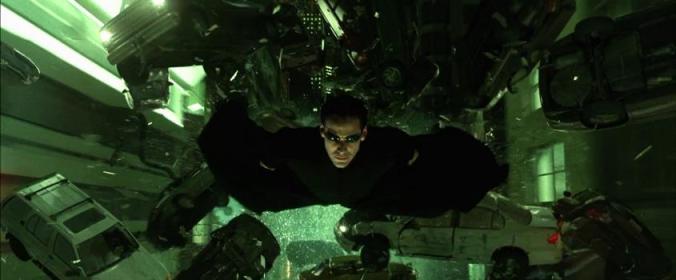
Before Neo gets out of the Matrix, though, once again saved from his purgatories by Trinity, he needs to talk to The Oracle. «Look at you now» she says to him. Neo is a different person. Solid, mature, sane, able to stand by himself, to choose by himself. He is ready. He now has to go to The Source, the real Source, the foundations of his mind, and face Reality: what he once thought to be the enemy – The System, The Program, The Prison, The Machine. Society at large is no-longer the enemy it is just… society at large. He will be able to face it with an integrated self. To himself (and to many in Zion) he is really The One – a man who is whole.

MV5BMzNmNzhhYWQtZDA5Yy00ZjJmLWIzODEtNjUzYzMyMTk1YTYxXkEyXkFqcGdeQXVyNjAwODA4Mw@@._V1_

But to be at Peace with himself, Society and the ones around him he must face his Nemesis: the Monster of his Father, once more. And he must do it alone. He must leave everyone behind him. Trinity takes him as far as she can, but she also dies and says goodbye to him.

In the last fight, the Monster of the Father has infected every corner of the Fantasy. Fantasy is dying and a grim Reality is settling in. By saving Fantasy, hope and faith, Neo will also save Reality and his Relationships with the others. He will save himself. But what can defeat the Monster of the Father? What can defeat Death itself? Certain, deterministic Death. What can stop being the legacy of his Father, the Past, the Immortality of the Ancestor, and become something new? Only choice. «Choice is only choice when we know the consequences of our choices.» And now he knows: he will have to leave safety behind. He will have to risk it all. He will have to choose. Choice is the foundation of our personality and our character. Of our identity. We are not in the world to obey the will of our Fathers. We are here to be different. To choose. To be free.

At the end of the MATRIX TRILOGY, Smith can’t understand why Neo persists in fighting, even though it seems pointless. Even though it is not logical and serves no purpose. Neo says: «Because I choose to.» Smith doesn’t understand that. Conformity, submission, obeying the Law, ending life, is all he knows about. And when finally, with the help of The Oracle (therapist), Neo chooses to stop fighting and accept Smith, he has already won. The Monster of the Father has lost all its power over him. Neo becomes free. And he is accepted by Society, by the Machines. He is finally working with them, not fighting them, and bringing Peace to his own world.

As Neo leaves therapy and passes into Reality, Fantasy is restored. It must. Fantasy must survive within us. With all its strength, it is the foundation of our sanity and must be preserved. But maturity lies in the Reality Principle. Lies in being a Man in a world of uncertainty. Freud said something of the sort: «Sanity is our ability to deal with ambiguity». Will Neo return to his Fantasy world? The Oracle expects as much. Sati draws a beautiful sun for him as he travels to another place.

main-qimg-1a2ab565571e50f610a7d81ead74c7af

This is my take on the MATRIX TRILOGY. I hope you enjoy it. In my next post, I will reflect a little bit about some of the philosophical, political and anthropological conclusions I draw from all this. Until then.

The Amazing Underlying Journey of the Matrix – 2- Reloading

(Second post of a four-post series on the Matrix)

2

So what is choice? What is freedom? If things around us don’t make sense, what could we/should we be doing about it? It seems our minds are sometimes caught in a relentless loop and our behavior comes in patterns that we are unable to control, it seems we are constantly reloading and reloading our actions, so are we really free? Are we controlled by a God or Nature or a System that enslaves us? The goal of psychoanalysis as Freud intended it is to ‘Lieben und Arbeiten’ – to be able to love freely and work freely. It’s to be able to create and to be productive and effective. Not towards the goals of others but towards our own goals. Life is a journey of frustration since we are born. When we are babies, the world revolves around us. If we cry for food, they give us food to our mouths. If we need to piss, we piss. If that makes us uncomfortable, we cry and they will clean us up and make us feel better. If we are sleepy, they will put us to sleep in the safety of their arms. Everything is at our command. We live by the Pleasure Principle – our pleasure is our command. The path to maturity is the path of frustration: it’s understanding that the world does not revolve around us and that reality carries limitations. If we are healthy we should be able to start living according to the Principle of Reality – that idea that we do not control a lot of things but we control some; that having our way with some things, being able to do what we want, also means having to deal with the consequences. We are driven by our purpose, we are driven by our Desire, as Lacan would put it, but for that we need to understand what we want and be able to deal with it intelligently and in an integrated way. Or we become ill. Lacan would say: «Our symptoms are our excuses not to do what we desire.» And so, the loops in our minds and in our behavior are symptoms of not being able to deal with the consequences of our desire. What do we desire? We desire to create and to be free. Or, in another way, we desire those fundamental actions that are still so misunderstood: to love our mother and kill our father, as Freud would put it. We desire to love our mother (to create) and we desire to kill our father (to be free). But still, «there is no spoon» – it’s all in our minds. So that’s why we need to understand what is happening inside our minds to be able to resolve the conflicts and escape the enslavement.

Then let’s go back to the MATRIX and to Neo. At the end of the first movie Neo had gone through that first phase of therapy, learning to accept that he had power over his life – and so be free even to fly.  For that, he had to trust his therapists and had to face some of his inner demons – in particular the figure of his Father, the Monster of his Father – the monster that was mean to him and restrained him and told him the rules and told him what he could or could not do – represented by Smith. He was able to kill Smith, infecting the idea of the Father and understanding that he was in control of that idea – that was the end of the first movie. The idea of the Father he was scared of and was unable to face is gone now. But that was only the first part of therapy. The worst is still to come. The Monster of the Father will return again and again until Neo understands a lot more. That is what happens in the second movie THE MATRIX RELOADED. Right in the beginning, we see Smith delivering his ear-plug to Neo: he’s now loose. The Monster is no longer confined to a single idea of the Father. It is free – or ‘seemingly free’ as Smith would say to Neo a bit later.

Agent-Smith

RELOADED is about loops. It’s about choice. What is freedom anyway? If all is prophesized, are we really choosing? For a schizophrenic nothing really is in his control because everything comes in patterns and loops that don’t make sense. The movie starts with the death of Trinity in Neo’s dream. Will he be able to prevent it? Everything seems already written… Zion, the asylum Neo is committed to, the safe place in his mind, is in danger from the monster of outside – the machines, the systems. Some believe that Neo will be able to save them, to free them, but some don’t. Either way, the danger is real and Neo turns once more to the Oracle. The scene where he meets the Oracle is, of course, the centerpiece of the movie.

The_Oracle_and_Neo_on_BenchHe meets her sitting on a park’s bench. She tells him to sit, but Neo says he will do as he pleases – when he finally sits, he says it was because he chose to sit (things in therapy often happen like this ). When the Oracle offers him some candy Neo asks that if she knows if he is going to accept the candy or not, is it really his choice? The Oracle replies that he already made the choice, he just doesn’t understand it yet. She is speaking of the choices he made so far: to join the asylum, to trust Trinity, to trust the therapists, to believe in therapy, to face the Monster. He doesn’t yet understand any of it. We are only free if we understand our choices, she says, for otherwise we are just randomly accepting loop behavior and the plans of others, I gather. So Neo has to dig much deeper: go to the Source of his conflict and understand why he is who he is, why he chooses as he does – only then will he be able to choose by himself.

Then Neo is back facing Agent Smith – the Monster of the Father. The Agent is now more powerful – he feels free, freer, but he is still bound by the Purpose, he is bound to face Neo, to kill him. That’s his choice. But it’s his choice inside Neo’s mind. In the Matrix. In Neo’s mind, the Monster of the Father is always coming back to kill him. Neo seems unable to get rid of him. He must understand why this is so. For that, he must follow the Oracle’s lead: he must find the Keymaster and go through the secret doors of his mind until he finds the Source.

To find the Keymaster, Neo and his friends will have to face the Merovingian, a man who again seems convinced that everything is the same, that everything is a loop and he has seen it all. Some mental patients have that feeling all the time: that nothing changes, that everything is the same, that there’s nothing you can do about it. Causality is relentless – suggests the Merovingian – relentless and predictable. Everything has already been decided by others, it is pre-determined; whatever idea of freedom one indulges, it’s a weak, ignorant idea. And he seems to be right because, in spite of all Neo’s efforts, he is faced with the events he has seen already happening. Trinity will die.

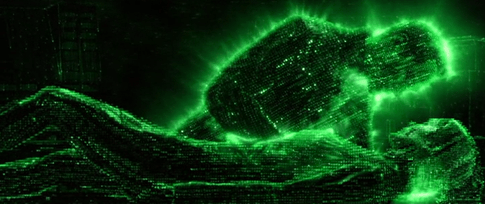
The_Matrix_Reloaded_-_The_Architect_clipWhen he finally gets to the Source, Neo meets the Architect (God? The System? The Military-Industrial Complex? The Evil Corporations? The Government?). He created the Matrix. And he has news for Neo. Neo is not the One, or better still he is Another One. There have been six already – anomalies of the system that are unintended consequences of the measures to secure normalcy – measures like the idea of freedom, hope, choice. For the Architect, everything is logical and predictable. He has the sociopathic mind of a machine. Emotion is but a tool or a defect to him. Everything must have a Purpose. Nothing can be illogical. So he gives Neo a choice: either he saves Zion and Humanity or he saves Trinity – he cannot save them both. Neo does not accept this. In spite of the Architect mocking both love and hope, Neo decides to save Trinity and runs to her.
etTEo

Afterward, Neo turns to Morpheus and tells him: the Prophecy is a sham – it is another control system to make them believe and invest in fairy tales while the System remains in charge. But while Morpheus is surprised and taken aback, Neo is ready to fight – he wants to do something to save Humanity. He is different. He is more grounded, more realistic. As the Nebuchadnezzar, Morpheus ship, is attacked and destroyed and the crewmembers flee for their lives, Neo turns back and faces the machines. With a gesture, he is able to stop them. But how can that be? How can he do that if he is not in the Matrix?  He was only able to change things, to be seemingly free, to be in charge, to choose, when he was in the Matrix, being The One. But something has changed. He now knows he can make his own choices. He can act in Reality. He is not powerless and bound by rules and regulations as a slave. He now can see the Machine, the whole System. And he knows he is a man. And a man is something else.

At the end of RELOADED, Neo is getting to that part of therapy where he can already see his loops, his paranoia, his patterns as what they are: his illness. He now knows he is more than that: he can choose. He has forfeited the idea of The One, of the Miracle, of being all-powerful. And now he will be ready to be free.

Next time will go over the third movie. I hope it blows your mind. Until then.

The Amazing Underlying Journey of the ‘Matrix’ – 1 – The One

The Wachowski’s MATRIX is a definite classic and one of my favorite movies. It was one of the best experiences I had in a movie theater, about 20 years ago: having been in seclusion for weeks before my Law School exams I hadn’t heard anything about the movie, nor seen any trailer or anything – when I went to watch it with a friend of mine the movie was a complete fascinating surprise. It also features one very interesting characteristic: it is a layered movie – a 12-year-old may watch it as a scifi-action-thriller, or you could view it as a profound deep-layered story. I love movies like that – like BLADE RUNNER, for instance.

JRtJ1

For years, when someone asked me what was my favorite movie I’d answer: The MATRIX TRILOGY. And then people would start to rant about how so much poorer the 2nd and 3rd installments actually were when compared to the 1st.  But I was analyzing it at a different level. That is what I want to talk about today – what I see in the MATRIX TRILOGY. Please don’t forget this is only my interpretation – and I will present some very complex concepts in a simplistic way. I’ll try to show you how I view the trilogy as a single unified story with deep philosophical, psychological and political implications. I hope you enjoy it.

‘Reality’ is a learned concept. I know – that blows your mind. But it is. In the first few months of our lives, we learn the basic concepts that will be the building blocks of our mental health. We learn Love and Hate, and Guilt and Frustration, and how to handle relationships. And before that, we start learning the rules – that things move in a certain way, that there are a lot of sounds and a lot of colors, that banana taste one way and tomatoes some other way. We learn ‘Reality’. The idea that everything out there is a ‘unified world’ is not particularly obvious – especially if the ‘rules’ of that world seem confusing. And sanity can be severely impaired if we cannot learn these rules or the unification of the world. There are a lot of theories about how schizophrenia forms and develops until the trigger events usually in the late teens when the ‘Reality’ referees of our childhood are no longer useful. But basically, I’d say that schizophrenics find it difficult to unify reality so they split it into different segments as if there were these isolated ‘boxes’ or ‘shelves’ where you can store your ideas of the world. The problems happen when these ‘shelves’ get mixed up and everything becomes confusing – you even start believing that what everybody tells you is a lie, because everything is contradictory.

Why am I speaking about this? Because when I look at the MATRIX TRILOGY I see the description of a Lacanian therapy process of a schizophrenic patient. Let me show you what I see. Indulge me.

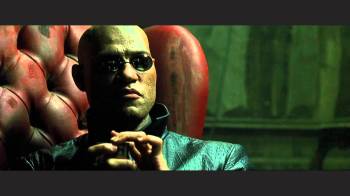
Anderson, the protagonist, lives two different lives. Besides being a computer engineer in a large firm, he is also Neo, a skillful hacker who earns some money through illegal means.  This man lives two realities and, as Agent Smith tells him, only one of them has a future. This man is looking for the truth: the answer to that basic question he can easily identify – What is the Matrix? What is Reality? Inspired by someone dear to him, maybe the love of his life, embodied by Trinity, he seeks help and after some hesitation, he submits himself to a treatment facility. When he is taken in the car, he feels threatened (in the movie, a gun is pointed at him) – it has to be our way (an employee of the organization tells him), or the highway. He opens the door, hesitating, but it’s the one dear to him that tells him: ‘you know that road, Neo, you know where it will take you’. That is the moment that Neo decides he will go into the facility. They take him to a weary room where he meets his first therapist: the man known as Morpheus. Morpheus tells him: I’m only offering you the truth. The paranoia Neo feels is real. Reality is a sham.  The Big Brother, the Big Other, is controlling everything. He shows Neo two pills and gives him a choice – he either walks away or he goes through the rabbit hole and finds out the truth. Neo accepts the challenge and submits himself into the facility.

maxresdefaultIn his next session with therapist Morpheus, Neo is told they are looking for The One. The Wholeness. The One that really created the Lie and which is the key to unraveling the truth – Reality itself. They are looking for the Subject, for Neo himself, and when he’s ready he will be able to change/accept Reality and become One with himself. Morpheus introduces a place called The Construct, a ‘safe place’ where Neo can develop his abilities, even though he is not able to make great jumps on his first time. Morpheus also assumes, by therapeutic transference, the role of the Father. Even though the Father himself is represented by Agent Smith.
Neo meets the other patients, having a conversation at the cafeteria about what chicken tastes like. ‘What if the Evil System even decides and imposes on us what chicken tastes like?’ How paranoiac can they be?

the-matrix-spoon

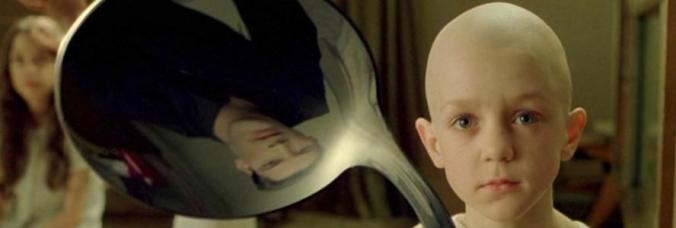
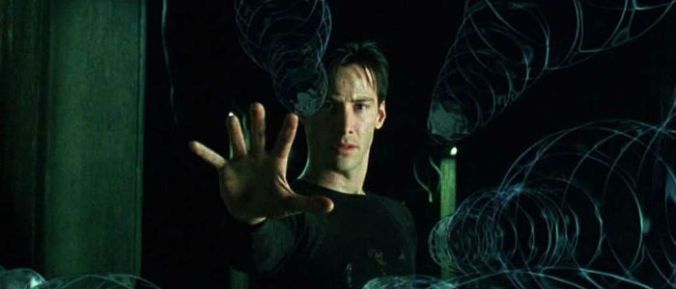
Finally, Neo is taken to a different therapist. The one they call The Oracle. After the delicious ‘There is no spoon’ (it’s all in your mind) episode Neo meets the Oracle. She looks at him and tells him: ‘You know what I’m going to say.’ And he ventilates his doubt: ‘I am not the One.’ She never confirms or denies it. It doesn’t matter what she thinks: it’s all about what HE thinks. That’s therapy. She also tells him something very important: a crisis will come when he will have to decide – either he risks it all and he accepts therapy and the figure of the Father (both Morpheus and Agent Smith); or he will run away and turn his back on all the hope Morpheus is bringing to him and the fight is lost. Either he dies or Morpheus dies.

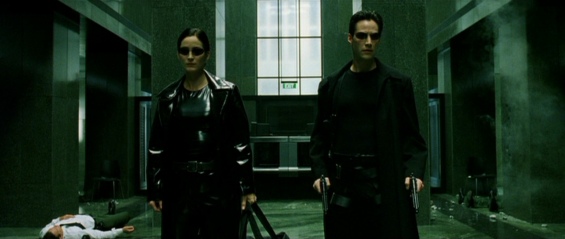
Next thing you know, the events in the prophecy are happening. Morpheus is taken and everything suggests he will not survive. Then Neo makes his most important decision: he accepts therapy. He will die so hope will live. He will go into the lion’s den and die so he can save Morpheus. Trinity decides to help him. She is always there when he needs it. She loves him. And that’s when that amazing Hall Scene happens.  And Neo saves Morpheus. His first words to his newfound therapist are: ‘But The Oracle told me…’ And Morpheus replies: ‘She told you what you needed to hear. There’s a difference between knowing the path and walking the path.’ Pure therapeutic stuff.

Matrix-700

As Morpheus and Trinity run to safety, Neo gets stuck confronting the Monster of his Father (Agent Smith). He decides not to run and Trinity, surprised, asks Morpheus: ‘What is he doing?’ And the therapist replies: ‘He is beginning to believe.’ The whole third act is the patient Neo starting to believe in the process. He actually dies. He gets shot in the chest by Agent Smith and dies. But he is no longer helpless. With the strength and love of the ones around him, he got strong enough to resist confrontation with the Monster of his Father and he comes back to life. He finally faces Smith completely in control. He now knows it’s possible.

In the final scene, we see Neo calling The Matrix i.e. his Family from a pay phone. He’s different now and he tells them: ‘I’m going to show these people (my inner beings, me) a world without you – a world where anything is possible.’ He now knows that therapy can empower him to live without the oppression of his Family’s history, of all that made him so ill. A world where he can fly. Neo finished the first part of therapy: he now believes in the process, he believes he’s The One, but the hard work is ahead of him – he will have to solidify his liberty, solidify Reality. Become Whole.

neo-matrix-keanu-reeves

I will continue the story of Neo, the schizo patient, in my next posts. That will show you, I believe, how the MATRIX RELOADED and MATRIX REVOLUTIONS fit in all this. I hope it makes sense to you but if it doesn’t I hope at least you have fun. Or a fraction of the fun I have been having analyzing this trilogy all these years.


Track B: On Publishing

(This is the third post of a three-part series On Becoming a Writer)

So, about publishing. Why do you want to publish? For me, there are several reasons I publish or I strive to publish. But first of all, a word of caution: publishing is not about writing. You don’t need to publish to write. Publishing and writing are different processes and it will spare you a lot of pain and suffering if you don’t confuse both rails of the track: write, always write, never stop writing, but publish only when it’s advantageous to you. Don’t ever wait to publish a text to start working on another text. That is a big mistake, in my view. Publishing or producing a play or a script often depend on others or on different circumstances – maybe you need some money for it, or some time, or someone to help you, or whatever. Writing, on the other hand, depends only on you. And it’s all about the process. The Path requires that you dedicate to writing and to be read. It’s not about publishing.

book-publishing-3

So why do I publish? First of all, I publish to connect. Writers need readers. Writing is about being read. Maybe some of you like to think you write only for yourself. That is reasonable – but you are also a reader. When you write, you are always connecting with someone – the reader. Publishing allows you to connect with more readers – hopefully, many readers. It gets you closer to the people you want to connect with.

Secondly, I publish to get my work out there. When you work hard on your text, when you invest time and effort, you want to share what you did – not only for people to appreciate what you do but also to be evaluated by the public and by peers. Being accepted by agents, publishers, critics and audiences is important – it means it’s been worth it. It means your story and your characters and your metaphors and your dialogues – are good. Or good enough. On the other hand, it is also a way to learn – all those agents, publishers, critics and audiences will certainly let you know what you could have done better, just as much as what you’ve done right. And that’s precious. If what you could have done better is more than what you did do right, it could be unpleasant. But it’s still very valuable. The worst thing of all is writing badly and continue to write badly forever.

Thirdly, I publish to earn a living. Now, there are huge misconceptions about this particular reason: if your main purpose in life is to earn a living as a writer, forget about it. It’s not a very good way. Warren Buffet always recommends investing in a line of work that has ‘Good Underlying Economics’. Meaning: how easy it is to earn money doing it. Banking has ‘Good UE’. Insurance has ‘Good UE’. Telecoms and high-tech have ‘Good UE’. Writing and publishing have ‘Lousy UE’. It’s just not a good way to earn a living. Don’t expect to earn a lot of money doing it. This said, I’ve earned money writing in several ways: journalism, advertising, commercial writing, ghostwriting, speech writing, playwriting, screenwriting, training writers and screenwriters, selling books. Did I make a living out of it? Barely. Most of the time I have to do other things to earn my keep. But my goal is, in fact, earn a living writing and publishing. I’m still years away from that, though. And I came to this goal after decades of investment and recognition. It’s not for everyone and you shouldn’t try it unless you are reasonably sure you will be able to make it. Otherwise, you’ll get in a hole where writing will be the last of your issues.

Of all the ways you can earn money writing, publishing is not the best way by a long shot. Most published writers don’t earn a lot of money. But for the love of all that’s sacred, don’t ‘pay’ to get published. That’s the worst bargain of all. And for the most part defeats most of what I said in the previous paragraphs: if you’re doing good work you can be successfully published or self-publish and gain an audience. Agents that ask you to pay in advance or vanity presses that ask you to pay to publish you are parasites, pure and simple. They are six-legged animals that jump onto your face, grab your neck with the tail and lay an egg in your throat: sooner or later they will also burst through your belly and kill or damage your chances as a writer.

indiana-jones-and-the-last-crusade

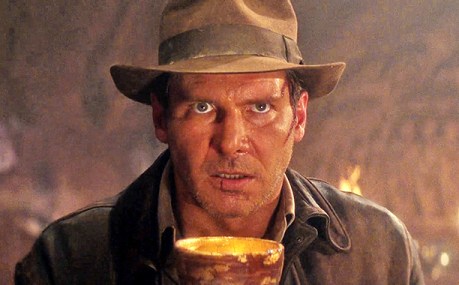
Fourth: I publish because I am searching for the Holy Grail. I publish because my ideal goal is to write a bestseller or a classic. I want to write something so good that it would be considered to be extraordinary. I dedicate my way of life to that search, even though I know for a fact the odds are against me. I have embraced that goal with all my heart. That’s the way of life that I have chosen. What I call The Path.

In sum, I publish because I am a writer and, as a writer, I need a reader. That’s the Yin and the Yang, the feminine and the masculine elements of that creative phenomenon that is telling a story.

Publishing is not easy. It is a difficult, slow, frustrating process. Self-publishing might seem more achievable, but drawing an audience, selling enough books, is always a considerable challenge. I believe the industry will relinquish to self-publishing and that the new generations of Nobel Prize-winners will come from the self-publishing field. But it’s not an easy ride and don’t expect any quick return.

Also, don’t try to do it alone. Publishing is a collective game. You need people to help you all around: agents, editors, proofreaders, cover artists, beta readers, reviewers, etc. Networking is the bread and butter of publishing. But here are the good news – we are all connected. Remember the six degrees of Kevin Bacon? This is the thesis: everyone in the world is connected to you by a maximum of six degrees. I’ll prove it to you. This is how I’m connected to the last few American Presidents (forget the fact they are all connected to each other):

gettyimages-84206003_-_h_2017

1.Bill Clinton: my father once organized a conference here in Portugal and he invited Alan Greenspan to speak. Alan Greenspan was Clinton’s Federal Reserve Chairman, thus, three degrees (me to my father, my father to Greenspan, Greenspan to Clinton)

2. George W. Bush: I was once interviewed by a journalist named Catarina Portas, who was the sister of Paulo Portas, Portuguese Minister of Defence in 2002, who met George W. Bush in the Azores. Thus, three degrees.

3. Barack Obama: I met the cousin of a friend of mine. She’s an international actress who performed with actors like John Malkovich. Connect Malkovich with any number of people who met Obama, including Oprah or any number of actors who met Oprah. So: three or four degrees.

4. Donald Trump: a few decades ago I went to Law School. One of my professors was Marcelo Rebelo de Sousa, who is now President of Portugal. He was at the White House shaking hands with Trump just a few weeks ago. So, two degrees.

Well, if I’m connected like this to four different US Presidents, so are you, in one way or another. And you’re probably just a couple of degrees away from a good agent, a good publisher, a good publicist, a famous writer, etc. Networking works. It’s not easy to get published, but it’s not impossible. Just ask for help and work it out. In the immortal words of Rob Schneider: ‘You can do it!’

Don’t forget: publishing will help your writing which in turn will help your publishing. It’s all about the searching, not the finding. Believe in this, take it in your heart and persevere. Success will follow. One way or another.

I find I have a lot more to say about The Path than I was able to say in these last three posts. Of course, I will write a lot more about it in the future, maybe even next week or the other after it. I want to write about marketing, for instance, or about The Voice. But for now, I hope this small three-post series is useful to you in any way. I hope you can understand a little better the quest you have embraced or you are about to embrace. I welcome my fellow knights. Those who follow The Path. This is an honorable but unforgiving quest and we are all brothers/sisters in arms.